See Full Transcript
So, wine making.
Yeah, it's a thing. I think it's a trend.
Trend or here to stay.
Yeah, wine making.
Welcome, ladies and gentlemen, to another episode of Barrel to Bottle, The Binny's Podcast. I am your host Kristen, and with me today is Gregory Versch. What's up, Greg?
Hey.
We've got two special guests, really excited.
We've got Chris Benziger and John Concannon. Hey, guys.
How are you doing?
Hey, glad to be here.
And you said Benziger, right? It's Benziger.
Did I, have I not been?
No, no, no, no. Most people say Benzinger.
Well, that's more fun.
Or every once in a while, Beringer.
Ooh, blasphema.
And Concannon, that's not easy either.
No, no.
Sometimes I'll get the Kincannon or Concannon. Oh, man.
You can.
Yeah.
Aluminium, you know.
We're here in the tasting room at the Naperville, Binny's Beverage Depot.
In this beautiful echoey room with some fine people.
John Concannon and Chris Benziger here all the way from California.
Yeah.
The exotic Livermore Valley in Sonoma County.
In Sonoma County from what Jacqueline called the Valley of the Moon on Sonoma Mountain.
It's very zen. Yeah.
It is.
And the weather here in Illinois is nicer than in California. It's hotter there. Yeah.
We're getting baked out right now.
We thank you for that California weather.
Yeah.
We're getting a little spooky now because now whenever the wind blows or the temperature gets over 100, everyone's like, it's fire. It's fire season now. It's fire season.
Everyone's all wigged out. But yeah, we're happy to be here. You guys are awesome.
You know that?
Thank you.
We try. The second city. Yeah.
We're having a good time.
I think, yeah. I think, you know, Binny's, all of you, the wine consultants, really fits both Chris and I's brands DNA. You know, just this kind of just, let's not make wine scary.
It's fun. It's all about, you know, getting together with people.
Yeah, we both come from big family businesses. I mean, I have four other brothers, two sisters with my parents, nine, and then 19 nieces and nephews. I mean, you talk about nepotism, run amok.
But it was cheap labor.
There are a lot of you.
You know, a matter of fact, do not back your car up too fast. You may run over a Benziger. We're not that quick and we eat them all.
So just be careful when you come drive into the winery.
So at Harvest Time, do some of the younger kids help out? How do you, is it all hands on deck?
It is. It is. We just make sure they don't fall into the equipment.
It's always slows things down. But no, it is a complete family adventure. John, I'm sure it was the same in your days.
It is, mom would cook up a storm breakfast, lunch and dinner. And then my sisters, brothers and I, we go out there. And it was 24 hours a day.
You'd be picking at night. So you have the guys out there picking at night. Then you get the grapes in there.
You try to get a little quick nap in. And then you'd go process the or join the processing of the fruit on the crush pad. And you'd be day after day.
And you'd think you'd kind of go crazy. And you do a little bit. But there's this incredible fun and kind of energy that comes from it.
And you're all punch drunk because you haven't slept. But you know, and you have the keg of beer up on the crush. We used to in the old days.
And it was a little bit of a little bit of a party. As you got everything done, you kind of needed that energy. And people you'd invite people up there and go, yeah, come on.
And then everyone go, the crush is great. Let's go. And you go, he's a lot of hard work.
And then they come and then they'd be like, can we leave now? No, you're on the crush back for the next eight hours.
And I same with us as well. I mean, I started I grew up in the house that my great grandfather built. They had 10 kids, Chris, you know, big Irish Catholic family, five boys, five girls.
So we didn't have sports center back then.
Right. A lot of kids.
And yeah, I remember growing up age 12, started working out in the fields. They called it chores. That way they didn't have to pay you.
And yeah, got around those child labor laws, right?
Well, we were as kids were on the bottling line because our little hands were delicate and didn't hurt the glass and we could fit them into the corks and stuff like that.
Nice. Yeah.
Child labor was not abusive. No, no, it's fine.
You just call it chores.
Yeah, exactly.
And look, I have all my fingers.
Much different than chores at my place. How about you?
Oh, yeah.
Yeah. Did your mom leave a list for you ever?
Yes.
Did you wait to the last minute to get it done?
100 percent.
You can't do that if you are, if your chores are in a winery. It just doesn't work.
No, but you get to drink your chores. We get to drink our chores.
You win again, Benziger. You win again. You always do.
4:31
Concannon Cabernet Clones
So, John, talking about your Irish roots, your great-great-grandfather came from Ireland and was the first Irish man to start a winery in the United States. Is that correct?
That is correct. Yeah, he was the first to start a winery. He came from Ireland, Ayr and Islands, born on St.
Patrick's Day. So we had that luck of the Irish from the get-go.
Who would have thought an Irish man liking alcohol?
Yeah.
There you go.
Let alone wine. But, you know, he always said it's not a matter of nationality, it's a matter of application. Just go out and do it.
And he had, you know, had to feed a family just like we all do. And so he recognized our climate and soil as very similar to bordeaux and went back there and brought back cuttings. And we were off and running in 1883.
And that was a lot easier to bring back cuttings back then.
Yeah, we didn't smuggle them in his socks or, you know, suitcase clones.
We brought them back through a reputable nursery.
Oh, cool.
Okay.
And so with those clones, can you tell us about what happened over the last 135 years?
Right. So again, brought back, we have a 135 year old propagated vineyard from Chateau Margaux on the property. And people come out, see it, go online and see it.
We kept the winery open and operational during Prohibition. So those dark 13 years.
That was a neat trick.
Yeah. Yeah. So, you know, medicinal purposes are the biggest company in the world, the Catholic Church, the Irish priests all the way across the country.
That's right.
That was pretty smart.
So you got to have the blood of Christ, right?
That's right.
A lot of people found religion. So we we steered through that and then in 1965, my dad, third generation, worked with UC Davis and we took cuttings from one vine, we call it the mother vine, and then those were cloned and propagated.
And now it's estimated that about 80% of all Cabernet in California's planted the Concannon Cabernet clones.
That's awesome.
That is amazing.
It's, you know, Cabernet is number two selling varietal out there, very popular. But, you know, I think...
You have all those numbers. Say those numbers that I always try to remember. How many wineries are on California?
Oh, Chris.
How many brands?
Yeah, well, so, you know, Chris and I, I think, you know, our families, you know, we're brick and mortar brand, right?
There's people behind this and I think sometimes forget that, you know, it's farming and agriculture just like Illinois, right?
Farmers first.
Yeah, you know, dirt under the fingernails.
And there's just in an 80-mile radius of both of our wineries in Northern California is 4,200 wineries and in the United States, there's 8,300 and there's 268,000 different skews, stock keeping units of wine. So, man, there's a lot out there.
What's that last number again? I'm sorry?
15,000.
250,000, 60,000 skews.
Oh, my gosh.
And how many do you have here?
I'll never taste it all.
You better get started. You better step it up.
Oh, I've been started.
You better step it up.
We're going to need a bigger Binny's.
Yeah, yeah. It's great.
We need a bigger Binny's.
So, I think, you know, I mean, what we're both doing is, you know, you better have good product, good juice, all that, right price point. But we have stories, right? Yeah, we're not a critter brand or virtual brands.
We're story brands, both of us. And I think, ultimately, people connect with people, and that's what makes the difference.
The rich family heritage.
Yeah.
In terms of propagating all these vines, one big issue is propagating clones that are disease resistant at some point. So how much is that on the forefront of what you guys do in terms of your clonal selection and propagation?
Yeah, well, I mean, there's like 10,000 different types of mutations and great varieties and clones out there. So with cloning, what we're trying to do, what is a clone?
A clone is basically a vine that's showing some kind of favorable conditions such as, you know, virus resistance, high quality, high yield. So when it portrays two, if not three of those, then it's like, hey, we want to make a genetic copy of that.
We want to copy that. So we basically we take a cutting, a dormant hardwood cutting, you know, about three feet long.
And we, in this case, we we worked with the University of California Davis and we heat treated it and then we isolated it in a vineyard and we observed it for five years.
And then between 1970 and 74, we took cuttings from that to the nurseries and made more and more and more. So, again, in theory, when you do a clone, you just have one parent, so in theory, it's a genetic copy. Yeah.
So, in terms of keeping that going now, with what are your big threats in the vineyard in California in terms of diseases and things like that?
Oh, there's always some.
Drunk tractor drivers.
You're right.
Bridal parties, yeah.
Yeah, bridal parties are a big, big problem.
Social media bloggers, getting selfies. Now, you know, there's always something out there, right? Phloxera was a root louse that wiped out California once in the late 1800s and the 1890s and then 100 years later in the 1980s.
But, you know, we've got fan leaf red blotch, just all sorts of things. So, we're always working with UC Davis again to make vines resistant to that, similar to, I'm sure, any other agricultural crops.
Sure.
Yeah.
10:06
Benziger Biodynamics
And so, Chris, you were here for part of our staff training today, teaching our white consultants about biodynamic and organic farming, sustainability.
And so, can you talk a bit what kind of things you do from that scope in terms of disease and keeping the vineyard healthy?
Right. So, our process is kind of a little bit old school. In traditional agriculture, you push nature out.
You're going to farm a monoculture and you kind of push it out, spray and pray is what I call it. And that's what a lot of large conventional agricultural does. But vineyards are different.
They want to kind of really get those roots down deep. So, instead of pushing nature out, we're going to invite nature back in.
And so, instead of calling the monoculture guy up and saying, hey, give me a big bag of methyl ethyl bad stuff to go nuke the vineyards, we're going to talk to the bug guy, the entomologist, and say, hey, what's the natural pest that can kill the
pest that's in the vineyard? So, what we'll do is we'll track that. We'll grow a garden called an insectary. And it'll be about an acre or so garden.
And we plant a bunch of flowering plants that attract these predatory insects.
That sounds like my personal hell.
No, no, it's not.
I don't like creepy crawlers and bugs.
No, no, no, think of this. Think of it as like the e-harmony of the bug dating world. It's a big bug orgy.
It's a big bug orgy. And then they go out there and then we-
He's just got the music playing. It's ba-ba-ba the whole time in the garden.
Hey, quit buzzing off over here.
Basically, the insects come and they kind of go out and eat the bad bugs. We also attract birds, hummingbirds, bluebirds, owls. I mean, we have the most paranoid rodents in Sonoma County with our owl boxes.
They're flying around every night, you know. Well, there goes Uncle Chad. But the whole idea is to kind of fill in all the nooks and crannies of nature.
So not one insect or animal has an advantage over the other one so that you don't have any infestations going on there.
And the ultimate thing is this, is when you use chemicals, it goes right down to the roots and it compresses the soil and you have to add chemical fertilizers so the root system stays very shallow.
This is a real problem when you're growing high-quality wines because you need to get the terroir of that site. And if you're using a lot of chemicals, the roots are near the surface, you're not going to get it.
So in our way, the roots have to go down through the tops of the subsoil into that fractured bedrock, it's called regolith. And we're on the slopes of an old volcano. I mean, this stuff is variable geological lasagna.
I'm not kidding, it looks basalt, red aggregates, this white welded tufa, it looks like lasagna.
And we want the roots to go down through each one of those layers, send out root hairs and pick up all those trace minerals and give it the fingerprints of authenticity that we're looking for.
We're talking like 25 feet.
On some of the vineyards, absolutely. But certainly at least 12 to 16 feet, almost all of them. And we were digging a cave here and we were down 32 feet and we saw root hairs.
And there's supposedly root vineyards in Europe that are over 100 feet deep.
But the object is to get those roots down as deep as they can into the vineyard and get that to our plus, they're also finding their own sources of moisture and they're much more resistant to any of the vagrancies of the growing season where rain or
drought, they're always going to do better. As a matter of fact, we made some of our best wines during that long California drought, 12, 13, 14. We're fantastic vintages because we had really good stable vineyards and we could take advantage of it.
Yeah, same with us. We just came out of five years of drought in California. And so the good news, bad news, we water rations and we're sustainably certified.
So we do things more on a macro view, but preserving water, conserving water is one of them with pointer of irrigation. So knowing that we were going to have a 25% cut in our water ration availability, we had to prune accordingly.
So less quantity, higher quality. So really the next, I mean we're into some excellent vintages. When you say Chris, I think for all California wine years.
I think what is on the shelf, in the barrel and ready to, and so far this year seems to be shaping up to be a decent.
17 will be a little challenging. Right.
So you can't blame it on mother nature, you know, if your wine isn't.
Yeah, yeah, yeah, exactly, exactly.
Is there a water table, like on a hillside that deep? Like is there aqua tard that's keeping the water in certain water?
Every single place is different. There's a massive aquifer in the Central Valley, but where we are, it's all different.
And it's kind of weird where there's like a little fault underground that will collect water because it kind of hits it and it stops.
There's a whole bunch of different, then you can go down into like the area of the Canary's where the water table is pretty low, but you got to be careful because it gets brackish.
So you have like a geological map of the vineyard. We do.
We do. And then we dig back up its old school, just dig a hole in the ground and go look at it. Yeah.
Soil pits. And you go say, Oh my God, that's what it is. That's kind of neat.
The really cool thing is this is when you farm in these more sustainable ways, you have more organic matter in the soil. For every percent of living organic matter in the soil, it sequesters something like 2,000 gallons of water per acre.
So you're talking a lot of water is saved. So the more organic matter.
That's interesting. Organic life and organic material.
And that is kind of a little reservoir for you. So you have that reserve water. And it may be even more than that.
John's very good with numbers. I am not, even though I wasn't a count in my past life. But it's a significant amount of water that is sequestered for every percent of living matter.
Okay.
When you're talking about sustainability, you're talking about not using chemicals. Do you have any issues with neighbors?
You definitely have an issue with neighbors. We have one vineyard where we have a complete a-hole who sprays right against the fence. And we can't use the first four rows because we have what's called drift, which is a painting.
Fortunately, Listen up, a-hole, you know who you are.
He knows who he is.
But typically, most of our vineyards are out by themselves and we have a nice big break. But every once in a while, you're right up against another vineyard and you hope that that guy is a good neighbor. Not all of them are, a-hole.
And I think what we try to do, too, is to pay it forward, to make the biggest footprint, carbon footprint, is the sustainability, it's how you treat your employees, we get back to the community, recycle, solar, no chemicals, pesticides, herbicides,
encourage natural predators. But then we also ask our vendors to be sustainable, you know, so whether it's our trucking companies or cork manufacturers, bottle plants, so.
Use good suppliers. And also it's this whole thing of generation, we want to leave it better because our method of agriculture is regenerative. It repairs the land, replaces that biological capital that gets expended through the growing season.
So that it's better for our kids.
Right.
Leave it better than we thought it would be.
All 3,000 of them.
So they better not, you're listening kids, you better not ruin it. I'm watching you.
17:15
Wine Packaging Options
Speaking of vendors that have to be sustainable, do you think you're going to, John, move to Screwcap?
Because you guys are doing Screwcap, right?
We are definitely on all near-term consumption wines. Screwcap is the way to go. I feel, John, I don't know if you feel the same.
Oh, totally, it depends.
So, I mean, our picnic wines, our Pinot Grigio Sauvignon Blanc, we use Stelvin screw closures. Stelvin's kind of the standard. And so anything, and again, I think anything that's going to be consumed fairly soon after purchase.
I know, like in restaurants, bars, they love it because they're just, you know, you don't need a tool to open it up. And then you have kind of the area of the composite corks and, you know, that's what we use because you can kind of control it.
And then, you know, for our reserve and upper tier wines, we use cork and we actually, I pay an extra dollar a cork, TCA's guaranteed not to have this trichloro...
246 trichloranacil.
Thank you very much. So if I have a corked wine, they'll, I guess, pay for it. So they literally hand sniff every cork, which sounds kind of weird.
It sounds hot.
Hand sniff?
Right, right.
Are you going to maybe close or bottle a few of your top tier wines in Stelvin to see how they age, maybe side by side?
Are you going to do, or do you do those things?
We've tried that. And there are screw closures now that have valves, because that's the thing with the screw closure, is you have to let the wine breathe and the red wines. So they do have valve closure.
So, you know, technically, scientifically, yes, it's very predictable and nice. But again, I think, you know, the jury's out. Either way is great.
There's some very expensive wines. But I think there's something about the romance of, you know, cutting the foil and pulling the cork. I mean, you know, you're out on a date or something.
You don't want to just, you know, the made or deed to go, here's your wine. Oh, that's impressive. Right.
90, whatever percent of wine bought is consumed within 24 hours.
So screw cap is the way to go. It's just the way to go. And you're guaranteed those wines are going to be good.
And they're going to be fresh. Pinot Noir, Merlot, Cabernet, Sauvignon Blanc, Grisio, all those, screw cap, screw cap. I am a real big believer in the screw cap.
Those New Zealand's, they were way ahead of their time.
Yeah, man. Australians, New Zealand's love them.
Yeah.
Well, anything for you? I see those wheels moving.
Do you want to talk about screw caps?
Noah, okay, so.
Yeah, are you still here?
So everything that you guys are saying to me makes complete sense, but then there's this layer of like magic and mysticism.
Voodoo, right.
On top of the scientific stuff, can you have the real stuff without the Voodoo?
Without the metaphysical sort of, yeah.
Yes. So you're right, because the end part of, nice jab there, I like it right in my ribs. It's this, the end of biodynamics is a religion called Anthroposophy.
You're probably going to get a lot of nasty comments right now.
But you're right, there's this kind of like worshiping at the end and we want to do, and we've been doing it longer than most people, is we want all the science and we've been recording it. People think it's crazy that you do things with the moon.
Well, farmers have been doing things with the moon since people have been farming. So we do that because it's a natural way to do it. But the basic thing about biodynamics is this, is to get you in the vineyard.
That's the most important thing. There's that great saying, the best impression a winemaker can leave on his wines is footprints in the vineyard. So you got to have that connection.
Then this idea of biodiversity, which is a key part of biodynamics. You want to have the pests instead of using the chemicals, then composting. Then the voodoo part is the cowhorns, the biodynamic preparations.
Could you get away with that? Probably. But with this part of biodynamic is you're helping.
This is where you regenerate in the soil. You're giving the soil in the compost teas, this nutrients that the soils needs because they're breaking and helping it breaking down. Just like you take probiotic to help the bacteria in your gut.
We're doing the same thing with the bacteria in the soil, trying to encourage that, and then making a super compost with our botanical preparation.
All in all, it's like 95% of it is really good sound science, and then there is that little bit of craziness on the outskirts of it, which I'd like to shake loose, to be honest with you, so we could just focus on what's real.
Okay.
I hope you guys can take what you've learned and maybe influence the culture to take these great aspects of it and really push everything forward.
I think there has to be a, again, this is probably going to get me a little bit in trouble.
I think it's going to be another evolution of it to kind of make it a little bit more practical and just so more people would follow it, because a lot of people kind of like, they drone off when you get to the cowhorns and stuff.
And I think there's a way to incorporate that and do all the biodynamic important stuff without getting into the other stuff.
There you go.
Good question. Very good question.
It's been an interest of mine for the last decade.
Well, a lot of people want to go, oh, all that woo-woo, all that voodoo and stuff like that. And it's like, well, no, it's actually, it works. Just give me a minute to explain it to you.
And I wish it didn't have to be either or.
Yes.
And then it all depends, like our whole political structure, it depends what side you're on. And unfortunately, environmentalism has become political, which it shouldn't be.
We're just protecting the earth for our kids, and all of a sudden that's become political. That's crazy.
But John, with Concannon, you guys have been sustainable since 2007, correct?
Correct, right.
Do you do any organic or biodynamic as well?
We don't, so we did try organic. That's very expensive and very regulated. And I totally agree with Chris, and hats off to him.
I mean, that is incredible effort. Again, sustainability for us, it's more of a macro view. You know, again, we helped...
But you're getting...
He's getting rid of tons and tons of chemicals in the vineyard. It's just, for him, it's more practical to kind of do it that way than to... I don't want to put words in your mouth.
So we helped write the code of standards with the California Wine Institute, and we were the 13th winery out of those 4,600 wineries in California wanting to be certified sustainable.
So part of sustainability is, again, there's an audit every year, make sure all the boxes are checked, and then you have to reapply and give a new initiative that you're going to do. What are you going to do to take it to the next level?
This year, it was, we have a large bottling facility at our winery, and so there's a lot of production wastewater.
I mean, it's wine, water with a little wine in it, and instead of, you know, dumping that into the ground, we built a reverse osmosis water treatment plant. We don't waste any water, and that was our initiative for this year.
So, again, ours is more of a bigger macro, you know, we have a scholarship program for our employees, and a recycling center, and...
And we forget that it's three E's, it's in the environment, it's also the sociable part, taking care of your employees, your neighbors, never being a good neighbor, which is a really big part of it.
And the idea is that we need to put teeth into this, it needs to be certified sustainable, because sustainable, unfortunately, is not regulated. And you go out to people that are greenwashing, right?
They pretend they have this aura on the outside of, hey, we're green, look at our solar panels, look at our little wind turbine, you can plug in your electric car, and then you look in the backyard and it's like Chernobyl back there.
And because what if you're not sustainable, then what are you? Unsustainable? And nobody really wants that moniker.
But there's a lot of bad actors, there's, you know, I hate to say it, but there is. And so we need to put teeth into this, and we need to, for lack of a point finger, saying we're doing it, now you need to do it.
I just realized this is about the farthest we've ever gotten into a podcast without opening something.
Oh, you know what? I thought you...
Can we taste one? No?
Are you starting to...?
None of this matters if the wine isn't good. So let's try it.
Well, that's kind of the... That's what I'm going to put on my tombstone, is it really doesn't matter if the wine's not good.
I started selling wine when I was like 16 at a drugstore, and this was one of the bottles that we had back then in the mid-90s, late 90s, and then into college. I was working in a grocery store and we sold this wine.
When somebody wanted to share with us.
Should we share with them?
No, not yet. It's a big tease. Whenever somebody asked for a big reveal, I'd say you got to have Concannon Petite Syrah.
26:03
Concannon Petite Syrah
Right.
Yeah.
I love the line, how do you describe Petite Syrah?
There's nothing petite about Petite Syrah. My tasty notes, I'm not big into the cork dork talk, so my conclusion at the end of tasting our Petite Syrah is that it's the St. Bernard that wants to sit in your lap.
So it's a very friendly wine, but it's big.
For us dog lovers, we love that. Yeah.
Very good. So Petite Syrah, again, it's a hybrid of the Syrah grape and Flower Pellerson, and my father was the first to make that a varietal in 1961.
So it's not the biggest, it's a great in the know wine, and now there's over a thousand producers and growers of it, but it's a wonderful grape to work with.
It's a bit challenging, it's like a little gremlin, a little double, you got to really tame the beast, but if you can tame those tannins out of it.
Don't feed them after midnight.
So again, this Petite Syrah is all nice, like a little gizmo, but it can be a little double if you break the rules. So tame that beast and you'll have a St. Bernard that wants to sit your lap.
Don't feed me after midnight.
I don't like sunlight and I like to be dry.
Don't get me wet.
So I'm looking at it here, my glass, again, I see my color, tasty notes are squid ink, fill your fountain pen, no natural light.
The color, how much color there is in the grape skins with the tears, how stain they are, how viscous they are.
So I mean, fun fact, all wines start out white, you get your color and your flavor from the skins.
So again, petite refers to the smallness of the berry, more skin, less juice, deeper colors, deeper flavor.
I can't believe more people don't drink petite straw. I love this varietal.
I agree.
It's a great wine to bring to a party and say, hey.
This is barbecue.
Barbecue is huge.
Right.
This is like my barbecue wine. You're putting anything on a grill or smoking anything?
Well, you're ticking a lot of the boxes, I think, that people want when you're bringing a wine to a picnic or a barbecue.
The price is right and it's something, if people aren't drinking it, it's different and new and so you kind of, you're going to get carried out of the party on the shoulders of all of your friends.
John Concannon, Petite Syrah Crowd Surfer.
Okay. So I'm going to give an exclusive here on this podcast. So how Petite Syrah came to be, because my dad always, he'd always say, because he's the father of Petite Syrah, and now a thousand producers, growers.
So he'd always say, this is a contender, not just a blender. So again, it's a great blending grape. Back in 61, you had Chablis and Burgundy, red and white.
And so he always knew it would be a great standalone, but we had a family to feed, and when you have a family business, you're the last to be paid, and no retirement, no medical plans.
So this opportunity came along, we had a, there was a guy that owned a couple liquor stores down in Los Angeles, and his name was Denny Caldwell. And he said, hey Jimmy, what are you putting in that Burgundy?
And my dad's like, well, you know, Petite bordeaux, Carte Franc, Petite Sorrel. I guess, tell you what, make me up a batch of just Petite Sorrel, take 300 cases. I mean, that was like 30,000 cases for us now.
So dad's like, done. He goes, well, we're getting 99 cents a bottle for the Burgundy. I think we can get a buck 19.
We can get 20 cents more a bottle. And Petite Sorrel was born, it flew out and here we are. Now there's a thousand producers and growers.
God, I belong in a different age.
That's true.
You know, $1.20 a bottle.
That sounds grand.
An extra 20 cents, yeah.
Nose, violets, raspberry.
Yeah, I mean, the typical nose on it is, yeah, tastes are, you've got the blueberries, the pepper, minerality.
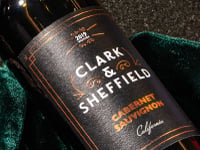
Good stuff. Again, I just always go back that this is not more popular. So, this is our 2015 Sonoma County Cab.
30:05
Benziger Cabernet
And so we grow this Cabernet there. It's about 80% Cabernet, a good slug of Cabernet Franc. Merlot in there, and we do some open top fermenting, where we wild yeast ferment some of this wine, and it takes about 21 days.
Those wild yeasts are amazing. They have these incredibly complex, unfermentable sugars to the mid part of this wine that adds this great kind of textural component, and then age it for about 20 months in French oak.
And it's a kick-ass little bottle of Sonoma County Cab. And this is coming at you for like 16, 17 bucks.
This is what blows my mind, is that you create such an authentic product that's about as natural as it gets, especially on this continent, and we can sell it for under $20 and get it all year.
Yeah.
And that's awesome.
I'm not saying we make any money.
Yeah.
But we can sell it. But no, that's the thing, it's a wine that truly reflects its sense of place. And that's the one thing about sustainability is, I like to think of it as fingerprints.
It's got four distinct fingerprints. It's got the fingerprint of the bridal, tastes like a Cabernet. It's got the fingerprint of the vintage, 2015.
We forget that every bottle of wine is a many time capsule of all the trials and tribulations of that growing year. Then obviously you have the fingerprint of where it's grown on the Mayan commas bench.
And then the most elusive one is the passion of the wine maker, the fingerprint. You can see the wine maker's magic in there. And you can think of him as the Greeks used to think of four elements, air, earth, water and fire.
I was about to jump in and be like, water.
Yeah, water.
And you can think of it as water being the varietal, earth being the vineyard, air being the vintage, and fire being the passion of the wine maker.
Oh man, I like that.
When you get them all together, you get the fifth spirit, the quintus, which is spirit, in this case, the spirit of the wine, or the wine.
That's the kid with the heart rig. And it's like, with your powers combined, die, Captain Blit!
wonder twins unite, form of a gazelle.
Oh, that's good.
That's a great way to explain it.
It is, no.
And the wine, it's good. It's got that kind of red, blue, and blackberry flavors. It's got a little bit of cocoa coffee in there.
And then a little bit of that kind of herbaceous, eucalyptus kind of in there, a little tertiary.
It's clean and correct. I dig it. And it's not too heavy handed, which a lot of Cabernet's can be.
From your part of the world.
You can rip the enamel off your teeth and tie your tongue into a bowl and it's like, that's not doing anything.
Exactly. Right. No, it's great.
And it's not sweet.
You know, it's about people coming together like us.
You know, good food, good wine, good people. We had some really good food earlier, and we're-
Pizza.
It was pizza.
Yeah.
But it was really good.
Pizza, really good pizza. But that's better, but Petite Seurat and Cabernet and the pizza, I mean, we played it perfectly, I think.
Yeah.
Well, thanks so much for sitting down for the podcast, all the way out here in exotic Naperville, Illinois.
Hey, this is actually a boatload of fun. I had a good time, really good time. Thank you, guys.
It was a good group.
We really appreciate it. I had a lot of fun, Greg.
This is, I mean, pretty good day.
Yeah, pretty good day.
Good day for me.
Do you guys want to stick around and help us out with the customer Q&A?
Absolutely. Can I ask, okay, ask your customers one thing? Can we, both John and I, we would love for you guys to come out and visit.
So if you're coming out to California, please come visit. We're in the little town of Glen Ellyn in Sonoma Valley. It's beautiful.
It's an hour from the golden Gate. And John is down in Livermore.
Yeah, we're 40 miles east of downtown San Francisco. You know, I like to say the four A's were affordable, approachable, award-winning and accessible. So, you know, God didn't just shine his light on Napa.
We're going to turn the table now to our customer Q&A portion of Barrel to Bottle, The Binny's Podcast.
34:08
Listener Questions
For your chance to win a $20 gift card, write us at Binny's Bev on Twitter.
Or email us at comments at binnys.com.
And we'll get famous wine makers to answer it. So, Greg, you've got the question today.
This one comes from Mary L. Mary writes, I've noticed wine in cans. I've had wine from screw cap bottles and it seems fine.
Is the wine in cans any good?
The answer is yes. It's tried and true, man. It's good stuff.
I mean, it's the same juice in a different enclosure, right?
I'm all about alternative packaging.
And whatever makes the wine more accessible, like John said, or more approachable, but also kind of portable. So for the three days of summer that we get in Chicago, you're on the go, man. We're burning the candle at both ends.
And so to go to the concert, go to the beach, do whatever you got to do, it's a lot easier to take the cooler full of beer and wine now and just pop the can.
Well, don't brewers think that wine tastes better out of a can than in a bottle?
I mean, beer stays fresher.
So, I mean, it's kind of the same thing with, I mean, literally the best way to store wine or have one is the bag, Mylar bag.
Do you guys, are you guys doing any alternative packaging besides bottles?
We both do kegs.
We do kegs.
Well, that's cool.
So, it's a big aluminum can.
Yeah. Beautiful.
Well, big for some people, that's normal for me. Yeah.
It's only two cases. Yeah.
So, there's a lot of wine on tap. No.
Yeah.
And wine on tap, it absolutely tastes better.
Yeah.
I agree. Yeah.
So, the answer, yes.
Yes. Cool. Yeah.
So, yeah, go for it.
And thank you for writing in, Mary. Thank you for writing in the question. Anybody else?
We answer these all the time on the podcast. Write us at Binny's Bev on Twitter, comments at binnys.com for your chance to win a $20 Binny's gift card at a location of your choice.
That was really good, Greg. Thanks guys for sitting in on Barrel to Bottle, The Binny's Podcast. It was a fantastic afternoon sitting with you and talking about all things, biodynamic, organic, and of course, Petite Seurat.
The first, the family who bottled the first Petite Seurat, iconic, it's great. So thanks so much for sharing those lovely stories.
Thank you very much.
That wraps up another episode of Barrel to Bottle, The Binny's Podcast. Thank you for listening.
Keep tasting. Wait, you do it again, I'll do it higher.