See Full Transcript
ladies and gentlemen, you are listening to Barrel to Bottle, The Binny's Podcast. I'm Greg in Communications at Binny's. In the room with me, wine buyer Bill Newton.
Hello. What are your categories, Bill?
Germany, Austria, New Zealand, Australia, Argentina, Chile, Portugal. I have a bunch of them.
And we have you in the room because we are joined by a man whose family name is practically synonymous with Napa Valley, Mr. Michael Mondavi.
Hello, it's a pleasure to be with you today.
Yeah, definitely stoked to have you here.
You are of the Mondavi family, iconic in California wine, but you also have your import portfolio representing Spain, Portugal, Italy, France, Austria, Argentina, of course, our great nation, United states of America, including your own winery.
So you really know wine.
yes. And for example, one of the things my grandmother taught me, she said to me when I was a young wine maker, Michael, make wine that tastes good. I said, Nona, what do you mean?
Expecting her to describe Cabernet Sauvignon. And she said, oh, it's very simple. When you sit down to a meal with family or friends at your home, and you serve them a wine, if they want a second, third or fourth glass, that tastes good.
But if they only drink one, you go back to work. So we really focus on wines that have the quality of inviting you back to the glass for another sip or another glass.
And that family tradition extends today. Your children work in your winery as well?
yes. My son is responsible for the winemaking of our wines. My daughter works with him on some of the final blending because, sorry guys, women have a more sensitive and delicate palate than most men.
And so we'll taste the final blends together. And very often my daughter will notice a little nuance, a little more elegance, a little more finesse in one glass versus the other in the final blending. And so we'll go with that.
You have been in the industry since the 60s.
You did some winemaking, you did some sales, you did so. I don't have to tell you, you know.
The world was still warm when I started.
So that means that you've seen the wine world in a way that we haven't in this room. You were there for the founding or you have a really good understanding, a perspective of the founding of California wine.
You were there when things shifted, got a little more commercial, a little less food friendly. I'd love your perspective on that. And now you're there seeing what's happening now, which seems to be even a further extension of that.
There have been cycles of the wine industry and really cycles of the wine styles, part of it economically enhanced and part of it food.
Sure.
In the 70s, 74, 75, interest rates went up to 17, 18 percent, and wineries had to move the wine through the process because you couldn't afford to age wines an extra year or so because it cost you so much.
And the banks were very limited on how much they would loan on bulk wine inventory or cased goods wine inventory. So we learned to make the wines essentially to help them accelerate the aging through winemaking techniques.
The next was when the bigger and more intense the wine was, the higher the rating and whether it was some of the Robert Parker ratings or Wine Spectator ratings, the wines were so intense, I could not do what my grandmother urged, and that is have a
We're nodding.
We know what you're talking about.
Instead of having a port with Stilton cheese at the end of dinner. So these 16, 17% alcohol, heavily oak Cabernet Sauvignon, I personally did not enjoy. I couldn't enjoy them with foods.
And so we chose not to produce that style of wine. Now in retrospect, we could have probably been financially more successful had we followed the crowd and done that, but we wanted to stick to our own style.
I'd say you came out pretty financially successful.
We were okay.
Yeah. When I was growing up through wine, like really starting to get into it in the early 90s, Mondavi reserve Cabernet, I would say was, for me, was the benchmark as far as that. And the 94 loved it.
But also it was-
Hold on a second. Hold on a second. Good job 25 years ago.
Yeah.
Well, thank you.
Thank you.
But also it was one of the more expensive ones, about $80 to $100 a bottle. And I've reserved Cabernet and some of the others have stayed there, but now there's the so-called cult wines, as you know.
Do you think some of the pricing in Napa Valley is sustainable?
As some of the people that are my age say, and have grown up and filled their cellars, do you think the younger people are going to be willing, some of these younger people are going to be willing to spend this kind of money on wine?
Well, if the younger people are involved with Silicon Valley and Uber or Lyft, and have just gone public and made millions or billions of dollars, they'll probably buy what I call the ego wines. They're going to look at the right side.
You know, they're going to say, what's the most expensive? I want that rather than what's the best flavor or quality. But to me, when you get above $50 a bottle for wine, it's a matter of personal preference.
I think in the $25 to $50 to $100 a bottle, you can find superb wines for any, any occasion. And you can put them on the table with some of these, quote, cult wines or very special wines at a dinner party.
The glasses will get empty probably sooner than these cult wines. They'll have more even drinkability.
I agree with that. But we'll see. I think it's going to be very interesting.
I know that the real estate in Napa, I mean, the land is so expensive now that that plays a part in the price too, correct?
Thank goodness we bought our land number of years ago. Just a couple of interesting numbers.
A number of years ago, when was that, 2003?
In 1999, we did our first purchase and our second was done in 2004. From a financial standpoint, if I pay $1,000 for a ton of grapes, I need to sell that wine for $10 a bottle.
In Napa today, the average price of Cabernet in 2018 was $7,900 a ton, which means the average Cabernet coming out of Napa Valley, should sell for $79 a bottle.
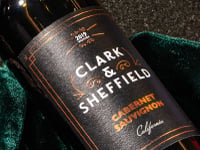
We have a Napa Valley Cabernet at $25 a bottle, and one of the reasons is we own our vineyards. We bought them before the prices went crazy.
We still buy grapes, but from growers that we've had the luxury of working with for generations, and we have long-term contracts with them, and they understand that they need to make a profit on their vineyard.
We need to make a profit on our wines and not break the bank.
You're talking about food-friendly wines. You're talking about more of a classic style. Do you extend that same philosophy to the other wineries that you work with around the world?
I mean, I definitely see it in some of them that I know. The Spanish stuff is about as old school as it gets, right?
Yeah, absolutely. We have two primary guidelines with any of the families that we do business with.
First of all, we only do business with family-owned, family-run businesses because we are convinced that they're going to do a better job consistently.
When I got into wine sales in the late 90s and early 2000s, Rosé was an entirely different beast. Are you surprised that we're having this conversation about Rosé the way we are now?
I've seen probably three cycles of Rosé in my 50-year career in the wine business. When we started in the 60s, Gamay Rosé or Vin Rosé was very popular at that time. Then the white Zinfandel craze came in.
When you look at it globally, Rosé has had ups and downs in the American market, but in Europe, it's a foundation. They drink more Rosé in France than red or white wine. They drink more Rosé in Italy than white wine.
The reason I think that it is such a staple is that the rosés are of the style we see today in the market.
They're drier, they're crisper, they complement food, and you can enjoy them with a very broad selection of foods, or you can enjoy them just as an aperitif.
I remember one of the first wines I actually drank in the 80s was a Rosé of Pinot Noir. So they have been experimenting with it, but it does seem that over the last five or 10 years, it's really taken off, especially the French stuff.
It's really hit the sweet spot, and the Rosés from Provence and the French Rosés that are the crisp, drier ones, not the, I call them, soda pop Rosés, the sweeter ones, are very enjoyable and they're refreshing.
Rosé on the rocks as an aperitif is spectacular. And then with the meal, I just get rid of the ice and enjoy the nice chilled Rosé. It's a very refreshing wine.
And I think that with many of the foods today that are lighter, more natural, fresh ingredients, lighter wines like Rosés are going to be enjoyed much, much more in the future.
Do you find now, compared to the 60s and 70s, that there's a different culture? It's hard for me to explain, but a different culture or a different attitude in Napa Valley than there was back then?
One of the things that happened after World War II was the US government went to the agricultural schools and gave them millions, not billions of dollars, to develop more efficient clones or varieties, whether it was soybeans, grapes, animal
husbandry, whatever it was, because the government knew the most important weapon in the war in the 50s and 60s was food, not the atomic bomb. And so all of the agricultural schools, fresno State, University of California Davis, as well as other
agricultural schools for other crops, had this funding to research productivity. How do you get more productivity per acre for less cost? Because that will help win back then the Cold War.
What we found was, in the last 15 years, over 90% of those products that were created during that time have been decertified, declassified and not used.
So my brother and I, the late 70s and early 80s, realized what my grandfather had taught me, protect the soil and have the soil in healthier condition for our children than we received it from our father. We weren't doing it with chemical farming.
And so we said we have to convert from chemical farming to natural farming and organic farming. And it took about seven or eight years to wean, if you will, from the chemical farming to get into natural farming.
And fortunately, the majority of people today are embracing it. In the Napa Valley, for example, almost all of the vineyards are natural farmed, are green certified, and fish friendly.
Now the fish friendly is an interesting thing, because when it rains in the hills, if you have chemicals or sprays, and it washes down into the aquifer, that can damage the fish.
If you are fish friendly, your vineyard will have clearer water, healthier water, go into the aquifer and the rivers, than if it was just an open hillside, because you don't have deer or other animals in the vineyard, and you don't have cattle or
sheep grazing in the hills, and you can have nice pure water into the river. So it's really interesting how the pendulum now has gone to natural, healthy farming.
So here in the midwest, we're just sort of seeing this from afar, but the last couple of years have been some pretty alarming news about some of the fires in California. Is this something that you see continuing?
Is there anything we can do to try to prevent it?
I'm afraid it's going to continue. We were supposed to harvest on the Monday after the fire started in 2017. We could not get to the vineyard till the following Friday.
Now, grapevines are a natural fire break. So the vineyards didn't burn, but the edges got singed or the vines damaged. The problem with our, we hadn't harvested, was that the berries absorbed the smoke, right?
The leaves absorbed the smoke. And when we were ready to harvest the grapes, we thought, okay, we'd better wash them. So we got spray rigs behind the tractor to spray with filtered water, just to wash the grapes.
We then handpicked them, brought them in, put them on sorting trays, and washed them again with water and then with fans, dried them.
But then the problem was, the smoke was in the juice itself, and it was like after the fermentation, everything we did, it still smelled smoky. It's like the difference between good, fresh salmon and smoked salmon.
And we declassified the entire vintage of 2017, because any one of us in this room, we taste the 2016 vintage. It's wonderful. It's beautiful aromatics, nice layers of flavor.
You taste the 2017 aromatics, but what's that smoky thing? And flavor, gee, it's nice, but what's that smoky thing? We said, no, we just have to declassify it.
Do you extend that environmental stewardship?
I mean, you're talking globally, so the family on wineries that you work with around the world, you also had that expectation?
Well, our guidelines for working with other families is pretty simplistic. And if I were to go to Harvard business School or someplace like that, and talk to their business professors in their classes, they'd say, Michael, you're absolutely insane.
But we only deal with, number one, family owned, family run wine companies. We have to like and respect the family, and we have to be looking forward to having lunch or dinner with them in the future.
No jerks.
No jerks allowed. And secondly, we have to be proud to put their wine on our family table for family and friends. And if we're not proud to put their wine on our table for family and friends, I'm not going to try to sell it to you or anyone else.
And I sure know I'm not going to drink it.
Assuming you're not flying to Chicago to hang out with a Liquor Store's podcast crew, what's the day in the life of Michael Mondavi?
Well, it depends on the time of year. During the harvest, which is to me, it's the revitalization of a wine maker because we walk the vineyards.
And as we get about two to three weeks before the harvest, we start walking the vineyards, say three weeks early, about every other day, and we taste the grape, and we look at the seed and chew the skin, and we want to see how it's, how the vines
are, the grapes are maturing. As we get closer to that day of harvest, we will select individual rows and groups of vines on this 15-acre parcel to harvest because with rolling hills, you have different depths of soil, you have different exposure to
the sunlight, and on 15 acres, there are times when we will harvest over 10 times, over a two-and-a-half-week period. To me, it's the re-birth, the fermentation of the new wines, selecting the grapes and then going in and tasting every day how that
fermentation is progressing, and then making the first master blend to put in barrels to begin aging. I mean, that's the exciting, creative time of the year.
You don't want to talk about the spreadsheets you have to do?
You know, there's a wonderful word. I like to say there's a funny Italian word. It's called delegation.
Those are the things I like to delegate.
Can you speak about the role of the reviewer and the future of the reviewer as we get more and more fragmented and more and more democratic?
Yeah, I think that the role of the reviewer in the past will not repeat.
I think that what Parker did, Wine Spectator, The Enthusiast, all those, there were probably half a dozen Decanter Magazine in England, periodicals like that, that as America was trying to discover wine and try to nurture their palate, they would
read those and then they'd say, oh, I have to learn to like Cabernet Sauvignon because it's the in thing. And so they would go more with the rating than with what their personal palate liked.
Sure.
Robert Parker, for one, liked big, intense wines. To me, they were too rich, too intense for my taste. That doesn't mean he's right and I'm wrong or I'm wrong and he's whatever.
We decided not to follow that. I think for the consumer, today is better. There are numerous writers, more regional.
There are numerous bloggers. I don't think wine is digital. A 94 or a 98 does not tell me a thing about how that wine smells or tastes.
Is it rich? Is it oak? Is it non-oak?
But a description, whether it's one sentence or a small paragraph, if written correctly, can really tell you about the wine. It'll take some of the mystery out of the wine before you have to buy it. And I think that that's very healthy.
It's great to be able to go on your iPhone today and take a picture of a wine and then see certain write-ups and get some information on it, or come into Binny's and talk to one of your team.
You were a little bit on an island there for a while. I remember-
We were. We were isolated.
I remember 15 years ago, here's what would happen, folks. 15 years ago, you'd go and you'd visit a winery in Napa Valley.
And you'd go into the winery and you'd talk to the winemaker, you'd talk to the people behind the desk, and they would say, we really don't like Parker, we hate what he's doing, blah, blah, blah.
But then you taste the wine and they were in that style, and you'd look at their newsletter, and it would have all of Parker's scores for all their wine.
That's it.
So it's great to talk that way, but they didn't back it up, and you did. I think one of the great things now, and correct me if I'm wrong, but it seems that there isn't a mad rush for any one particular style.
It seems like now the consumer has so many different styles to choose from, and that's as it should be.
I think having multiple styles is terrific because we don't eat the same food all the time, and whether it's different ethnic type foods, or whether it's foods we eat in the summer, that are generally much lighter than the foods we eat in the winter.
People ask me, what's my favorite wine? My favorite wine happens to be what's in my glass at this minute.
But realistically, I drink lighter wines in the summer, a lot more rosés and Sauvignon Blancs, and wines of that style, and I drink fuller bodied wines in the winter.
And what's fun to me in the wine business is trying different producers as well, to notice the different styles of Cabernet or Sauvignon Blanc, etc.
So you know what's going on when you're out dining. I don't always, sometimes a wine list is kind of foreign to me. How should I approach the wine list at a restaurant?
First of all, many of the wine lists are so large, they're very confusing to me.
And on a lot of those wine lists, if you were to ask me to tell you about the wines, I could probably tell you about 30% of them. And about 70%, I wouldn't have a clue.
Like buy a bottle or just because you know the region, you know the producer's style?
I know the region, but I don't know the style of the wine within the region of that producer. So, what I found the best question to the, if there's a sommelier, the sommelier, but if not to the server, is not what wine would you recommend.
I'm going to have the Petralli Sol tonight. What is your favorite wine on the list? I have rarely been disappointed when a waiter, waitress or sommelier has said, oh, I tried such and such wine.
Most of the time, I had never heard of the one they recommended.
It's usually like a Gourmet Grown on the Bikini Atoll or something. It's always like as obscure as it can possibly get.
Well, a lot of the restaurants, as you know, like to do some direct importing so that they can have a little larger markup on their wines.
They're selling Chateau No Name all the time, but I've found when asking the wait person, what did you enjoy most? I've not been disappointed. interestingly enough, the majority of those wines are reasonably priced.
They are not outlandishly priced wines.
Well, if you ask them, what's your favorite? And they tell you, Petrus.
The favorite, the other is, what do you, what wine do you recommend? If you ask that question, they will recommend whatever the manager said, we're pushing this week. So you don't want to ask that question.
I think also you're flattering the Smellier when you do that.
And that's probably why it works, you know, because you're saying, all right, you're the expert. I want to know what you like.
Also, you're Michael Mondavi, and I'm Greg from Skokie.
So, but also I try to go in as Michael Abernathy instead of Michael Mondavi. And I find that more often if I can go in under the radar, it's a much better meal and better evening.
Fair enough. With an expense card. Oh, yeah.
Do you like BYOB, BYO restaurants?
I think BYOB restaurants, and if you have a wine that you particularly enjoy, or if you're having friends and want to have a special wine for a friend, you should have BYOB.
In Napa, I make it a point, if I ever bring a wine to a restaurant, I bring two of those same wine. I don't care if it's a 1979 Cabernet out of my cellar, I'll bring two bottles. One for the restaurant, one for my table.
And then I always make sure to order another, for every bottle I bring, I want to buy from them at least one wine.
So that's a really interesting point.
The only thing that you lose by going to a BYO place and bringing your own entirely is that if you go into a great restaurant, they're creating a list with intention that really works with the food, and the chef's trying the wine and everything's
copacetic, right? Everything's really made to work together. And other than that, man, just BYO.
Well, you're also supporting the idea of a restaurant having a really good wine list.
Putting thought into it.
Many of the wines in their cellar are going to be there for a while, and they need a temperature-controlled space for them. They need to maintain the inventory, and that costs money.
They have to train their staff to be able to present the wines properly. So they are justified to charge a higher price than you would find at a retail store.
There's a huge movement now towards organic wines. I guess there's different. There's sustainable, and there's organic, and then there's biodynamic.
Give me your short view on all three.
Okay. I think that sustainable and natural grown vineyards, natural wines are what we all need to do in the future.
When you go to the next step to the organic, it is still a political football where the organic regulations in Europe or in different countries in Europe are different than they are in California, than they are in Australia, or New Zealand, or what
are South America. So until that gets all straightened out, it's going to be confusing because what's allowed in certain countries is not allowed in others.
Biodynamic, when I was in college, I didn't smoke enough dope to really understand how biodynamic works.
And you know, by on the full moon, putting a cow's horn full of manure on the northeast corner, I don't know what that does to help my grapes grow.
Right. They say that it's like you pay more attention to the land. You can do that without the witchcraft.
We say that we are beyond organic.
We're natural farming. Now, you know, organic farming means only natural organic materials. Snake venom is organic.
Cyanide is organic. They're not very good for you. So again, common sense has to come into it.
And we think that natural farming as a steward of the land, how do you make sure that what you do today will have your soil and that land in healthier condition in the future for the next generation.
Demultuous political times we're in. Have you had troubles hiring labor working with vineyards?
The labor problem and the American immigration policies are a serious problem, not just for agriculture, not just for the vineyards, for the restaurant business, for the construction business.
And we have found the difficulty in hiring qualified people has gotten worse and worse. The price is going up. I'll give you an example.
We had people pruning our vineyard that are all documented, very good workers that have worked for us periodically over the past years. And a vineyard manager came up to the vineyard when they're pruning.
And at the end of the shift, said, what are you being paid? He told them, he said, we'll give you each $5 an hour more. Come to work with us tomorrow.
Now, fortunately, they told us that. And so we negotiated with them, and they stayed because they knew we were going to take care of them longer term.
But it's that type of competition that's being created because of the lack of available quality labor. And these workers are good.
They're good family people, they work hard, and we love the fact that we've had now second and third generations working for my family over the decades. It's really neat to have people come.
You treat them with respect the way you expect to be treated. They will be part of your extended family.
Why don't you tell the president to stop being ridiculous?
I wouldn't be the first.
The Wine Institute of California, the California Wine Grape Growers, the California Ag Groups have all been working very diligently in Washington with our lobbyists to try to get a positive policy on immigration and to let things move forward.
The angst and the battle between the Republicans and the Democrats is causing log jams that just things aren't being done. And I think there's polarization within each of the political parties as well as the political parties fighting each other.
But sometimes, you know, you almost look forward to things to get worse so that all of a sudden everybody goes, you know, it is real pretty bad, so maybe now we have to fix it.
One of the really big issues facing us right now is the whole thing with climate change. Let me just use Oregon as an example. Oregon used to have maybe three or four vintages out of a decade where the grapes became fully ripe.
Now they've been on quite a roll. Is this something that's gonna continue to get worse? Are you seeing it with your vineyards?
I'll use a different term.
I don't think we are involved in climate change. I think we're in post climate change. I think we're worse than getting into climate change.
When I started making wine in 1966, we would not harvest grapes. We never needed to before Labor Day. And usually we wouldn't start until a week after Labor Day.
So, into the first 10 days of September.
Most of the times now, we begin harvesting the middle of August, almost a month earlier, in order to combat that, because the longer the growing season, the cooler the climate, the better the flavor in the grape or the strawberry or the peach.
All of a sudden, we're getting warmer climates. That means less flavor in our Cabernet, as an example. In the last eight years, we send a crew through in July and August.
And as the leaves are growing, we remove the large leaves, which are solar collectors. And so we minimize the amount of solar collectors that are there, to try to extend the growing season.
And we have to do that four or five, six times during the year, at the cost of about $800 an acre. If this trend continues and it keeps getting warmer, Cabernet is going to have to move from Oakville, Rutherford area, the sweet spot, to Carnaris.
When I was growing up and in the 60s, there were no vineyards in Carnaris, where we now have Chardonnay, Pininwar and Merlot. It was all sheep grazing, because it was too cold to grow grapes. Climate change is here.
I think it's a very serious situation that needs to be addressed because it'll affect all types of agriculture all around the world, needless to say, the tides as well.
So what would you say would be the worst case scenario as far for the wine industry?
May have to buy vineyard land in Alaska. No, that's... I think that we have to move to cooler climates.
The UK has been talking about how their wines keep getting better and better, and there's no question. Like in Oregon and Washington, instead of three vintages out of ten, they're having six and seven good vintages out of ten in the United Kingdom.
I think you're going to see parts of Europe where they're growing classic great wines today. If it keeps getting warmer, that growing season is going to be too accelerated.
They're not going to have the layers of flavor and the wonderful character of the wines.
I really think that the character of Bordeaux has changed, and not just because of wine making. I mean, I think climate change has a lot to do with that.
It's had a great impact. You notice the structure of their wines is not the same as it was 15, 20 years ago even, and you go back and taste Latour's and Lafitte's of the 50s and 60s.
Their tannin structure is much firmer even after 60 years in the bottle than some of the new ones.
So even before you got started in the industry, you lived in California, you lived in Napa. What was Napa like back then growing up? When did you have your first bottle of wine?
I started drinking wine with my grandfather when I was probably seven or eight years old.
I was visiting him in Lodi where it was very warm in the summer. And he took me out to the back porch where they had, I called it an ice subox. It was the old fashioned ice box where you put a 25 pound block of ice in it.
And he gave me an ice pick and two little Mary Ellen jam jelly jars. And he said, fill them with ice. I filled them with ice and he went to the table in the kitchen and he got the half gallon jug of Zinfandel.
He poured his half full. He poured mine about a quarter of an inch, went to the sink and filled them both with water. And he said, Mikey, taste this wine and water and ice on a hot day is the most refreshing beverage.
That brings us back to Rose on ice.
But that's where I started drinking in the summer.
I still will have some Cabernet ice and water as a refreshing beverage on a hot day.
Do you have time to stick around for the Q&A portion of Barrel to Bottle, The Binny's Podcast? All right. Folks, that brings us to the Q&A portion of Barrel to Bottle, The Binny's Podcast, where we answer your questions.
And if we answer your question, we give you a $20 Binny's gift card. A question this week comes from jameson. jameson wrote in, I'd love to get a crash course in Old World wines.
What are five important Old World wine regions?
Old World wine regions?
Yeah.
Well, I would say Chianti Classico is, Tuscany, but Chianti in the Tuscany region, you have to look at Bordeaux, you have to look at Burgundy, you have to look at the Rheingau. Am I missing one?
Champagne.
Is that the wine with bubbles?
I'm crying out loud. You have a fantastic champagne in your portfolio, but you better not knock champagne.
What's really interesting to me is the way they manicure their vineyards, whether it's Champagne, Burgundy, Bordeaux, they're all different. They are different because they found that it gives them a different character or flavor in the grape.
When we first started traveling to Europe, my father and I had learned what they were doing. In Beaujolais, they didn't know what they were doing in Burgundy. In Burgundy, they didn't know what they were doing in Bordeaux.
In Bordeaux, they didn't care what they were doing in Germany or in Austria. And some people put all of the grapes into the tank and allowed carbonic maceration. Others would de-stem, but no one knew who was doing it in a different region.
When I would ask people in Burgundy or in Bordeaux, why are you using this technique? You know what the answer was?
What's the answer?
My father did it that way. Why did he do it? Because his father did it that way.
And then they codified it into law.
Yeah, then Appalachian Control A.
But I think if people want to study kind of the heritage, the history of wine, they have to start in Europe. We're newcomers. The Rocassoli family started in 1141.
Napa just celebrated its 160th anniversary, not 900th anniversary.
And there's been some tumultuous times and some missing periods in that span of time. Michael Mondavi, this has been fantastic. Thank you for sharing your insight with us.
It's been a pleasure to be with you today.
Thanks a lot, Michael.
It was great.
Thank you very much.
Great being here with you guys.
We'll be back in your feed in another week. Thanks for listening to Barrel to Bottle, The Binny's Podcast. Until next time, I'm Greg.
I'm Bill.
I'm Michael. Keep tasting and enjoying.
Folks, that brings us to the Q&A portion of Barrel to Bottle, The Binny's Podcast, where we answer your questions. And if we answer your question, we give you a $20 Binny's gift card, which is good for anything.
Good for anything in our store.
What did I say?
Good for anything.
Just cut the good for anything.
Yeah, they may want to go on a date with you.
It's good for, you wouldn't be shocked at what $20 could get you.