See Full Transcript
This is a true story, and our listeners aren't gonna believe it, but last night, I had a glass and a half of a cheap Bordeaux, and it was enough, and then I stopped drinking. And I feel pretty good today.
That's a problem.
You mean wine or all together?
Now he's stuck with three and a half glasses of Bordeaux in his house that aren't gonna taste as good.
Wait, you had half a glass?
Yeah, I had like a glass and a half. I just had a couple of smaller pours with my pizza.
It means he filled three quarters of a pint glass and fell asleep on the top.
It means the opposite of that, because for once I actually like kind of feel okay. And I maybe dialed back some of my, maybe a couple less Manhattans a night. You know what I'm saying?
But I bring this up, of course, because Jason brought us a collection of wines that you can have a couple of and not need to take a nap.
Hopefully.
Hopefully.
Hopefully.
Thanks for listening to another episode of Barrel to Bottle, The Binny's Podcast. I'm Greg, we got our other regulars.
Hey, I'm Pat.
Hi, Chris. Wine.
Roger, beer. Seltzer, hard tea.
Other. Other. And infrequent contributor from our wine department.
This is Jason.
Hey Jason, thanks for coming back.
Hi, dear, thanks for having me.
Another beautiful day.
Welcome back, Jason.
Thank you, thank you, thank you.
All right, so you pitched us this idea, and I think we're all pretty much on board, except for me.
I think you're on board, you're not going to admit it.
I think you actually had a good time, and not only drinking that wine, but enjoying your time afterwards last night.
It's true.
Wait, wait, let me get this straight. All we're going to do is talk about lower alcohol wines?
No, no, no, I wouldn't say that.
Yeah, man, it's a demisec January or semi-sec.
This is the concession for instead of drinking NA wine, why don't you consider drinking low alcohol wine?
Well, I wouldn't even call it a concession. I think that's a little bit too derogatory there.
Never mind. I was approaching this as like, I have to do this, now I have to approach it as they're doing me a favor by letting me drink real wine instead of non-alcoholic. So thank you.
Yeah.
So there's a lot of gimmicky half-calf wine out there. There's a lot of gimmicky non-alcoholic wine. We've had a couple in years past.
We didn't do a show this year. But the truth is that especially in the old world, there's a ton of wine that's very good and that has always existed, that just isn't 15 percent alcohol.
Exactly. I think that's what we really want to cover. I mean, don't get me wrong, they're lower in alcohol.
One of the categories that we'll be covering, we're talking like 8 percent alcohol. You could find lower wines at that low alcohol, but there are other places we want to visit as well.
We're talking compared to like a Napa Cab, we're just talking moderate alcohol, let's say 13 percent, 12.5, 13 percent. Yeah. There was a time when that was actually the standard.
I could recall drinking Napa Cab, but I think it was one of the big ones. I forget the name, Insignia, from the 80s. We're talking like 12.5 percent alcohol.
If you take a look at older labels of Bordeaux from decades ago, nine and a half, 10, 10 and a half percent.
That seems like just out of this world. That seems bizarre.
Oh, God, yeah. It is bizarre. I don't know if I go that low nowadays, but there are great wines to have at, again, let's say, we'll call it moderate levels of alcohol.
We just wanted to visit that, just to remind not only everyone out there, but even ourselves sometimes, because we just still get caught up in 40 percent Napa caps that are just fruit bombs.
Beautiful wines, but there's a whole world out there, so we just want to revisit that stuff as well.
What's the wine vernacular for extreme, like in beer it would be when we started brewing extreme beers? What do they call the higher ABV wines?
Parker's, Parker Wines.
Yeah. So Chris, not to call you out as the old guy here, but do you remember when wine wasn't so wacky?
I refuse to answer this question on grounds that I may incriminate myself.
You said Parker Wines, so he has that much influence, so he had a proclivity for these and then they wanted to appease him and get his ratings or what?
That's precisely right, Roger.
Before there was Facebook, things like that, the influence of the critic was paramount. There just weren't that many critics or that many voices. So Parker had a platform and his tastes were to dictate everything.
In all fairness too, we just became better winemakers. We just had better root stock. We knew exactly what to plant.
We got so good that California cabs and their alcohol levels just rose naturally. So there is some of that Parkerization, but there's also, we just got better.
It is what it is. More of our own identity is American wine.
Yes.
Instead of having to call your red wine Hardy Burgundy no matter what's in it.
Yes.
We just decided to own the varietals and own our own geography.
Exactly.
All right, you're ready to dive in, we're gonna go around the world or just?
Mostly Europe. I mean, there's one place though, just off of Sonoma Coast, we'll be hitting. I think the first one I wanted to pull out was, I don't wanna call it an old scam, because it's always good.
It's just domain de pouille.
Domain de pouille.
Domain de pouille. Predominantly Ooni Blanc and then some columbar.
Aren't those the lousy grapes that they make brandy out of, because that's all that they're good for?
You got it.
You got it.
The proofs. The proofs in the glass.
High acid, low alcohol.
This is actually grown in the Bas Armagnac region, if you can believe that, in Gaskin.
These aren't, quote unquote, noble varietals. But gosh, even now.
It's more aromatic than I expected.
Exactly.
That's a fruit cup plus some flowers, like elderflower or something.
What's cool though, it's not exotic or anything, but it's refreshing. They're ripe. I would almost say like apricot notes, but again, there's nothing overboard about this.
There's lime, there's maybe just hints of orange. It's crisp, even intense. Yeah.
What's the alcohol?
10.5 percent.
10.5 percent. And just a little bit of background on domain de Pouille. Chris, this is where I reveal my age as well.
I'm sure you remember Bobby Catcher wines.
Oh yeah.
Oh yeah, Bobby Catcher. That was a big favorite of Parker.
Famed importer of European wines and then around the world.
Yeah, he brought some great wines in. Everybody knew him for his Burgundy's, the Grand Cru Burgundy's that he'd bring in, so many other stuff from the Rhone Verrailles as well.
Bobby Catcher's Bread and Butter, and I think his real treasures were his inexpensive wines. This, you know, the Rosés that he brought in, some of the stuff that he brought from Southern France, and this among them too.
I think this more than most was really one of his unheralded treasures. Again, so inexpensive. But, that being said, we've all tasted it.
10.5% of alcohol, we're thinking it might be a little bit too tart. No, not at all. Full of flavor.
Just really, really tantalizing wine.
Chris, what do you think of this?
Yeah, I've known this wine for years, of course. It's a huge seller at Binny's because of the price to quality ratio, and it is just super delightful. This is quintessential summer wine to go with oysters, or salads, lighter fare.
It's got plenty of character. It's very light on its feet. I think it does have certainly high acidity, but it's not searing, and it is bone dry.
It's really, really good.
Yeah.
It comes off as way more steely on the palate than I would have expected from the nose. The nose seems so plush and tutti frutti, and then it's a little more of a razor's edge on the palate. Not that it's overwhelmingly so, but yeah.
But I think that's like the magic.
You get the vital in the right place, where it just keeps that other bad word that you probably shouldn't say, acidity. But-
Jason's allergic to acidity, you guys.
I'm allergic to the word acidity. But I think that's one of the big things when it comes to like, it's almost an excuse. Going from low alcohol wines to acidity.
Low alcohol wines are normally found in cooler spots, or let's say a cooler spot, and there's going to be higher acidity. That's not a bad thing though.
I know that's something I don't talk about a lot when I'm writing about stuff, but city is actually a good thing. I think we all know what benefits of it when you're tasting something.
It's like a nice salad with like a vinaigrette, lemonade, or like a really fresh tomato sauce. I think that's like my favorite example. Sometimes tomato sauces can be a little bit too rich.
There are other ones that are just nice, bright, clean. That's because of acidity. So when you're tasting wines like this, you're right, you're absolutely right.
You taste that almost exotic fruit, but there's that pleasant, clean finish that just sort of like refreshes you. You want another glass. I hope you guys want another glass of this.
I think the apricot descriptor is dead on, and I could see it being really well, or a good partner for salads, just like you would put things like cranberries or apricots in salads.
I'm sure this would complement that well. Softer cheeses, I could see this going really well with a chev.
Absolutely. What does it cost?
$10.99 is wonderful. Yeah, great price. Glad you guys like it.
Cool.
That's awesome.
Another one that people on the floor absolutely love. You know, frankly, we're always kind of struck why people don't turn to the aisle. It's Riesling, yes, there's no way to go around it.
You know, again, there's a certain amount of sweetness to it where irrespective of whatever level of Riesling you buy. I have to say again, an example I brought up before.
When you're having lemonade, sometimes lemonade could be a little bit too tart. And so you just throw just a little bit of sugar just to cut it, and it finds that right balance. That's the magic of Riesling.
In the right place with the right people making it, you find that balance of both freshness and nice ripe fruit. Let me pour some.
Pour me a glass. What's the producer here?
JJ Primm.
Oh my. And what's the year and what's the predicate?
Yes.
So is JJ Primm Riesling?
One of the all-time greats.
That's why I brought out my finest stemless wineware for this episode.
Very nice.
So it's the latest release. It's only a cabinet, but again, it's going to be that punch of flavors.
So more like a punch of sulfur. What is going on here?
Yeah.
It has the petrol quality that you get.
You always think Rieslings are sulfur-y or are any Alsatian wines.
You know what? You're dead on here though. Primm is famous for their reductive wine making style that produces a fair amount of hydrogen sulfide.
So this is never to be confused with added bottling sulfur or any kind of sulfur that's been used in the wine making process.
This is a metabolic breakdown that occurs when wines are produced in a super reductive environment, meaning the lack of oxygen.
So prune famously and reliably will have this nose of struck match or sometimes even veering toward something less pleasant when they're young. But what may surprise you is that even this cabinet will age for decades and that will go way over time.
This tastes wonderful, and I assume it's going to blow off a bit as it sits in black.
Yeah, it should. All it needs is air or time.
Can you smell good sulfur from bad sulfur? Can you tell them apart or is it just something to know?
Well, yeah, there's so many different sulfur compounds. Some of them are appealing and nice. We're talking about thiols a couple of weeks ago.
Those are sulfur compounds that give you aromas like tropical fruit. But then there are things like hydrogen sulfide, which can be problematic.
The beer world is like that too with sulfur. Sometimes you get this really subtle hint of sulfur that's appealing in some loggers, where it sticks out because the rest of the beer is, there's no place for other things to hide.
Again, you can have a pleasant amount. I think that's what I pick up with this wine. Again, that struck match, I think is a good descriptor as opposed to like an eggy, sulfur-y.
Boiled eggs, fart sandwich.
Yeah.
When you're crossing over into rotten eggs, you're not in a good place.
No bueno.
All right. Underneath the sulfur, there's all kinds of different fruit that you can smell on Riesling.
This seems to be more on the mellow, understated melon on the nose, with a little bit of loamy dusty quality, and then another little touch of floral.
Yeah, I get where you're coming from.
I would add to that, maybe like, maybe riper apple notes and maybe just a hint of like a, I don't want to pin it to like, but it's not like pineapple, but it's a touch more exotic than what we had previously, and maybe a little bit fuller as well,
Well, then the acidity comes back on the palate, and this one finishes in a real uplifting way that hits your palate and makes you want to salivate.
As gross as that sounds, but it makes you want to hit another glass or grab a bite of food or something.
Yeah. Again, that's because of just where it is, and we're talking a German wine. Normally, most varietals would not ripen up there.
Riesling, of course, can thrive in cooler climates. But I brought the map out just to illustrate what are the advantages of this particular site.
Jason brought a map to a podcast.
Yeah, yeah, yeah. It's just here to see it. Again, this is just off the riverbank.
We're talking like this riverbank that's snaking through its own hillsides. If you take a look at the scale here, we're talking miles long of one particular site of vineyard.
This big, looping, sneaking river cutting through vineyard land and creating a lot of hills that point lots of different directions.
Exactly, exactly. That's why we have sunlight reflecting off of the water. We have light hitting the slopes directly as well.
That's why the Riesling is able to at least yield fruit that's good for wine. Again, this is only 8% alcohol, but Riesling in particular, it can express its distinctive flavors at lower alcohol, unlike other varietals.
What's the alcohol in this one?
This is, I believe, 8%.
8%?
8%, yes.
Man, that's less than fucking awesome. Wow.
That's like all the beer Roger makes us drink.
But there's a trade-off for sugar there.
Yes.
So if you were to ferment this wine dry, you would probably end up somewhere almost exactly like where the Domaine de Pouille was, about 10.5%, maybe 11% alcohol, I'm guessing.
But they've made the choice to leave residual sugar behind, as is normal for them.
The thing about it is, though, it's still an impeccably balanced wine, and any recently worth of salt is going to have sweetness, if it's a sweet style, but then the right amount of acidity to make it beautiful, never cloying, and a sweet sour
experience of the highest order, in my opinion. And this one does-
You're right. This would be great with salt.
Yeah.
Oh yeah, God. And to pick off where you, I think you mentioned this before, there's like no additives here. That's the magic of, again, cool climate viticulture.
I mean, all what you need to true for clusters to ripen is just sunlight. Sure, a certain amount of warmth. But again, if you're able to keep within a cooler band of temperatures, you're going to retain that acidity.
Again, it's expressing its flavors at this particular alcohol level, and there would still be a little bit of sugar. Now, imagine if there wasn't that acidity there.
It would definitely taste a little bit more like, I won't say syrupy, but it's like goopy.
Exactly, goopy. Hey, Pat, would you serve this with turkey? Of course.
Have you had turkey since Thanksgiving? The tiny Alicia voice in the back of my head asks.
I don't think I have, actually. Maybe, no, I haven't.
Yeah, she would absolutely tear you apart for that.
Yeah, I know. But she's not here, so thanks a lot, a**.
Have you guys had that salad that's watermelon, feta, and mint? Yes. This would be awesome with that.
Definitely.
I get a lot of watermelon from it.
Yeah, Reese's is a great salad wine, just because the acid is always high, you want to match that vinaigrette.
But yeah, if you've got fruity elements in it too, it's great. The fact that turkey was brought up, I went prune crazy in the 2001 vintage and bought just ungodly amounts.
Took a break from nutmeg and just went hard in on prune.
Yeah. I did drink an O1 Bernkastler Badstube, Badstube Cabinet with Thanksgiving and it was fantastic.
Well, okay. Now again, we have the 2020 in front of us and you have the 2001. How did it develop?
These wines are amazing.
In fact, in the last year, I've been knocking back a lot of the O1s because they're in a really good place right now. The Bernkastler stuff that they do is by far the most elegant expression I think that Prume turns out.
If you go to their home village of Welland or next door to Grok, the wines are heavier, weightier, and more concentrated, but still incredibly elegant and beautiful.
But even though this is such a delicate expression, seemingly, with 20 years on it, incredible, incredible, mind-blowing.
That's amazing. Chris, that is what we have right now. We have the 2020 JJ Prume Bernkastler Bad Stuba.
Exactly, Kevin.
We should also say that this is in the mid-30s.
Again, Chris bore testimony of the fact that this stuff can age and age well.
That's a $30 wine that can age for 20 years.
Exactly.
Yeah.
Exactly. And the time that you bought, what was it? Maybe 20.
It just speaks to how German fruity wines are undervalued on the world market.
I mean, Prume is considered one of the top two or three producers of Pratiket style wines in Germany. And yeah, that price is ridiculous for the quality you're getting.
It doesn't help that they all bought the same label in 1860, and it has remained the same sense.
I agree. I agree.
We gonna rock on to the reds?
So we're just going, I'm sorry, France, Loire Valley, Chinon, that means Cabernet Franc, maybe a little more. This one's Cabernet Franc, Olga Raffaul-Chinon, 2019.
Olga Raffaul.
Raffaul, yes.
Spelled Raffault.
It's Cabernet Franc.
I think what people really should know is that this is one of the parents of Cabernet Saint-Magnon, and for people of a certain age who remember sideways, this was only always talking about Merlot, but the ball that he was treasuring was
predominantly Cabernet Franc. You might not have heard of Cabernet Franc. Some of the greatest wines in the world are made with, there's a dominant percentage of it with Cabernet Franc. For instance, Chateau Arson, Chateau Cheveau Blanc.
Some of the best cab blends have a nice dollop of Cabernet Franc in there. Like for instance, Sassekaya, that's really well known to have an unusual proportion of Cabernet Franc.
In America, the Continuum by I believe Tim Mondavi, I think Tim Mondavi, he uses a generous portion of Cabernet Franc. It brings aromatics to it, to a Bordeaux blend, but in Chinon, it takes center stage.
It adds muscle too. I always think of Cab Franc as like Cabernet Sauvignon's weird uncle Randy who has a knife and still plays football.
That's not a bad way to do it because it's a little bit more crisper, so it's almost like on a knife's edge because of the acidity. Let's say he's always playing football, a little bit of rough and tumble.
A little bit of bad cologne. On the cold side, it can get dangerously green peppery, and on the overripe side, it can get wonderfully raspberry and blueberry. This is in the middle.
In the middle, I would say.
It's already the pepper.
I mean, there's a nice savor to it if you really like that savor, but the fruits there, I would say almost like red, almost dark cherries.
What's the alcohol level on this?
I think it's 12.5.
You could drink that all day.
Yeah.
This is not for me.
I find it a bit lean and herbal.
Well, we're drinking the same wine.
I totally understand why this is a good wine. It's just not something I'm going to drink.
Yeah. This is pretty typical of the Loire Valley style of Cabernet Franc.
Although some producers do make richer, riper styles, but others, and sometimes the same winery make even almost picnic style wines that you would chill down like a Beaujolais or something. Yes.
It can be real fruity and easygoing with that hint of herbs. But you're noting in California, it can be really broad-shouldered and full of very ripe fruit akin to Cab Sauve.
The real distinction here is the presence of the super high levels of pyrazines in Cab Franc. Now, they still show up in Cabernet Sauvignon, but not to the extent they do here, which is to say those herbaceous notes, those green notes.
This is exceptionally tart and lean.
I like the way that this tastes, but the aromas is very different. I mean, it's hard for me to pinpoint what it is, but it reminds me of like, does this see much oak?
This particular one does. I think this is one of the, I don't want to say intro, but one of the, well, we'll go introductory cuvées. What's cool about Cabernet Franc now is that it really is starting to receive the acclaim that it deserves.
Wine cricks are writing more and more about it, and one way to tell is they're getting a little bit more expensive now. The quality is going up, plain and simple. But this one we picked just because it is distinctive, it is Cabernet Franc.
If you tasted this, you put this on a person who tastes a lot of Cabernet Franc, this is like its signature Cabernet Franc.
Yeah.
I know. Yeah.
This is one of those wines for me that it's hard for me to enjoy it, I think on its own, but I would really like it with food.
Yes.
I'm picking up what Roger is saying, and Pat.
There's so much herbaceousness to this that is kind of like the basil and it reminds me of eating like bruschetta or something, like it's so pronounced. So I can see this being excellent with food.
This smells like a great wine.
You're precisely right, Roger. This is where a wine like this will shine is at the table with the right food. Yeah, it has pronounced acidity and herbaceous aromas.
As you say, the nose is interesting. It's earthy. There may be even a hint of beetroot in it or something like that.
Certainly, herbs, maybe even. A lot of times you talk green pepper, but I'm almost getting a sense of roasted red pepper out of this one, which is a little odd. I'm there.
Yeah, a little tobacco as well.
Yeah, tobacco, classic.
I can see that for sure.
As we'll see with some of these other reds that when things are grown in a cool climate, you often get less fruit but more savory flavors.
This one definitely does that.
Yeah. This is a rusty chainsaw of a wine.
When you taste a wine like this, it is so distinctive. This is like those piercing qualities, those green pepper qualities. That is so distinctively Cab Franc.
That's why I love it. It's just that you taste this, you know it's Cab Franc. Whereas if it gets really ripe, it could taste like Pinot.
It could be this. It could be that. It could just be any wine just because it's all fruit.
Second point, this is my throw down. Some people might complain this is a little bit too bitter, and then yet we could drink these IPAs all day long. Now, I say this utterly sympathetically.
I was not too much of a beer person. I usually like lagers and lambics. But I've really grown now to enjoy IPAs precisely because of that wonderful bitter quality to it.
It's crisp and it's bitter. It's a good balance between the malty, maltiness and that bitterness. It's just so riveting.
Yet here we come here, it is what it is. I would think that if one really likes IPAs, this might be a good place to go to. Why?
Yeah, it's also following a pretty sweet white wine.
True.
It's set up to be an extreme opposite.
Absolutely.
That's a good point.
All right. Well, so anyway, to wrap this segment, do you think you could do your taxes after having a glass of this wine?
You'll be up. Because I don't think you'll be reaching for a second sip. You'll be fine.
At least most of you. Okay, we're coming back to America, West Coast, Sonoma County. Producer, Poxmal.
A former sommelier decided to make wine back in the late 90s, early 2000s.
Okay, one of the problems is that they stole this label from 1860 Europe.
Yeah, yeah, yeah. Well, once you taste it, it almost alludes to like a...
Roan?
A classic, more French kind of style.
Yeah, this smells pretty good. Sonoma Hillside, Sonoma County, Seurat. This is the one that smells like cherry pie.
Yes.
Yeah, it does.
It kind of smells like fruit leather.
Yeah.
Yeah, there's almost like this cherry confit in the back.
With an emphasis on the leather.
Wow, that's like lean and minty on the palate.
I see what you're saying. They're like a savor there. There's like just a hint of like violets and maybe just a touch of smoke.
Totally.
This is really interesting.
The first thing that we mentioned was fruit. Now, that's ripe fruit.
Yes, it is.
This is 12.5% alcohol.
Wow. How did they do that? How is it so low alcohol?
Well, with this plushness, well, it's not plush fruit. It's still focused and like laser beam focused.
But with that much like big cherry and raspberry, you think that there's a lot of residual sugar too with the ripeness of the berries to get to those flavors. How do they do that?
No, that's just the magic of syrup. There are some varieties that could just express fruitiness at lower alcohol and go up to higher alcohol as well. I mean, I always think of syrup as one of those magical varietals.
Could you add something from the Northern Rome? I've had syrups from the West Coast. They were like 11.2 percent alcohol, still tasted wonderful fruit.
You go over to Barossa Valley where it's like 14-15 percent. Fruit, of course, is there. There are just some varieties that could really thrive in both cool weather and in warm weather.
Syrups is one of them.
Pat, do you pick up smoke and bacon fat? Yeah.
Absolutely bacon fat.
Definitely. Definitely smoke.
Yeah.
I would say in addition to what Jason's saying, what Pax is doing here, and ironically, when he started his winery in the early 2000s, he was making big, fat, modern syrah styles that were much higher in alcohol.
But he was looking soon after that to hyper cool climates. And the way you can get a syrah like this is to plant it in a very, very cool climate like the Petaluma Gap in Southern Sonoma and places like that.
And then the give the grapes long hang time, so they can develop a lot of fruit flavors.
But that cool hyper intense diurnal shift will, in fact, keep the alcohol levels down, keep the acid levels high, and give you all of these different spicy flavors that you find in cool climates syrah. Absolutely.
And the other thing that will accentuate fruit like this in a wine like this is the use of whole cluster fermentation, which is commonly employed in, say, Beaujolais with Pinot Noir and also with Syrah.
So you get a little bit of carbonic maceration going on with whole cluster fermentation, because it's an enzymatic fermentation that happens inside the grape. So it can't happen really if you crush the grapes and don't pressurize your tank.
But in this case, inside a grape, you're getting this hyper fruity semi-carbonic maceration going on. And I'm pretty sure that he's using 100 percent whole cluster fermentation.
Yeah, that you're right. And with this particular one, it's 100 percent whole cluster.
Yeah. So that'll really amp up those candied fruit flavors. But then also, you're throwing the stems in there in whole cluster fermentation.
And depending on how ripe the stems are, you get a different result there too. So if you put the green stems in, you get green herbal flavors.
But if you put lignified stems in, you tend to get all of these complex spice aromas, like anything from oregano to nutmeg.
I knew it.
Nutmeg horn.
Those flavors then support the inherent qualities of the syrah grape itself, which has a chemical called rotundone in it. So the turpene that smells dead on like black pepper. So if you're getting any black pepper aroma out of this.
Yeah, I get a lot of that.
Right.
I like it, but yeah, it's very pronounced black pepper.
Yeah, very classic expression of syrah.
If you were blind to this wine, would you guess it's from the Rome?
Because I would.
Yeah, absolutely.
I would have guessed Rome. Yeah. Not California.
That was pretty interesting that you brought up great stems because I was literally just about to say that you ever buy grapes that you think are seedless, but they have seeds in them.
So you're like eating grapes and you start eating the seeds and that flavor, that intense tannic thing is what I tasted in this wine.
That mouth feel, that specific drying, palate grabbing feel.
Yeah. Both stems and seeds have similar tannins. I mean, in whole cluster fermentation, you really don't have to worry about extracting seed tannin and people are generally hyper careful about crushing the grapes without crushing the seeds.
But yeah, that same flavor, I think is you're getting lignified stem.
Interesting.
Yeah.
Well, I think what I also like to say though is returning to our theme, let's say lower alcohol or cooler climate varietals.
There's something really cool about, if something is crafted or fermented at let's say lower alcohol levels, you still have all these other flavors that really, you couldn't taste or taste before are now there.
At the same time, we're not sacrificing any of the fruit flavors that we all expect from really good wine. I mean, what would we say when we first tasted this? It's really intense fruit, but it's not like 14 percent alcohol.
Look at all this bonus that we're getting. It's like smoky floats, bacon, violence, it's all there. This is what happens at lower alcohol stuff.
I cringe as I ask this, but how much is this bottle going to cost me?
By the mid-40s.
All right.
That's fine.
Yeah. Again, that's undervalued.
Yeah.
It really is.
It's a very complex one.
Yeah. There's a lot going there, so it is undervalued. But I hear you.
Good Syrah is not necessarily, well, it is what it is. A good example before it, I would still always go to this. If you're looking for something, let's say the mid-20s, Gigaal's pros or Mataj, that's benchmark.
That's what they have to compete with.
Yeah.
So Jason always brings some esoteric kind of culty California wine that I end up loving, and it's really irritating.
What can I say?
You've turned me to the beers, and I'm loving beers. So.
All right, next.
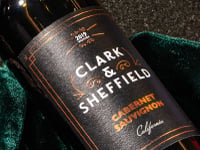
Okay, the final line. Again, a Bordeaux, this is a Seine of Steffe, a Prue Bourgeois, I'm not even gonna try pronouncing it. Lafite Carcassette.
Oh my, oh my.
You guys get a nose of this wine. Okay, you said Seine of Steffe, right?
Yes.
And that's Left Bank?
Left Bank, it is the northernmost well-established commune, we'll say. There's still properties above Seine of Steffe, but Seine of Steffe has a number of Grand Cru wines.
I mean, none of the first growths, but some great, great estates in Seine of Steffe. So what distinguishes Seine of Steffe as an appellation, it's on the northern tip, so to speak, of the Madoc. The gravel is what makes the Left Bank very famous.
It's that gravel terroir that sort of defines it. But there's a good amount of clay in Seine of Steffe as well. So quite a few of the Grand Cru wines, you'll see a healthy daub of Merlot because Merlot loves clay.
Okay, this one you cheated because everything else up until this point has been 12.5 percent on the label or lower, but something's happening in Bordeaux, it must be getting warm over there or maybe they're getting better at wine making too.
Probably a combination of both, but yeah, good point.
This one's what, 13 percent?
13 percent.
Yeah.
Well, now we're edging up there.
Oh my God, yeah, too much. Well, again, I bet you all are tasting that fresh fruit. It's not like a bludgeon of fruit.
This is really nice.
It is really nice. The peppery quality is there underneath the raspberries, and the raspberry is both primal and red off the vine, and it's also confit at the same time.
Yes, I agree. I agree.
Indeed.
Definitely more on the red fruit notes. I'm going to guess, I didn't look at the Sopage, but I'm going to guess there's a good amount of Merlot in there as well.
They usually grow around 70. It's usually around 70 percent cab, maybe the balance Merlot with maybe something else thrown in there, Petite Verdeux maybe.
But one thing I would point out that nobody has mentioned yet is the veil of minerally tannins that coats your tongue at the end of this wine. Oh, yeah.
Very typical of Santa Staff, the Appalachian in the Maidoc that is probably best known for its tannic profile.
What vintage are we drinking?
This is the 2016 vintage.
So it's already got a little bit of maturity.
One important thing to note about 2016 too, if I'm not mistaken, is that this is a very old estate, but I'm pretty sure it changed hands at 2016. I think the quality has gone up considerably, quite frankly.
They're using the same oenologist as the guy who works at Angelus, which is a pretty esteemed estate on the right bank, and pretty esteemed is a vast understatement.
Oh my goodness. So the nose here, I keep going back to the nose, and as much as I want to drink it, I can't get my nose out of the glass, because even underneath all that fruit is a gamey summer sausage, again, kind of smoky, fatty meat.
This is so complex. And it's also like sometimes complex can be a code word for like dialed back, but it's amped and complex at the same time.
No, I don't disagree.
Look at the vegetarian here getting so moved, he's referencing gamey summer sausage.
Well, beloved childhood memory, that deer bleeding out in our garage.
I just had a venison.
Oh my God. It wasn't bleeding out, it was being stripped, but horrific.
So what I'm hearing is that this is a dream pairing with venison.
Yes.
Hell yeah. This would be fantastic with venison.
This wine is incredible, Jason. I love this wine.
That Syrah would be as well, both of them.
This wine is incredible, right?
What's great is, this one's like in the mid-20s.
What?
Maybe mid-20s, low 30s.
Well, **** your Syrah then.
Although that the system has been quite maligned and is rather complex, if you look to wines labeled Creux Bourgeois, you're often going to get wines that are of classified growth level without necessarily paying the price for a classified growth.
So a lot of those wineries either, they just didn't make it into the classification, which was set in stone 180 years ago, or they didn't even exist at the time and they have no chance to get in.
So you're saying it's bougie but not too bougie?
It's exactly what I'm saying.
It's bougie. It says Creux Bourgeois.
That's precisely what this means that the wineries owned by the class of capital owners, rather than the aristocracy who may have owned the big chateaus.
All right.
I recall trying the 16 Lafitte Carcasset when it was released, and what struck me at the time was maybe what I thought was slightly heavy-handed use of oak, but I think everybody here would agree that that has integrated nicely at this point.
So absolutely.
Just in case you've tried this and think they were a little over the top, it's really come together into something quite beautiful at this point.
Now it's time for the question and answer portion of Barrel to Bottle, The Binny's Podcast, where we answer your question for a $25 Binny's gift card. Is it 25? Is it 20?
What do we do? I don't even remember. $20 Binny's gift card.
Right.
I can't believe you guys aren't going to take in the rampant inflation into account when we reward people.
$20 Binny's gift card plus a sliding 6 to 7.2% depending on the day of the week.
Nice.
Hey, they're lucky that we didn't adopt what I preferred with the method of, your award is dependent upon what I think of the quality of the question.
Yes, I like that. Some of the rewards would be classified as punishments if that were true.
Today's question comes from Jeff H via email. Jeff H writes, Hello guys, I really enjoy the podcast and have a question. Thanks, Jeff.
Can you use wine preservers like the ones Binny's sells to extend the life of spirits and liquors?
Why couldn't you? I would recommend doing that with older bottles you open. If you're in the dusty bourbon game, you want to do everything you can to halt further oxidation.
Shut up about the dusty bourbon game.
What are you talking about?
The dusty bourbon game is what like 10 people do.
There's a lot of people in the bourbon game.
No, more than that. But either way, yes, could you use a neutral gas to push oxygen out of the bottle, whether it's spirit or wine? Of course.
And is oxygen going to degrade the quality of the item inside? Of course. It happens much, much, much, much, much slower with spirits.
And you have to have a pretty trained tongue to taste it when it does happen. Okay. But it happens nonetheless.
The general rule is to just drink the stuff you open. And when it's like less than half full, try to call some friends over and finish the bottle. If you can't do that, the neutral gas is certainly a route you can take.
Greg's Infinity Bottle is always a choice.
Yeah, it's always full and empty at the same time.
It's a Schrodinger's Infinity Bottle.
I happen to have some Greg juice right here.
Yes, it's very good.
Gross.
There's a distinction here in the different kinds of preservation methods that we have.
One involves introducing something to replace the gas, and that could be inert gas, or it could be like marbles or something to raise the level of the liquid to make less air in the bottle. But the other method is to suck the air out of the bottle.
And since spirits are more volatile, I mean, you don't even know what that method is doing to wine. It could be pulling all the nose right out of the wine. I don't know.
I'm not a chemist. Chris is. With spirits, it seems like it would be even more susceptible to that.
Yeah, I think there might be something to be said for that, to be creating a vacuum and with the volatility of the alcohol and everything, it might be pulling something out of it.
It's certainly a higher strength spirit, I would think.
Molecularly, alcohol is very light, so I would go the neutral gas route, the inert gas route personally, because that just pushes the oxygen out instead of pulling it out.
Again, though, I think what's important to clarify here is what kind of time period are we talking about. I think when people tend to notice this, it's when they open a bottle of something special.
Let's say somebody gives you a really sought-after burden, or a really high-end single malt.
If it's something that you think you might open and really nurse drinking to the point of you might keep it for more than a year, then maybe this is an issue.
But I can tell you from experience having done that with, I always want to try things comparatively. I've tried bottles that I've had open for several years, and I can start to subtly tell the difference.
But if you're just starting, if you're talking about like a year, I really don't think it's something that you have to worry all that much about.
Yeah, this is a multi-year oxidative thing with spirits. But at the same time, a lot of people with large whiskey collections these days, like having a lot of them open, and they want to keep them as preserved as possible.
I think that is a good personal.
It's virtually imperceptible in the short term, unlike it is with wine. But it can happen. But let me throw a curveball at you guys.
What do you think about the added benefit if you were to be using inert gas with the category of cordials or things that have things macerated into them, where the volatile aromas dissipate much more quickly than something like bourbon.
Yeah, and they brown super fast too.
Yeah.
I haven't experienced a lot of cordials or liqueurs that brown or oxidize faster, I would say, than plain distilled spirits or brown spirits.
Because of the sugar?
I've got some actually really old liqueurs open downstairs that I've had open for a couple years now that I've been slowly using bits and bobs up for cocktails. I don't think it's made much of a difference, if any, at all.
All right.
So, I think it depends on what it is, but one that I have actually regularly noticed degradation on is something like creme de cassis.
So, that will show a browning in color and a change in flavor and aromatics in much shorter order than whiskey or something like that.
In that case, I think you're better off storing that bottle in the refrigerator to slow that process.
But as we always say, why not both?
Yeah.
Oh, totally. Absolutely.
Why don't you guys just invite more people over and just finish the drinks?
Do you think any of us have friends?
Come on.
The moral of the story is drink up.
Yeah, drink faster.
One thing that I can recommend, if you have a bottle that you think you want to try years later, you want a little bit of it in the future, the other thing you can do is pour it off into a really small bottle where you're filling the bottle all the
way, so that you have a very minimal amount of oxygen in there. That can be fun for keeping a little bit of, let's say it's a specialty bottle of bourbon, and you don't want to drink it all at once, but you want to be able to return to it a year or
two from now. Put it in a little teeny bottle and then keep that. Won't be exposed to as much alcohol.
Can't bury it in your backyard next to the barley wine.
Yeah. That's an old school DIY recommendation for wine too. Just put it in a bottle it fits in with little head space.
My recommendation is drink it that night.
You're gonna get a lot more life out of it.
All right.
$20 worth of answer there for Jeff. You know, we still do this segment.
Oh yeah, he got his money's worth.
It's just that Jason knows how to get the f*** in and out of a topic in 45 minutes.
Despite my best efforts.
Yeah. That was the Q&A portion of Barrel to Bottle, The Binny's Podcast, where we answer your question for a $20 Binny's gift card.
Write your question to us at commentsatbinnys.com or hit us up on social media, at Binny's Bev on Twitter, Facebook, Instagram, and soon to be TikTok. It's coming.
Yeah, about time. Roger's going to be doing beer dances on TikTok.
All right, Jason.
Apparently, Greg's going to be doing auctioneering too.
I mean, it came back, the ride in a bicycle came back, and I remembered what I used to do and still do. Write your questions to us. So Jason, thanks for bringing these five wines.
This is cool. I do not feel like I need to take a nap right now, although I mostly spat.
Thank you, guys. Thank you for having me. This was fun.
Yeah.
We'll have you back again sometime soon.
Absolutely.
Thanks, Jason. Nice picks.
Yeah, these are great.
Yeah, very good.
Except that one I didn't like. The rest of them were fine. Screw that chinon though.
That thing sucks.
Thanks to Statler and Waldorf for joining us on the Zoom call.
Thank you, Jim.
All right. Until next time, thanks for listening to another episode of Barrel to Bottle, The Binny's Podcast. We'll be back next week with, I don't know, Roger Makes a Bubblegum Margarita.
Until next time, I'm Greg.
I'm Pat.
I'm Chris.
I'm Roger.
And this is Jason. Hope to see you again.
Keep tasting. Say keep tasting. I don't know, you're really fucking that up, Jason.
All you gotta say is your name.
And this is Jason. Hope to see you again.
Keep, let's do this again. This is Jason. Keep tasting.
You didn't tell me this.
We need to clean read one more time.
You didn't give me a script.
I'm Jason.
I'm Jason. Keep tasting.