See Full Transcript
So, like 10 years ago or so, I was at a wine tasting, and it was like a big trade, wine tasting. And I went to this table with this winery, Clife Lede, they had a bowl of guitar picks. And that was like 10 years ago.
That is still one of the guitar picks that I use most frequently. It's like the perfect thickness and everything. So I think about Clife Lede every time I'm playing guitar.
It says on the back, these wines go to 11. So, cool story. Don't correct me.
Well done, Greg.
Hey, you're listening to Barrel to Bottle, The Binny's Podcast.
I'm Greg. I do communications at Binny's.
I'm Alicia. I do wine education.
Time out. Alicia, welcome back.
Thank you.
Missed you. Glad to have you back. And we have a guest today.
Hi.
That's me.
Am I introducing the guest?
Yeah, I'm not doing anything. I'm handing it off.
We do have a guest with us today. We are very fortunate to have Jason Lede here from Clife Lede Winery and Vineyard. Welcome.
Thanks for coming.
Thanks for having me. I'm excited to be here.
Sorry about your name.
It's okay. I actually like my name. Sorry about f***ing up your name.
It's perfectly fine. Trust me. I've seen all different, heard all different iterations.
Some people even imagine that there is a G in there and they think of Cliff Lede.
That's a new one.
When the G comes in, that's when I know they've probably tasted a little bit too much wine.
They're starting to see double. Jason, I want to get into it because we are privileged to have you and the son of Clife Lede.
Can you tell us a little bit about, I want to hear your story first before we get to the wineries, and your journey into wine. Sure. Because there are some people that don't take over from their parents, so I'm sure he's pleased that you are.
Yeah, I think he is.
I was introduced to wine at a very young age. My dad collected wine.
He was a big fan of Bordeaux wines, and so I remember him coming home from work trips and things and having these special bottles that he'd take pictures of me holding them and stuff, which is kind of funny.
But you look at them now and you're like, oh, that's kind of cool. We should open that bottle one of these days. But he collected wine, and that's the atmosphere I grew up around, someone that was really passionate about wine.
And every once in a while, he'd give me a little taste of wine, especially as I got a little older. And I never really liked it because he was a Bordeaux guy, and he loved aged Bordeaux as well.
So I think for a young palate, that's kind of a difficult way to get into wine. So I didn't really have any interest when I was 16. That's when he started the winery in Napa.
And so that was kind of just crazy because at that point in time, we were living in Edmonton, Alberta, Canada. We're a Canadian family. So different world, different world in a lot of ways.
He was a construction guy. So wine, luxury, high-end wines wasn't really a natural thing other than he knew that he loved to collect them. The first wine I remember enjoying, so there was this one day he comes into the room.
I'm sitting there and he gives me a little taste of wine. And I couldn't believe what I was tasting because it was just fruit forward and bold and concentrated and delicious. And I said, oh my God, like, what is that?
That's not like anything you've ever put in front of me. And he's like, oh, we call it poetry. And I was like, oh, so this is your wine that, you know, from California that you're going to be making.
He's like, yep. So that was it for me. I tasted that, you know, and I thought, okay, well, wine, wine, I guess can be can be pretty good.
Shortly after that, so I mean, that would have been 2003, 2004, right around that time, I started going out to Napa for my summer breaks in between semesters at school.
2005, just worked in the vineyard, worked in the cellar, learned as much as I could, came back in 2006, did the same thing. Again, in 2007, but in 2007, I decided to stay through the harvest.
So I took a semester off school, worked the harvest at Cliff Lady Vineyards. And that's when I really, that's I guess when it really solidified for me that this is what I wanted my future to be in.
Then I transferred to the University of San Francisco, graduated from there at the end of 2009, decided to go overseas to Australia, worked to harvest there 2010. And after that, decided I needed some sales experience.
But being a Canadian, I had to go back to Canada. I couldn't just come back to sunny California. So I went back up north and worked for a importer slash distributor slash retailer in my hometown of Edmonton, Alberta.
So I did that for three years, got my master's degree in business shortly after that. And that's when I went to my dad and said, okay, I think I'm ready. Are you ready for me?
And luckily, there was a position open in wholesale sales. So that's when it all started.
Grab a mop, son.
Yeah. Well, yeah, it was like here, you know, here you go. Just threw me to the wolves.
I had a lot of great markets, a lot of our smaller markets, but a lot of opportunity there as well. So did that for four years. And then the last two years, I was, I managed the hospitality centers, the tasting room.
I did that all through the pandemic, which was a great way to learn about hospitality, shutting down and opening up. Hiring people and laying people off, it was tough, but it was a good way to learn.
And then just last October, I moved into what I'm doing now, which is Director of Communications. So doing a little bit of everything with all our different departments.
And of course, coming out and celebrating our 20th anniversary, doing things like this.
No offense, but that's a fake job. That's not my business card.
I just, you know, I'm a Beastie Boys fan, so I was like, it's like the ill communications. I'll just look at it that way. Like, you know, that's a good title.
That'll fit. It's a great position.
I mean, like I mentioned, I get to work with all the different departments on various different projects, make sure we're all saying the same thing on the inside and then working with our trade and media and community on the external side too.
So it's great. I get to be the brand ambassador that I've always wanted to be. I get to travel around the country and do things like this.
So it's really wonderful. I get to represent an awesome, awesome portfolio of wines.
So as we celebrate 20 years of your wine, we are going to taste through here, but we have six wines.
Sick, I didn't even know you had six wines.
A lot to go through, just to kind of get some wine in our glass, if we don't mind kind of diving into this oven you bunk. And as we pour that, I'd love to hear anything else that you guys are doing.
Are you doing any special bottleings for the 20th anniversary? How else are you celebrating this occasion?
I think number one, we're doing these 20th anniversary tours. So we've got a variety of destinations that will be hitting up over the next six months. Doing events, everything from trade dinners, which I just finished up and came straight here.
So I had a great group of buyers from all the great local restaurants. So of course, doing consumer events too. So tonight we'll do a wine dinner as well.
So a lot of it is the events. We are doing some special releases of library wines and things like that to celebrate that history. Those wines will be coming available in the next few months here.
And then I would think when we actually start releasing our 2022 wines, that's when we'll probably have some more of an anniversary product, if you want to think of it that way.
Focusing around the library, looking back at what we do great, I think is a wonderful way to tell our story. I think starting here with the Sauvignon Blanc is a great way to tell our story too.
I mentioned my dad was a big collector of Bordeaux wines before he got into making wine. All of the wines at Cliff Lede have this Bordeaux inspiration to them. Look, we're in Napa Valley.
We're proud Napa Valley. We're rooted there. But we have this nod to tradition.
Between the reds, the whites, everything at Cliff Lede is a Bordeaux style blend.
Here you've got some Sémillon, you've got some Sauvignon in the blend, still predominantly Sauvignon Blanc, but it has that essence of the richness and the roundness that you might find in some of the greater renditions of Sauvignon Blanc in White
I love the texture that the Sémillon brings, the body, a little bit of waxiness on the mouth.
The herbal quality, is that the Sauvignon Blanc itself?
Probably coming from the Sauvignon Blanc, I would think.
We have a variety of sources from the midpoint of Napa all the way up through to Cal Stoga. You get a lot of different tools to work with when we blend this wine together. The other key thing here is it's fermented three different ways.
You've got stainless steel, neutral oak, and concrete. We use the egg-shaped fermenters as well. If we break it down percentage-wise, you're probably 55% neutral oak, about 40% stainless steel, and then just 5% concrete egg.
Retaining that freshness and the brightness from the stainless, polishing those edges a little bit with the neutral oak, we'll stir those barrels weekly to get that lees, that weight that it'll bring to the wine.
And then concrete eggs kind of do that naturally. So you mentioned the texture.
I mean, the waxing is certainly from the cimeon, but that weight, the way this kind of sits in the corners of your mouth, that's that neutral, I'll call that lees contact that we're proud to have in this wine. It makes it a very unique style, right?
It's so, like the acidity is so juicy, and just like, I want more of it, but it has such a clean, mineral finish.
This is a cerebral Sauvignon Blanc. It's a thinky Sauvignon Blanc.
How long have you been doing the three different types of fermentation? I mean, that's kind of an expensive way to approach Sauvignon Blanc, which a lot of producers will just throw on a big stainless steel vat and call it a day.
Has that been 20 years or is that relatively new?
No, it's been an evolution. It started off mostly stainless steel fermented, I'd say probably from 2002, the first vintage, up until maybe 9, 10.
We started playing around, well, I believe it was eight or nine when we started playing with concrete, but the neutral oak thing didn't really happen until 2012. That's when we brought Chris Tynan in. He's our current wine maker.
And he saw what we were doing with the concrete egg and we were using a little bit of Semi-Own back then too, but it was like 2%, 1, 2%. And he kind of wanted to push that envelope. He said, we're again, Bordeaux inspiration here.
Let's kind of rethink what we can do with this wine. And just build it into something even more special. So you're right.
It's a lot more thought and care and love that goes into this than your typical Savian Blanc that you might find out there. But we wanted to make a wine that we're extremely proud of, that we love to drink.
And we feel like dialing those percentages every other year, they do change. And that's part of who we are as a winery.
We like to have a certain style to the wine, but we're not afraid to experiment a little bit and change things from year to year if we feel it's going to make a better bottle of wine.
So I would say since 2012 is when things really took this direction to become this more, a little bit richer, fuller, a little bit more weight and texture than previous.
Yeah, it is certainly a sophisticated Sauvignon Blanc, no doubt.
Great with food too. I mean, this is like something that's versatile. If you chill it down, you can have it by the pool.
Of course, it's going to serve that need if that's what you want, but then maybe you're having a barbecue by the pool, and you have some shrimp or something like some seafood on the grill, this will certainly work well with that.
For our listeners, they're hearing more use of concrete eggs. Can you share top level of what is this doing to the wine? Why have you chosen to use it in your fermentation?
So, during fermentation, you've got a lot of activity, right?
The wine is warming up, it's kicking off CO2. There's just a lot of motion in the vessel. So, what concrete does is it kind of contains that in a unique way.
As your lees, your dead yeast cells, things like that are making their gravities, pulling them down, the natural shape of the egg sort of forces them to hit each other through the middle and come back up to the solution.
So, there's this natural stirring. Concrete is also porous, so you get a little bit of that softening that you would expect out of something like neutral oak.
I think it has become more popular and I think we enjoy what we get from using concrete, but I don't think it's something that we see, we want to like expand greatly.
In fact, I think the neutral oak is something that's more intriguing to us because you have a little bit more ability to stir weekly if you want. Maybe it's every other week.
We actually use a combination of used burgundy barrels and the elongated cigar style barrel as well to really get that, increase that surface area to wine ratio.
So, really incorporating that lees component and letting the wine interact with that throughout its life cycle. So, I think that to me, that's the more interesting of the two formats.
Looking at the 2021 vintage, which we're tasting 2019 today, but 2021 coming out in the next month or so, that is a higher percentage of neutral oak than we've ever used before. The vintage itself was great 2021, beautiful year, lower yields.
We were able to bring our Sauvignon Blanc at a little lower bricks than we normally would. And because of that, we built a little bit more of the richness through that increasing that neutral oak.
And I just tasted the wine last week and I was just floored. It's fantastic. It's just like, it's a little bit more elegant than I'd say the 2019 was.
Yeah.
Well, we will look forward to that.
Yeah. Very excited for that.
All right, Fell Chardonnay?
Fell Chardonnay.
What's a Fell?
Fell is a tribute to my grandmother, Florence Elsie Lede, so it's her initials, Fell, F-E-L, Florence Elsie Lede.
You know, if we step back in time, I mentioned, of course, yeah, Cliff, big Bordeaux collector, but you know, what sparked that love for wine? Well, it was his mom. Growing up, I mentioned we're a Canadian family from Edmonton, Alberta.
She liked to make homemade wine, and I still think to this day, Ed, I don't live in Alberta anymore, but I'm pretty sure there are still are no grapevines in that province. So she was not making, you know, Pinot or anything like Chard.
No, she was making fruit wine, you know, like many grandmothers do.
And that was how my dad got introduced to making wine, was just helping his mom out in the basement, making fruit wine, and it set him off on this sort of something he was intrigued by.
So even when he was in his early 20s, he started, you know, going to the local wine shops and tasting wine and engaging with staff there and learning about wine.
And he had his aha moment at a local shop when they gave him his first taste of Bordeaux. It was some, I think it was a Dew Crew from the 80s that just like, boom, that was it for him. He's like, I never taste anything like that in my life.
Kind of like me with the poetry, right? It was like, that's the wine. So we decided to pay tribute to Florence, grandma, with the naming of this wine, because she was truly the one that started us on this path of sort of appreciating and loving wine.
So that's the genesis of the name. The wine itself all comes from the Anderson Valley. So we're 80 to 100 miles northwest of Napa, depending on where you are in the Appalachian.
So cooler climate, closer to the coast. It functions a lot like Napa does in that you have warm days and cool nights back and forth. The coastal influences crucial to the grape growing up there.
And we started this project shortly after acquiring the Savoy Vineyard. So my dad always truly believed that to anchor your winery, your brand, you needed to have a top notch estate property.
So he did that in Stagsley District where we've got 60 acres, but in the Anderson Valley, for him, it was the Savoy Vineyard. So that's a 44 acre site. There's about five acres of Chardonnay.
So not a lot of Chardonnay, but a portion of that will go into this wine. And then we source fruit from a few other sites, but the most prominent being the Farrington Vineyard, which sits in the south end.
So you're getting really some of the best vineyards that, you know, grow Pinot and Chard in the Anderson Valley in this bottle right here. Now, this is a wine of style as well, right? Of course, any Chardonnay is, what's the style?
That's what you got to find out nowadays. We wanted to make a wine that really sort of spoke well to the Anderson Valley. Being cool climate, we wanted the natural acidity to come through.
We wanted it to be bright and just sort of lifted and not your classic oaky buttery style.
That it is not.
Thank you. I'll take that as a compliment.
A person whose desert island beverage is white burgundy, what do you think?
I completely agree in that, first of all, the acidity is lifting it throughout your entire palate, and you're really kind of concentrated in these pure stone fruits and even some like ripe orchard and citrus.
But yeah, it's not round in terms of like, it's not this like weighty presence on your palate. Yeah, are you doing just kind of a really gentle kind of oak regimen here?
Yeah, so-
You can get it in the texture and there's a little sign of it there kind of in the aromas and flavors, but just ever so much.
Yeah, so this is 100% oak fermented, but it's neutral, 100% neutral oak. So these are barrels that we've used for multiple vintages at this point. Some of these barrels, they're over a decade old.
They're barrels that Ryan, so Ryan Hodgins, our winemaker for Felwines, he's had these barrels in his program forever. He's been making wine in the Anderson Valley since 2005.
So he kind of has this collection of these old, these old oak barrels that he loves to use.
So you're not going to get a lot of those oaky flavors, but you're going to, again, as I was talking with the Sauvignon Blanc, you're going to get that, you know, polish those edges, just round things off a little bit.
You know, if you went stainless steel here in the Anderson Valley with this style, I mean, it can be fairly astringent, fairly, you know, acid bomb style Chardonnay, which we feel using that neutral softens that just perfectly.
Everything's aged on the lees, but we're not really stirring here. We kind of just let everything rest on its gross lees as it ages for about eight or nine months. Do you like that term?
Gross.
Gross. Don't stir it up. Just leave it alone.
Yeah, just let it be.
I don't know how many times in one podcast I can say I'm sorry.
I'm not the one who said gross.
It's gross lees.
Yeah. That's the technical term. So I'm trying to flex my winemaking muscles here a little bit.
I'm trying to show off a little bit of my terminology.
All right. I'm glad to be the chuckle nuts on this one.
It's so vibrant. This is a Chardonnay for an ABC drinker and anything but chard, right?
It's so vibrant and juicy and I think that ABC drinkers like, I don't like Chardonnay because it's too oaky, because it's just too round and this is something that I feel like anyone would enjoy.
It's fresh.
It's very fresh.
It's lean, it's focused, which isn't to say it doesn't have any fat on its bones, but yeah.
Yeah. The fruit is really pure. It's not, a lot of times we associate tropical fruits in California Chardonnay and as mentioned before, it's more restrained than that thanks to its cool climate and some probably early pick dates.
So yeah, beautiful wine. And sorry, how long have you been doing the fowl?
So the first releases were 2012 on the Pinot Noirs and then the Chardonnay would have been the I believe the 2014 was the first fowl Chardonnay vintage. I should also mention that this has no malactic fermentation.
So that's another key piece of all of this, right?
So and a unique one.
Yeah, I mean, that's the beauty of Chardonnay, right? Is you can have kind of literally everything depending on what the wine maker wants to do.
But we found that by limiting the malactic, you really retain that gorgeous, like Granny Smith Apple freshness. And then the neutral oak, again, just balances it off. That leaves gives it a little texture.
So, I mean, you mentioned that little bit of fatness is there. I mean, I can see that. And as this wine ages, I mean, even two, three years from now, this will continue to pick up a little bit more of that weight.
Delicious stuff. I love it.
Yeah, I can see just kind of like this hay, like nuttiness coming in a few years. Well, more than a few years, but five plus or so. It's a beautiful wine.
And yes, as a diehard white burgundy lover, if you like those really kind of classic, elegant expressions of Chardonnay, this is the one.
Do you have a library of these?
We don't keep a lot of library of this particular wine, more so on the Pinot Noir side, the single vineyard Pinot Noirs we make. We do make a Savoy Vineyard Chardonnay. So a single vineyard selection, we make like 200 cases or something, not a lot.
But that one, that one's a little bit more age-worthy in that we do allow some aloe lactic and we use a little new oak on it. It tends to be a bolder expression from the vineyard, something that does well with some years on it.
Speaking of fruit wines, I took a vacation last week. We went to Southern Illinois. I don't know if you know this, but it's a beloved wine region for counties around.
Okay.
Stopped by a winery there.
And I think I might have been the only person who was like, can I try the Cab Franc? Can I try the Cabernet Sauvignon Merlot blend? Can I try the Chardonnay?
And I named the only three wines that weren't like blueberry razzmatazz. Orange, vanilla, you know, whatever. I don't know why they do that.
Why do they do that? But yeah, wrong audience. Still have that bottle of Chardonnay if you want to try it.
I mean, I was hoping for the Creamsicle one, but.
I'm just imagining Clife Lede at this tasting bar drinking to crew and being like, yeah, this isn't fruit wine.
This is really good.
Right.
Yeah, that was it for him. That was it. But, you know, when he collected, it was at that time when you could kind of access some of those things.
It wasn't as difficult, especially in Canada. I mean, he would go on work trips and he would stop in at the little liquor store and they'd have a case of something and he'd load it up and take it home.
My grandpa used to tell me that, you know, my dad would ask him, hey, can you stop at this store up in this?
Because you got to know Alberta, know where Grand Prairie is, but it would like, go stop at this store in Grand Prairie and pick up this case for me. So he just, you know, he found a way to find those wines and that's how he got into wine.
Learning, collecting, reading all the Robert Parker newsletters and learning about all the Chateau. I mean, it's, you know, it was a hobby, a very passionate hobby of his.
More Canada real estate references, please.
I was like, am I really going to throw this out there? No, I'm not.
We might have like one listener in Alberta, but you know.
Oh, we should look that up on the stats. Shout out to those couple of people in Canada who are listening to the podcast.
Shout out to them.
All right, so let's go to the Savoy Vineyard Pinot. You know, this is, you mentioned at your estate, this was your purchase up in Anderson Valley. So what was so special?
What drew you to it?
Well, the Savoy Vineyard has been, you know, around much longer than even Cliff Lady vineyards. So, you know, this vineyard was established in the early 90s by Richard Savoy.
And, you know, his whole goal here was to grow excellent grapes and work with the best vintners to make excellent wine from an excellent site. He never intended to make his own wine.
And so he assembled, it was like, you know, the Avengers cast of Pinot Noir producers. Ted Lemon of Litteri was the first to kind of come on board, help him design the vineyard. He was the first to vineyard designate Savoy, I believe, in 1997.
And then shortly thereafter was Eric Sussman of Radio Couteau. Started making Savoy Vineyard, I believe, in 2002. And then, you know, on and on, there's been some that have come and gone.
But we were introduced to Richard in 2009. And well, my dad, through his magical ways, was able to acquire this gorgeous vineyard. And we continued the tradition of selling fruits.
So Litteri, Radio Couteau, still purchased grapes from us. And then, Fela, Pei, William Selyem, just really, again, like the Avengers cast of great Pinot Noir producers coming together, you know, just elevating this estate property.
So this is our take on the vineyard. Fun fact is Ryan, our winemaker, has actually been working directly with this vineyard since 2005. So he's got a pretty long history and knows every vine on this property.
So he makes a wine, I feel, really helps tell the story of Savoy. It's an assemblage of all the different parts of Savoy. So you've got a couple of rows here, a couple of rows there.
You've got some Pomard clone, you've got Calera and Mount Eden, the Heritage California clones, you've even got a mixture of different Dijon clones on the site. So what comes through in the wine is the vineyard.
It's not a specific clone from a specific section. It's the sum of all of those parts. So that's what I look for when I taste this wine.
I mean, the fruit that pops out of the glass, those aromatics that are just like, you know, just beautiful. That's those heritage clones from California coming through.
This wine smells awesome.
Yeah, it's like cranberry and mulberry and dark raspberry.
And there's like a hint of vanilla and even a hint of like orange or orange blossom. But then when you sip it, the the herbal qualities just totally pop. And like cola notes, you know, that's awesome.
Yeah, Greg doesn't get this excited about many wines.
So that's true.
I'm jaded.
This is an exciting wine. I agree. I mean, every time we get to open this, I just, yeah, I get excited.
You know, it's a wine that I find drinks fairly well, like straight out of the gate. Like when this wine is released, it's just a lot of those beautiful, high tone fruit qualities come through.
And as it ages, I mean, you just get a little bit more integration and some of those more ethereal elements start popping out. But I just love how the combination of those heritage clones and then sort of the old world clones come together.
You still get a little bit of that earthy quality, that herbaceousness. Greg was picking up on there is there. And Savoy, it's a vineyard of place.
I mean, right across the street is the Hendy Woods. Beautiful place to go for a walk if you're ever in the Anderson Valley.
And as you're walking through there, you know, you're crunching on all the pine needles and the mossiness, a little bit of mushroom. And I'm like, that's exactly what I smell in this wine.
Like, it reflects that place so well as most Pinot Noir does, but just being so unique in that, you know, it sits in this really special part of the Anderson Valley and it comes through in the wine.
I mean, that's that's why I love drinking this wine. It takes me it takes me directly there.
I know this one's do.
Yes, precisely. I just also think you all and the vineyard, as you're describing, has just nailed the structure. The tannins framing the wine, I think, are so balanced and precise.
It's incredible and really kind of holds the wine through the palate.
So, I'll say thank you on behalf of the winemakers. I don't want to act like I make the wines, but yeah, no, they, Ryan has, again, he has that history with the vineyard for a very long time.
Sarah Greene, who's now our winemaker with Ryan being the director of winemaking, but Sarah Greene coming in the last few years has really elevated what we're doing, and the wines are getting better and better and better and better and better every
year. They're always exciting when the new releases are coming out.
So, Jenna was cyber-stalking you guys ahead of this, and she said your director of winemaking has what?
An English and art history degree, which Greg has an English degree and I have an art history degree.
Okay.
We're feeling kind of outclassed here.
Yeah, and neither of us are doing anything with those degrees. So, there's hope for us yet.
I do words.
We could be director of winemaking some day somewhere.
With our powers combined.
You got it.
Hey, you got to have a dream. That's what Cliff had. He had a dream and he went for it.
And, you know, still do it.
So, Cliff, 20 years ago, is up in Alberta, right?
Yes.
And he decides, I love wine. And that's just fruit wine. And I'm going to buy vineyards in Napa Valley.
Yeah.
In a sense, yeah.
So, he chose Stag Sleep. So, can you tell us what attracted him to Stag Sleep? Sure.
What should our consumers associate with Stag Sleep? But why did he land there and how did that go?
You think he should have gone at the Finger Lakes?
Well, it would have been a little more similar to home. A lot of fruit wine and Concord grapes throughout New York. I'm from Buffalo, so shout out.
But anyway, yeah, what about Stag Sleep? And how did, was he just Google mapping around? Oh, that looks good.
I don't think there were Google maps that long ago.
MapQuest, that's how he was getting around. Printing them out. Yeah, exactly, right?
Well, it was an evolution, right? So, I mean, he was collecting wine through the 90s and he actually went over to Bordeaux in the mid 90s. And that's when he, that idea of like, oh my, I gotta get a piece of this somehow.
That's when he kind of really started thinking seriously about it.
You know, a couple of years after that, he was in Napa on a work retreat and he was, you know, he runs marathons, he's a jogger, so he would explore all the back roads and he just, there was one particular day, it was in the middle of February and,
you know, he's in like shorts and a short sleeve t-shirt. Again, being from Canada, I mean, Chicago, you guys know, like February weather is not like that.
So he was like, okay, so it's got perfect weather, it's beautiful, like the landscape, the people are great, the food, and then you've got Cabernet Sauvignon, you've got Merlot, Cabernet Franc, Sauvignon Blanc, you've got all the Bordeaux varietals
being grown around. So he's like, well, why not Napa? So he came back again a couple of years later, that would have been right at the end of like, like 99, early 2000, maybe like 2000.
He came back one more time and that's when he was like, okay, I gotta start looking around.
And so, you know, he was working with a few people that he had met and, you know, of course, if he was gonna establish his own, you know, his winery, it was gonna be Oakville, it was gonna be Stag's Leap, it was gonna be Howell Mountain.
It was, you know, it had to be prime, a prime appellation.
Of course, Stag's Leap was the top of that list because, I mean, Stag's Leap District, if you're gonna grow these riddles that I was just referring to anywhere in the world, outside of Bordeaux, and by the way, I should say that the only reason he
wasn't looking there is because we don't speak French. It's very far from home and it's just culturally different. It would have been a much bigger step for him to do that. So when he found Stag's Leap, he was like, this is the perfect place.
You've got such rich history with the Paris Tasting that really put Napa wine on the map. You've got such a small community. There's only, I think, 16 wineries in the district.
It's the smallest appellation in Napa, so it's very unique to that. And it was the opportunity as well.
So, I mean, there were other vineyards available, but the fact that this was 35 acres initially, all contiguous on the valley floor, with an opportunity to purchase grapes from the hillside, which is now what we call the Poetry Vineyard.
We were able to acquire that vineyard the very next year in 2003. To him, it was to have a piece of almost history. Stagley District is that world-class neighborhood for Cabernet Sauvignon.
People know that. People recognize that when they see it on a wine list or on a shelf at a store. It's a very unique part of Napa Valley.
We talk about those high ranges and temperatures throughout the day. That's what Stagley is. It's not the warm part of the valley.
You know, Calistoga in the north. It's not the cool part. Carneros in the south.
It's like Goldilocks. It's like just right. So we love the wines that come from there.
And that's what really pushed him to deciding on that over the other options.
Awesome indeed. So are we going back to Stag's Leap now?
Yeah.
So we do have the Claret, which we should probably go next.
So this one's kind of special, right?
This is a special wine.
We're very excited about this one.
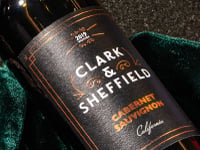
We're pouring right now 2019 Clife Lede, Napa Valley Claret. This is a special one. This is a Binny's exclusive in the state of Illinois.
We just brought this in, and we had some folks out in Napa recently, our buying team, and they tasted this wine, and just fell in love with it, and they and the team at Clife Lede just made magic happen to bring it to us.
So do visit your local store to try this out because it is a unique offering, and I'm excited to hear about it because it's my first time trying. So, Jason.
So the Claret's a wine we've been making since really since the beginning. In fact, I think there was a year where it was a Stag's Leap District wine because we had a substantial property there with a multitude of wines we were trying to create.
But the Claret was something that we started or continue to do as a wine that sort of brings all of these wonderful Appalachians and vineyards together that we work with throughout the Napa Valley. So, we do make Stag's Leap District wines.
Of course, that's our home base. But we also buy grapes from some growers in Diamond Mountain, in Howell Mountain. We work with the incredible Tocallan Vineyard.
Of course, we make a Tocallan bottling. And of course, our Stag's Leap District property, we own a vineyard as well. And in Calistoga, it's a 20-acre vineyard there.
So we do these these, you know, sort of single vineyard Cabernet bottlings from all these various sites. And, you know, really, like those wines are precise to those areas.
And there's always going to be little things that don't make it into the cut when we come down to the blending table.
This is the goulash.
If you want to say that, that's actually a nicer term that I've heard. But it is a blend. It is a blend.
That's what we're talking about here. We're talking about how this wine brings together all of these great sites. There's a certain percentage in here from the Tolklawn Vineyard.
There's a certain percentage in here from the Poetry Vineyard. There's a certain percentage in here from Howl Mountain and Diamond Mountain. It's very much a Napa Valley red wine.
It is predominantly Cabernet Sauvignon, but there's Merlot and Malbec and typically some Cabernet Franc and Petite Verdot in there as well.
What we find is these are typically lots that are just a little bit more approachable, and that's the style of the wine. It's just a very approachable.
If this is a Tuesday night pizza wine and you want to have something nice, I mean, this is that wine that's going to deliver without having to really think hard or spend over $100.
A couple things. I want to correct the goulash comment here because I don't know, when I think of goulash, I think of that the ingredients were-
Leftovers.
Well, leftover, that's fine, but they didn't start in a fantastic place, but this is different. This is like leftovers from the Michelin star restaurant that you took home food from.
Maybe not that you would really do that, but you get what I'm saying.
Yes.
Point is, there's some-
It's not really dumpster diving here.
There's some really great fruit in this wine. And then also too, for those listening here and kind of pizza wine, I too want to, again, elevate because-
Yeah, pizza wine, you're not doing yourself justice there.
Because, I mean, we're talking, this is still a-
I like pizza.
Well, you came to the right town.
This is still a serious wine. And you get it in the fruit expression, you get it in kind of these like earthy, savory herbal notes that are coming through, you get an etanic structure.
There's so much cocoa.
It's an awesome wine. I really like it. And as we kind of go through the other cabernets after this, you're right in that it's approachable and that if you're just having a glass too before you go out, you can have this.
You can serve it with kind of a variety of things. You don't kind of need something super serious on the on the plate, but yeah.
But you could, yeah. I mean, you could take this with a great piece of grilled steak, of course. Like, you know, it's yeah, the pedigree of the vineyards involved here.
It's a great wine. So happy for you guys to have this available for everybody.
Yeah, this is rad.
Yeah, very exciting to have. Yes.
And if you're the person who listens to this in Canada, I don't know where you can get it.
Is there any Lede family members still in Alberta?
My sister still lives there, raising her family there, but we're actually bringing her down to California this summer. So we're excited that she's finally going to make the move.
Making the move.
Yeah.
So we can't even tell people to go knock on her door and get some bottles of the clearance.
I mean, before she moves, maybe she'd probably be happy to share the wines because I doubt she wants to bring a bunch of wine down to Napa Valley. So yeah, we're looking forward to that.
What's the plural of lady? Is it like Ledi?
No?
Or Ledi?
It's Ledi.
That's an Italian joke.
It's like, hey Ledi.
Jim's not here to get it.
Whatever.
So, we have a wine now that we sell a lot of, that our consumers love and we enjoy, and probably the label most recognized by the public. So, we have 18 cabs off here. Yeah, the philosophy, the approach.
What do you want people to think about when they see this on the shelf?
I want them to think, that's the bottle of wine I'm going to buy today. But no, I mean, it's a representation of our estate in Stag's Leap District. You know, I will say that this is not 100% estate.
We do buy a little bit of Cabernet from our neighbors, the Stelzner's just south of us, but this is effectively like 95% estate fruit.
It is of course a Bordeaux style blend, so it does say Cabernet Sauvignon on the bottle, but there is some Cabernet Franc, Petite Verdot, Merlot, Malbec all sort of contributing to make this wine even more incredible.
But the base of this is Cabernet Sauvignon from our estate property. Now, I think the key thing about this wine is trying to understand what this vineyard looks like and how it functions.
And if anybody's interested, you can always go online to ladefamilywines.com and you can see the map of our estate vineyard and get a sense for what I'm about to talk about. You've got 20 acres of hillside vineyard, that's what's on that label.
So when you see that on the shelf, you see that hillside vineyard, that's 20 acres, we call that the Poetry Vineyard. That's our, you know, AAA, our sort of our top tier cabernet is grown on that property.
We do make a wine called Poetry, which we'll taste next. But some of the younger vines that don't make it into Poetry contribute to this wine.
The other section of the vineyard is down on the valley floor and it extends down from the hillside and it reaches towards the Napa River. So with the hillside and our valley floor vineyard, you have this very long strip of land.
And that matters because you have an incredible diversity of soil type throughout the property. The hillside is mostly volcanic, big rocks underneath a very shallow layer of soil.
Those vines have to work extremely hard to find water and to establish themselves. As you come off the hillside, you have eroded alluvial soils that are still wonderful for Cabernet but they give you a different expression.
Then as you reach the western edge of the property, the soils are basically clay because you're right next to the Napa River. That's where we've got most of our Merlot planted. Things like Malbec are being grown down there as well.
This wine brings that all together.
You get this expression of the estate, of Stag's Leap District, of all five of the Bordeaux Red Varietals that contribute to make what we feel is like just a beautiful expression of not only Stag's Leap District but of Napa Valley, and sort of a nod
to respect for the old world in that there's ageability here, there's structure, there's acidity. Wonderful core fruit, of course, because it is from Napa Valley. It's tried and true.
This is the wine we've been making since day one, and I think it's just a fantastic...
Could be a pizza night wine, depending on how gourmet your pizzas are, but yeah, this is something you'd want to have, special Friday night dinner or put in the cellar for a few years.
It does seem to take itself a lot more seriously.
Yes.
Bigger in almost every way.
Bigger, but the fruit isn't overly concentrated. It's not a big fruit balm either.
As you talk about the influence from the old world, that's the herbal component in the wine, and I don't know how much Cab Franc is in here, but you can definitely taste it, and then also that eucalyptus sage note too, that's coming through, and old
It has a sanguine quality.
Can I say that?
Yeah.
She gets mad when I say it tastes like pennies, but it doesn't, but I bet that makes it pair with meat pretty well. A mistake.
Yeah.
Absolutely love it. I mean, you guys have had a series of good vintages there.
Anything that makes 18, how would you compare it, as the 19s will come out soon, but how would you compare this so customers know what to look for as they shop both vintages?
Yeah. I mean, I'll say that we're extremely fortunate to have the climate we do in Napa Valley where you really only have at least good vintages, mostly great vintages. You never really have anything that you would consider otherwise.
Of course, most recently with from 13, 14, 15, 16, 17, into 18, into 19, just exceptional quality across the board.
18 was really what a winemaker would consider to be just a perfect year because you had warm summer, those warm days, cool nights, back and forth, no major heat events throughout the summer.
Maybe you'd hit a few days of 100, but it never really had these massive heat waves. And the season really extended far into October. I remember driving around in 2018 and seeing fruit on the vine close to November that year.
People were really pushing some of their hang time.
So I think that that's what is special about 18, is that you could really, even when you're bringing the fruit into the winery, you could do it at a pace that made sense for your team and you could take your time and you could really be meticulous
about everything. And that's reflected in the wine. The quality is exceptional. I mean, this particular wine, the Stagsley District Cab from Cliff Lady Vineyards, this is 93 points, I think, every year, which is a great score.
But we've got some great scores continually on this wine. I will say that when you see the 2019 start hitting the shelves, that's another very special wine.
I feel like there is a difference between 18 and 19 that you could only really taste if you had the wines in front of you. 18 to me, and this is within our wines, has a bit more bold and concentrated and a little bit more structured quality.
19 has a little bit more of a lift and a prettiness to it. I don't know why that is. I don't know if it was a wine making difference because literally we had back to back vintages where things were just like perfect.
So anything that Chris did in 18 that he might have wanted to change, he got to do that in 19. He got to make tweaks here or there. I don't know if he did anything different or not.
I honestly think that he just, you know, every year he makes decisions based on his gut feeling and what the data is telling him. But I find that the 19s have a little bit more prettiness, if that would be the word.
Both great wines, both exceptional. Yeah, I would add both of them to the seller and watch them age over the coming years because it'll be one of those, you know, which one turns out to be a better vintage.
We may not know for 10, 15 years until things are, you know, we're looking back on them.
I think that's one of the most fascinating things about wine itself. In the wine industry, we like to simplify things and like identify this tasting note comes from this technique and then like break things down to that. But there's so much involved.
I mean, in terms of the grapes and where they are, and the direction of the slopes, and how late in the season you pick them, and how late in the season you can pick them, and different yeasts, different barrels, different sapage, different ageing
times. It's so amazingly complicated. And yeah.
But at the same time, it's like the most simple thing too, because it's like, you know, people have been making wine for thousands of years, and, you know, it doesn't have to be... You don't have to overthink it, right?
Like you can kind of have a strategy that you follow every year and continue to make exceptional wines. And I think that's when you have a winemaker and a team that understands a vineyard and how to make exceptional wine.
And I truly feel that's what we have at Cliff Lede. And it fell wines too, you know? We just have people that are excelling to the top level.
Like they're just making incredible wine.
Is this poetry that we have in the glass?
It is.
Thanks for the short pour, Alicia.
Plenty there for you, Greg.
It's been a long day, all right?
Yes, we're having poetry now. So this is the flagship wine. This is not 100% hillside because we do grow such excellent merlot on that west side of our property.
So there's a little bit of estate merlot in there, but it's predominantly Cabernet from our hillside vineyard. I mentioned that these are volcanic soils. The vines are working extremely hard to access water.
I mean, you look at these vineyards that are 10, 15, 20 years old, and they still look like they're only five or six years old because they are just having such a challenge to establish themselves.
And so because they're working so hard, you get hyper concentrated fruit, small berries, thick skins. This is a wine that when it comes into the winery, we have to be very gentle. Our winery itself is set up for that.
We use gravity flow and when we move these grapes to tanks, so we try to be as gentle as possible. And Chris is just a master at getting what we want out of this vineyard, which is just exceptional Cabernet Sauvignon.
So we've been making poetry since the beginning. If you've ever been to Napa Valley, you probably have seen the famous Welcome to Napa Valley sign. And on the bottom right corner, there's a little quote that says, And the wine is bottled poetry.
And that's a Robert Louis Stevenson quote. And my dad, at one point, he was the tourist in Napa, and he went and saw that sign, and he was like, oh, that's really pretty.
And then when it came to establishing his flagship brand, he recalled that sign and was like, oh, poetry would be a great name for a bottle of wine. And everybody on his team laughed at him.
There was like, there's no way that you could get that name. There's no way somebody has been making poetry. There's no way.
And he's like, well, so what? What's the harm in trying? They literally were trying to talk him out of it.
And he was like, well, so what's the harm in trying? So they tried, they filed for it, and it turned out that it was available. So yeah, here we are, poetry.
That's more or less the genesis. I mean, you can really look at poetry as like so many different things and the beauty of so many different things in Napa Valley. My dad's a huge music fan.
So he looks at like the lyrics of his favorite songs as poetry.
This is better. You got to retcon a better origin story than he stole it off his side.
Yeah, I know. I'm just being real. I mean, that's what it's all about, is being authentic, right?
Authentic wines and that's an authentic story.
It's great because it probably wasn't taken because so many people thought the same thing. Oh, that's got to be taken already and here we are.
It's like naming your band like Nintendo or something.
Yeah, it just seems so obvious that you're not going to try it.
We're Taco Bell.
Taco Bell.
So anyway, poetry.
Yeah. Perfect pairing suggestion. Thank you.
In the winery, can you talk us through the difference here and just in the approach from your Stag Slit cab to poetry?
Sure.
I would say the main difference, I don't know if there's a massive difference. I think the difference is more in the vineyard.
In the fruit source.
Yeah. Taking care of the poetry vineyard is a lot more work intensive because it's the steep slopes and it takes a lot more to keep that vineyard perfectly manicured and well taken care of versus our valley floor property.
But in the winery, once we start bringing grapes in, we treat everything with the best technique and that gentle wine making as I was describing.
Because then it comes down to, okay, when we're blending these wines, we want to have the best tools available. So that's not to say that if we have something exceptional that was grown on the valley floor that we wouldn't put it into poetry.
I mean, it's always going to be a hillside cabernet. But if you've got something that you can throw in to bring out or to accentuate or complement another component of the wine, we're not afraid to do that.
So we want to make sure that we have all of those tools when we sit down at the blending table. And that's when Chris' talent shines. He just tastes through the lots.
He can really pick out what is going to be the best representation of poetry. And at this point, I mean, we've been working with the vineyard for 20 years now. So we are starting to understand it more and more.
And we know more and more which blocks are going to be, you know, making it into poetry every year. And so that knowledge helps a lot as well. You know, from the oak program, for sure, you know, we're using the nicer barrels for poetry.
This has a, you know, slightly more new French oak. I think it's typically between 70 and 80% new, whereas the stag's eat cab is a little lower in the 50, you know, 50, 60% range. So the concentration of the wine can handle a little bit more of that.
But outside of that, I mean, I think the wine making, we take, we take everything, you know, serious. We treat everything as it could be poetry because you never know.
Yeah. Well, I think that's exhibited even just in the first wine we tried, but there's Sauvignon Blanc and taking that so seriously in your approach. So beautiful wines.
This is a powerhouse.
Yeah.
I mean, it's huge.
This is not a pizza wine.
Not a pizza wine.
It would probably be a pizza. The ripeness, the weight, the way that it's framed in its tannins, I, yeah.
This is a wine that, like, you know, Chris refers to it almost like it's like a, like a rose that's just about to blossom, like it, it's got a lot of beauty in it, but it just takes a little time for that to start to come out.
And my advice there is open this bottle at like 9 a.m. If you're going to drink it for dinner that night, like, don't be afraid to let this get lots of air before you really dive into it.
Also something that you could stick in the cellar and forget for 10, 15 years, if you are into collecting. It's something that when it gets to that point, we just tasted the 2009 earlier today.
And to me, it's like, you don't need to pair that with anything other than the glass you have in front of you. Just drink that wine and enjoy the experience and watch it evolve as it aerates.
The 2009, you say?
Yeah.
Did we bring that one? The whole magnum.
The whole magnum. What a brunch that was.
Yeah. Living the dream.
I was recently at the Wine Spectator event. Well, not recently, four or five months ago. I forgot.
But anyway, I just want you to know that leaving that night, and I went with a colleague, and Clife Lede was one of the names. We walked away with like, that was memorable, and stuck out to a whole host of awesome producers. So I am a personal fan.
Did you get a guitar pick?
No, no guitar picks.
Yeah.
That's why we brought them today.
Where do we go from there?
Now we just pour them all into one glass.
There we go. Do we have any straws that we can just put in the bottles?
So just, I loved the last one, of course. I think I was most surprised with the feld wines. In terms, like I kind of knew I loved the others.
The Sauvignon Blanc was awesome, but the feld Pinot from the Savoy Vineyard, I think kind of really spoke to me.
Is there an Anderson Valley facility or is it produced out of your Cliff Lede?
So all the feld wines are made at a facility in Sonoma. So yeah, it's much easier to bring the grapes down there than it is to bring the people and the water and everything else you would need to make wine up in the Anderson Valley.
So that is where the wines are currently being made.
Cool. I agree. Those are surprisingly light on their feet, bright and fresh and complicated.
For a lineup that's so Bordeaux focused to see that additional style is really cool.
Yeah, just shows great versatility. I mean, it'd be easy to say the poetry is my favorite, but.
I mean, that's like a layup, right?
Yeah.
You know, the Claret's pretty good. People should give it a try.
That's true.
Well, I'll just say thank you.
Yeah.
Thank you for having me.
Thank you for your time. Thank you so much for coming. These are beautiful wines.
We're very excited to try these and talk about these and share these with our customers and listeners. So thank you so much.
Well, thanks for being a supporter for so many years, and we're happy that we can do fun things like the Claret and continue to send anything cooler way that we can.
Awesome.
Awesome.
Thank you, Jason.
Thank you.
If you like this podcast as much as I like that poetry, you should leave us a review on Apple podcasts or give us stars on Spotify if you have Spotify, which I don't recommend, but you know, whatever. What? It sucks.
They're still in all my favorite podcasts.
I use Amazon Music.
Oh, you're that guy? You and Pat's brother are the only people.
Okay.
Well, anyway, thanks for coming. Thanks for bringing the amazing wine, and thanks for listening to another episode of Barrel to Bottle, The Binny's Podcast. We'll be back in your feed next week with something probably not this good.
Until next time, I'm Greg.
I'm Alicia.
I'm Jonah.
And I'm Jason.
And then you say, keep tasting.
I say these go to 11. Keep tasting.