







New Wines For Spring - Barrel to Bottle Tries Eight New Arrivals

Binny’s is constantly getting new products, and Chris always has his eye on different, interesting and fun wines for us to try. After taking a stroll through the domestic wine aisles, he found eight new wines for spring.
See Full Transcript
All right, I see something called Orango Tango. It's really...
It's Ted Nugent's new brand. Haven't you heard?
I also see an LFC.
Yeah, LFC, Michigan Girl.
Oh, yeah.
Oh, is it Left Foot Charlie?
Sure is.
I just asked Barb about this winery.
Well, how about that? We're going to taste it.
Inquiring my client.
Is that what we're tasting it, or is this circumstance?
100% happenstance.
Wow.
My friend.
Yeah, sorry.
Serendipity.
Happenstance, not circumstance.
No, Roger, this whole thing is-
Roger is the main character, as you know.
The protagonist.
I was literally cleaning up some of the cider skews in the system of stuff that hasn't been around for a long time.
Yeah.
I stumbled on there, so they do cider as well, so I started reading about them and it's fascinating.
Yeah, it is interesting and we'll get to it, but yeah, it's a winery and a cidery and it's a co-op.
And their location is in the old asylum.
Yes, which is very interesting. In the old asylum in Traverse City or nearby, right at the base of the old mission peninsula.
Spoiler alerts.
Yes.
Because all of that is spoiler.
You're listening to Barrel to Bottle, The Binny's Podcast. Is it Gazebo Guzzling Time?
Oh, yeah.
Something like that.
We're pounding on porches.
When the weather warms up.
I don't know what.
Porch pounders.
And we're gonna drink some wine.
That's what, let's do a rewind of it.
Not necessarily in that order.
Hey, I'm Greg, I do communications with Binny.
Hi, I'm Chris. I do wine.
Roger, beer.
Lexi, socials. Okay.
And it's warm and you brought, oh, you brought red wines too.
I did bring red wines too. This is not necessarily a Gazebo Guzzler. Although some of these certainly would qualify.
And really mostly universally pretty moderate alcohols, easygoing. So, you know.
Also Turley.
It's not, well, you'll be surprised by this one.
Okay.
So, not so far off, but what this really is is just a selection of eight new arrivals. You know, I'm constantly watching the wines flow in. And as I want to do, I took a stroll through the domestic aisle.
I just grabbed anything that really caught my eye that I thought was different, interesting, or fun, that it was brand new on the shelf.
New wines for spring.
Yeah, new wines for spring. These are all pretty much brand new on the shelf. Cool.
And yeah, that's the theme. However, there are other themes woven into it that I discovered when I started thinking about what I had actually picked up. So anyway, let's get started.
He's going to Tarantino us through this thing.
I will refrain from doing any.
I'm just going to let you taste the wine and shut up.
Okay.
Anyway, the first wine we're going to try here is-
Bill Dillon Vineyard.
Bill Dillon. Dillon. Well, you know.
What?
It's an Arnold Schwarzenegger.
That's what we've been missing on this show for a couple of seasons now.
Schwarzenegger?
Yeah.
We used to have Schwarzenegger references all the time. We don't anymore. These two feed off of each other in German accent.
They just hit each other.
He's Austrian, okay?
Uh-huh. Yeah, sure.
The Austrians really know how to speak the German language.
Yeah. Here we go. They have their own particular accent.
Anyway, you didn't know that.
One of the themes that I discovered is a lot of these wineries are relatively young, which I know, but I didn't really think about when I grabbed them.
So Andis Vineyards is in the Sierra Foothills and only founded in 2010, and they're sourcing this from a 45-year-old head-trained plot of Semeon, planted by a gentleman named Bill Dillion.
Where are the Sierra Foothills?
So the Sierra Foothills are, if you are in San Francisco, you're going to go almost straight east toward Sacramento, and you go past the very, very hot and dry Central Valley, and then you start to get elevation again where you can grow finer grapes.
The Central Valley is all about bulk production. It's very hard to grow anything.
And produce and stuff.
Yeah. Almonds, prunes, pit fruits, raisin production is huge there. It is a huge, huge center of agriculture of various kinds, but also tons and tons of grapes grown for the jug style wines for the most part.
Now, there are pockets in the Central Valley where fine wine is grown. There's a place called Clarksburg that's famous for Chenin Blanc, Lodi, parts of it, technically, you know, very, very close to Central Valley.
But here you get very, very warm days, but cool nights from the elevation. And they grow a lot of oddball stuff over here.
Like Semi-On.
Like Semi-On. So Semi-On, just for your edification, is a Bordeaux white varietal that finds its way into most Bordeaux whites, dry and also sweet like Sauternes. So it's a major component of Sauternes.
I can only think of one bottle that's labeled Semi-On and that's La Cole.
Yeah, La Cole makes one out of Washington.
They're not very common on their own. The real center of Semi-On production as a varietal bottling is the Hunter Valley in Australia. They've been doing it for a long time.
They have a very old industry. They might have older vines than this, but this is old for Semi-On.
Is this all Semi-On or a big one?
Yeah, it's 100 percent Semi-On. So this is usually the partner to Sauvignon Blanc. It's an interesting grape because if you pick it early, it tastes a lot like Sauvignon Blanc.
It's herbaceous, it's crisp, it's citrusy. If you let it go longer, it develops a broader, rounder mouthfeel, often considered waxy in texture.
This is like bananas and pears, it smells like.
Yeah.
So it's floral too. I love the florality.
Definitely floral.
Yeah, totally would have guessed it as Viennier, like a light weight Viennier.
But yeah, pear for sure.
Can you feel that slightly more unctuous weight as opposed to a Sauve Blanc which would be crisper, brighter.
Super mellow on the acidity. It's there, but it's farther back into the sides.
Yeah. So this gets a little oak aging. So it's a little rounded out for sure, but still a little fresh.
I like this a lot.
There's like a smack of asparagus way on the back of the finish too.
Greg hit it early on the tasting notes that will make some people go, oh, I don't want to drink that then.
Well, I mean, that's a very common note in Sauve Blanc too.
And here we again, we see the bridge between these two varieties and how they interlock with each other.
It's so mellow fruit up front, but then the back is this like steely, weird acidic finish on the back, it totally makes you salivate.
Right.
Which Roger thinks is gross, but people like that.
Yeah.
I could see where it, I'm surprised you didn't evoke your other favorite veg olive. The subtle, almost salinic character reminds me of green olive more than asparagus.
Definitely green olive, for sure.
I'm going to posit something about the nose also. If you had your eyes closed, you might guess the nose as like a Southern Rome rosé, like one of those really pale rosés.
I don't think it rises to the tutti frutti level of some of those, which is largely an artifact of yeast selection and esters.
I might be uncalibrated at the moment.
No, I'm not.
To three on the Little Richard scale? Right.
As the-
Woo.
I mean, rock and roll legend. The greatest.
He can't not call that.
I can.
I know one program you can watch on American Masters via PBS. All right.
We're going to take a brief pause and turn over to the phone banks to see if anybody's calling in.
Right.
Sorry, that was read with too much energy. Now we turn over to the phone banks. We bring you such quality programming as George Burns' Three Hours of Static.
So this bottle of Semi-On is normally 18.99 right now, and when the podcast is released, it will still be 16.99 on sale.
That's a fun experiment and affordable, and you should try it if you want to try something interesting.
Yeah.
I agree. If you're a Sauvignon Blanc drinker and you want to try something akin but a little different.
Seems very apropos for springtime.
Yeah.
Definitely.
Perfect spring wine.
A little more funky than a Sauvignon Blanc. Yeah.
Okay.
Drink this outside, perhaps in your gazebo. Yet you need not guzzle.
Yet you need not.
All right, what's the next driveway drinker?
Sure. I'm the only driveway drinker around, and that's what upgrade for my alley drinking. Okay, so next we're going to try a California Chardonnay.
Finally.
I mean, we neglect this category because it's an engine unto itself.
It's the most popular white grape. But this is an exceptionally good value. It comes from a winery called Presquille in the Santa Barbara region.
They source grapes from the broader Santa Barbara region and Santa Maria Valley. And this is their entry level Chardonnay. Very, very cool climate expression.
So you may know that Santa Barbara is very close to the coast despite being very, very far south in California. But this matters not for the most part, as far as the microclimates go.
You know, it's more about elevation, ocean influence, proximity to the Pacific that drives local climates rather than latitude.
I'm getting cookies on the nose. What's going on here?
Is it coconut cookies?
That's interesting. I kind of get, yeah, like a Solano butter cookie type nose. Yeah.
This Chardonnay smells like Chardonnay.
I'd like to start off by saying that.
Well, yeah, but.
It's like baked pineapple with a fleeky crust.
There's not a lot of oak influence here. It's more about the fruit. It's more about freshness.
Yo, this is delicious.
Good.
It's peachy.
Yeah.
It's peachy keen.
Met a disadvantage with this category because I've honed my palate for diacetyl. So whenever there's any kind of buttery flavor, it reminds me of spoiled or flawed beer.
You pick it up on that here? I mean, there's not tons of it.
I'm super sensitive to it.
What a tragic life you must live.
Sometimes, you know. It's rough.
I ate like half a stick of butter on a baked potato last night. So it doesn't taste buttery at all to me.
Chris has no sensitivity to butter.
No.
I mean, butter is life in my regime.
So I would say this is more on the fruit forward.
Yeah, it is.
This is a cute Chardonnay.
Yeah. It's fruit forward. It's refreshing.
It's not too intense. It's not too sweet. It's not sweet at all.
Yeah.
The butter is barely there.
I didn't mean to imply.
If there's anything dairy, it's like sweet cream.
Yeah.
Or like when you mentioned a pie, it kind of reminds you of like coconut cream pie.
A little bit of that.
Yeah.
Okay.
How much is this Chardonnay?
So strangely enough, exact same price as the Andis, normally $18.99. $16.99 for I think a really well-made, cool climate Chardonnay. Easy to enjoy, easy to buy.
Anyway, another relatively young winery, just been around for, you know, maybe 20 years.
Is that the, is that one of your undercurrents here?
Well, it is just by chance.
Okay. Pass the next kind of young winery wine.
This is an interesting wine that popped out at me because it's from Michigan, rather than your usual suspects, and it's from a very good growing area in Michigan for Vitis vinifera, which, you know, along the Michigan shore and cooler places in
Michigan, you can grow very good vinifera varietals, including Riesling, which this is, but other things like Pinot Noir. And interestingly, a lot of Blaufrankish grows there too. This is a cooperative called Left Foot Charlie.
And yeah, they're located in the old asylum. This is right by Traverse City. And the grapes come from the old Mission Peninsula, which juts out to the north here.
It sounds like a prison stabbing method, give them the old Left Foot Charlie.
Well, actually the name comes from the owner, and why maker had kind of a pigeon-toed left foot, but not right.
So when he was a kid, he would trip on it all the time. When he started running, his family started calling him that.
Oh, yeah. That's...
It's one of those, you just got to own it, you know? You just got to own it.
You're either horribly bullied or you love it, right?
Right, after a delightful childhood of bullying, he grew out of it, owned the label.
They go to great lengths to say that this wine is about balance, so I haven't tasted it, but we'll see what you think.
They're trying to dial in acid and sugar levels, so on their website, it said that this particular vintage was warmer and the acids were low, so they fermented it slightly drier than usual to create the balance, and they demonstrate this on the label
So as I mentioned in the beginning, I had just been reading about this winery, because they're also a cidery, and they actively plant true cider varieties of apples with local farmers.
But it sounds like besides being with these varieties, they're coming from just all local farmers in the peninsula, and he's actively involved in helping with the viticulture at some of these, so it seems pretty interesting.
Absolutely. He takes a strong hand in this, and a lot of these grapes have been grown for a long time, but they were sold off for bulk wines that were probably blended down into totally anonymous American wine.
And there's real potential with Riesling here and other varieties, and he's very serious about saving the viticultural heritage of this area.
I would say that this is a balanced wine.
Well, good. That's what they're aiming at.
Nose, lemon, apple, it's like lemon curd, not as much lemon peel. And it's green apple, but it's baked green apple with a little bit of spice. Yeah, the acidity is there, but it doesn't blow it out of the water.
The fruit's there to balance it. It's not that sweet. You were worried it would be a rooster.
Well, I didn't know because I've never had it.
And there is a little measure on the back that shows it being off dry. But it drinks pretty dry. This is what I would equate to maybe something like a German Halbtrocken.
This one seems a little saline.
Of course. Half dry. Halbtrocken.
Come on. Roger, if any other German word, you'd be totally on board.
I didn't say it with the proper accent.
This kind of reminds me of the trick that some ciders can play on you where it's so fruit forward that you can misalign that with sweetness. Right. So the beginning definitely has such a bright fruit character with kind of apple and pear notes.
Yeah.
But it's definitely got lots of acidity.
Yeah.
Well, they're totally sweet-tarting my palate right now.
Yeah.
There is residual sugar here. Don't be fooled. That's what balance is all about.
Sugar in a vacuum, acid in a vacuum mean nothing. It's about how they interact with each other. The way you perceive any wine is based on things like that, rather than the raw numbers.
This has over four grams of residual sugar in it.
It doesn't seem that sweet.
I mean, that's not a lot, but it's there, you know? And normally, it sounds like there would be more left behind. So this is a little higher alcohol.
This is over 11% alcohol, which falls in line with German dry wines, as far as alcohol goes. It sounds low, but it's pretty normal.
And it's clean.
Yeah.
The nose has that very characteristic.
Yeah, the petrol.
Yeah. This is what people say easily.
Yes.
I like that because it kind of reminds me of gooseberry.
Oh, man. I like it too. That's a chemical called TDN, which is a metabolite of keratin.
So if you have a good sun exposure on the actual grapes, when it comes to Riesling and a few other varietals, if you ever see a really ripe-
Oh, yeah, you were saying this in another episode.
Yeah, Riesling, they turn orange. So they're high levels of keratin in them.
That's supposed to be good for you, right?
Yeah.
Makes your eyes better. That's why you don't see a rabbit wearing glasses. You said that that's called tedium?
Yes, tedium.
Thank you.
I like this a lot. What is this retail for?
So this sells- Oh my God, how weird. 16.99 on sale from 18.99.
What is going on?
Is this the other? Is this one of your other?
Sweet spot. Only one wine cracks $40 here. Most of these are-
Turley. Reasonable. Nope.
Oh.
The Turley is going to blow your mind too.
Have you guys spent time up there in that area of Michigan at all?
Eating cherries?
Yeah, sure.
Drinking beer, hanging out.
Yeah.
I took a summer when I was 21 and lived up there. And we would camp on the beach and we would drink not this exact wine, but anything from Left Foot Charlie.
I drove through there once. I think I was at Sleeping Bear's up there.
Yeah.
So I was there briefly, but someone who used to work at Binny's, actually, Corbin, shout out to Corbin. He just moved up there. Oh, hey, Corbin.
So I was just talking to him about up there. And so I've been reading more about it.
Again, in my apple nerdery, there's that whole homesteader component where you can just walk in the park there and you're allowed to harvest a bushel worth of apples a day from these old homesteads where some of these total antique heirloom apples.
So I will be going up there this fall to geek out and-
You've got to. You absolutely have to.
Check out random apples.
It's a really well-balanced wine made by a gentleman who trips on his left foot.
Exactly.
They have this giant cellar there that was meant for the food storage for the asylum. And that's where they age a bunch of the apples after they pick them to let the sugar content increase before they make the ciders.
Well, I'm just crazy about that idea.
Anyway.
Orango Tango.
Orango Tango.
Not just a cartoon character from Hanna Barbera.
Wow, this is like legit orange in color.
It sure is.
McGilligorilla.
We have an orange wine here.
This is an interesting thing. This comes from a winery in Paso Robles called Giornata, which I think simply translates to day, like bonjourno.
Giornata gonna believe this.
Giornata gonna believe how good this wine is. I've never had this wine. It's a Rango Tango.
This is an Italian wine specialist. This is made in that natural style of-
What is going on with this wine?
Smell it. Yeah.
I don't know.
I haven't smelled it yet. It smells like a crush mixed with sour beer.
Like apple cider vinegar.
Here's my impression of Roger. I have a very refined palate.
Yowza.
Here he goes.
The back end on that is-
Come on, you like some sour.
I do, but there's a bitterness to this.
Well-
Black pepper kind of-
Consider this, Roger. So this is an orange wine. Basically, the definition of an orange wine is a wine made with white grapes with skin contact as if you're making a red wine.
So you do extract tannins and some bitterness from those skins, and it gives you this orangey color. I've been very hot for the last decade or so. People either love them or hate them.
You have to be ready for a little tannic texture and some of that bitter edge.
If you're the kind of person that likes to lick a pencil before you start writing.
Okay. What's the grapes?
Mostly southern Italian grapes, phalangina and fiano, which are both from Campania.
Grown in Passo.
Exactly. And then, vermentino too.
Grown in Passo.
Yeah. Yeah.
Weird. This whole thing is weird.
Yeah. Vermintino famously grown mostly in Sardinia and Liguria and a little bit on the Tuscan coast. And yeah, volcanic soils down in Campania is where you'll find phalangina and fiano.
It's an oddball. These guys are all about the Italian bridles. They do Nebbiolo and Allianico, another the famous red grape of Campania.
But there is a history of this in Passo. There's a brand that we have carried called Capparone, that going back to the 70s, they planted Nebbiolo, Allianico, Sangiovese.
That's funny because the Italians ended up in Napa and grew a bunch of those in and stuff there.
Right.
That's a totally different area.
Yes. That Italian heritage is definitely a Southern Italian heritage, but not Campania per se. We're talking more like the heel of the boot.
Immigrants would have brought Zinfandel with them.
Right.
I mean, it would have been theoretically Primitivo, which has grown down there still. They planted a lot of America's now historic, great field blended vineyards that famous, famous producers now use to make incredible wine, like Ridge, you know.
All right. Let's talk about this one. Roger, I actually really like this.
I think it's interesting, and it's not that often that I get to have a wine that I find interesting. And you mentioned Sardinia, and my brain immediately started thinking about sardines on your Ponte Tomate, which would go great with this wine.
Sure.
It is pretty tannic, but it's just such a light body that it's...
Yeah.
I like that.
This is a wine for your generation.
It sure is.
And so you're down with this.
There's an unrelenting fruitiness through the whole thing, too. And it's because it's amped up with the peels. I think it's just at a degree that you never get from white wine.
Yeah.
It's a very naturally made wine, which is hip these days. It's very low sulfur, not no sulfur, but very low sulfur, about 20 parts per million, which is nothing.
Would you say this is more of just a drinker or drink with a meal?
I think both. I think it's fruity enough to drink on its own. But that structure makes you want food.
Yeah.
Right.
Yeah.
So in general, I think orange wines are food wines.
But in America, there are a lot of them being made that are fruit forward and easier to just kind of enjoy.
I mean, we've had orange wines before on the podcast, and I don't ever remember one being this tannic. That's why I asked.
Yeah. Not too tannic. I mean, the cradle.
I know.
I'm sensitive to it and always complain about it.
Well, it is weird, though. It's also it causes some cognitive dissonance when you look at the wine and then feel that structure. It is like not what you're expecting at all.
Total oddball.
It's making me ache for carbohydrates with fat and salt. That's what I want, buttery popcorn or cheesy parm on bread.
Well, I failed you.
And cacio e pepe.
I was just about to say this would go quite nicely with cacio e pepe.
So what's the price point on that?
That is $23.99. I agree. Cacio e pepe would be great because you've got some acidity and you've got that tannin to match the richness of all that cheesiness.
Isn't that the dish with tons of pepper in it?
Yeah.
I think the pepper would be fun.
Blow your palate to pieces.
Yeah. Well, you've got to drink something with it, Raj.
Live a little, buddy.
Okay, let's move on. We're done with the whitish portion. Next up are reds.
Surprisingly, perhaps to some of you, we're gonna start with a Turley wine as the least bold.
You're starting with what I would expect you to finish with. I was surprised to see you grab this one first.
Yeah, and there's a good reason for that. It's 100% Sansa. It's not Zin or Petite Syrah.
You will note the delicate magenta color, the bright red with magenta highlights, the transparency, the delicacy of the color. Not what you would expect from Turley Wine either, but exactly what you'd expect from Sansa.
So I noticed it has one of those decanters on the label with the little Spanish.
Yeah.
What are those called?
I don't know, but you can pour stuff into your mouth from lights.
You don't know?
I can't think of it.
Oh my God.
I know, it's ridiculous. But speaking of cider, I mean.
Yeah. So.
So in my friend group, we just call it a Pet Nat, even if you're not putting a Pet Nat in it, and then just pour it into your mouth.
Okay.
Hey guys, time for a Pet Nat. Doesn't matter what wine is in it, but.
Your friend's group uses the phrase Pet Nat to describe taking shots of wine.
Not shots, samples. I mean, small pours.
Whatever.
I just saw Sarah Mouton on PBS fast porn, trying to drink out of one of them and it was quite hysterical. Sarah, of course, cooks with Julia Child.
Yeah. So do you know when this film?
No.
I can't think of it either.
Okay.
We're going to edit it in right here. I can't believe you guys forgot that. Okay.
This is Tutti Frutti.
Yeah. So one thing that absolutely supports the idea of Tutti Frutti is this is 100 percent whole cluster fermented Cinsault.
I'm hearing Beaujolais.
Yeah. So this is basically what you would call semi-carbonic maceration. It's that process where the grapes remain whole and start an enzymatic fermentation inside the grape before they're crushed and finish alcoholic fermentation with yeast.
What a delightful wine.
Right?
Oh my God.
I feel like such a moron. It's called the Poron.
Moron to Poron.
Okay. Hold on.
Hold on.
And you can order one from Barnabon.
I love it. Hey, hey, hey. It's Poron.
Poron.
Not a pet nap.
Before we talk about this wine more, because I'm going to buy a bottle. You've made me buy multiple bottles of turleys this year, and I'm irritated with you.
But isn't this the weirdest turley you've ever had?
Well, I had the Rosé. Remember that? That was weird.
Did you taste the 93 Roussaint I had?
I don't remember that.
That's a whole generation of winemakers ago.
Yeah, it really is. I mean, it was ancient. It was for Ancient Wine Friday.
It was an old Roussaint from Alban Vineyard, a famous, famous Central Coast producer.
How much is this?
This, you're not going to believe this. So $29.99 on sale for $26.99.
Shut up.
Right. Elegant, fruity. This is like a great picnic wine, in my opinion.
Speaking of outdoor, it's just delightfully joyous, simple. And how about this? Oldest Cinsault vines on the planet, allegedly.
At 17.
No, 1886, man.
What?
This is an ancient, own-rooted, meaning un-grafted vineyard.
Yeah.
Is it in the desert?
Well, so you can do this. This is in Lodi, which is in a river delta. You have the San Joaquin and Sacramento rivers.
The soils can be very, very sandy.
San Joaquin and Lodi again.
Yeah. Very sandy and well-drained, and phylloxera hates sandy soils. It won't go in there.
If you're going to plant an un-rooted vineyard, look for these sandy soils that don't retain water very well.
Everything about this is neat.
Right.
It's delicious and it's also fun.
Yeah. This just points out to you that the Turley philosophy is not necessarily bold extracted wines. It's making balanced wines however the vineyard wants to express itself from incredible old vines.
That's the philosophy. Because this is delicate. This is light.
This is pinot-esque.
It's fruity and it's fun, but it is absolutely in balance. And it has cute little complexities too.
It looks beautiful too. Yeah, it's gorgeous. The ruby color is really quite something else.
Mrs.
Versha is either going to love or hate that I bought this for tonight.
By the way, Cinsault is like a southern French varietal that goes into Côte d'Irène.
Cinsault, yeah, yeah, Rome, right? It's like one of the extra Rome goods. Yeah.
It's like a raspberry, blueberry component to this.
It's pretty amazing.
Delightfully fruity.
So me, normally the wine noob who doesn't really know much about it at all.
Even though he's been on this podcast for 16 years.
Yeah. I've actually been to this winery. Oh, yeah.
Thanks to Jeffers Richardson, formerly of Firestone Walker. Yeah.
Right nearby, you just have to drive up the street. The one you went to is the Pessenti Vineyard in Vassarobles. Obviously, not this vineyard site, but they were sourced grapes from vineyards all over California.
But yeah, that's a nice little winery.
The best thing I've heard about that was that I was trying to be polite and make some small talk with the person behind there. I go, yeah, I work for a company that we sell your wines, and he just gives me like whatever.
I don't think you sell our wines. I was like, what? I'm like, yeah, we do, but okay.
Well, here's the thing.
For decades, Turley was very, very highly allocated and hard to get to. And it's not a surprise that somebody in the tasting room thought that they would not be available at retail.
Roger, I went in there with Barb.
Yeah.
But we went in unannounced. She refused to slap down a business card. She paid for the quickie, low-end tasting, and we slammed through them, and then we left.
That is 100% Barber.
Yeah.
I went to this vineyard the first time I ever went to Paso, and it was not owned by Turley at the time.
It was owned by the Pasentis, and I stopped. I'd never heard of it. I stopped there because I was driving by, and I'm like, oh my God, look at those glorious old vines.
Something interesting must be happening there. I went in.
Back then, they were middle-aged.
No, they were already ancient, and the wines were very, very old school, light, fruity, everyday, coifers, and they're producing this out of these old vines.
Yeah, that's crazy.
And it's nuts. And then the next time I was there, they were pouring percenti wines and turley wines because they had just taken it over. And then the next time I was there, it was all turley.
And they have taken that vineyard site and used it to its full potential at this point.
Awesome. We should move on.
Yes.
This is fabulous.
Good. Good. I'm glad you like it.
I'll let you know what Melissa thinks about it.
Yeah.
Okay, this is the most expensive one, though, right?
It is not.
Oh, no. So this is Capio.
Crank over there demanding some elegance. Snap to it.
This is an elegant wine. This is Capio's Russian River Valley Pinot Noir. They call it Chimera for the mythical beast made of a lion, goat and a serpent because the cryptozoology.
Yeah.
I didn't realize that this was a passion of Rodgers until recently.
I'm like, oh yeah, obviously it is.
You know what the official animal of Scotland is?
Griffin?
It's a unicorn. All right, sorry, derailed you.
That's okay. I mean, we can get into cryptozoology. So the chimera was related to the hydra and other mythical beasts in Greek mythology.
So there's a whole class of these weirdos.
Anyway, the reason he named it that was because the first vintage, this was one of his first wines, Sean Capio's first wines when he opened this winery, which has been around for 30 years now, was from three different vineyards.
So he wanted to call it Chimera.
Very cool color again. This is almost like magenta. Yep.
Russian River Pinot from seven vineyard sites now around the Russian River Valley.
It has a stoniness and a flinty sort of sulfur quality on the nose, like in a delicate pretty way.
There is a very elegant mineral undercurrent here, but there's some floral notes that right on top, maybe a little rose petal.
Raspberry. Yeah, and bright red fruits.
There's like a violet.
Silky, elegant.
It seems really high-toned and bracing on the nose. It hits the front of your palate, and it's like cherry and orange and sweet fruit that fills out. It's so rich, maybe especially compared to the Cinsault that we just had.
It just seems so rich and broad and cocoa across the whole thing, milk chocolate across the whole thing.
Yeah. That's the magic of trying that Cinsault. From Turley, no less, it makes this relatively elegant Pinot Noir seem relatively rich.
It is. It's Russian River Pinot.
It's really good though.
It's delightful.
Oh, man. I think it's really huge complexity. Yeah.
Complex and hedonistic. Pleasureful and multifaceted.
This is the 2023 vintage. I don't know if I've been stating vintages so far, but anyway, they're all brand new on the shelf. Most of them are 23s or something like that.
Anyway, this is $33.99.
Wow.
Yeah.
Wow. That's actually a really good price for Pinot of this quality, you guys.
This was an excellent wine. This is another wine that I think would be phenomenal with food.
Yeah, absolutely. I mean, Pinot Noir is a classic food wine. It's original from Burgundy, and that's the heart of French gastronomy.
I feel like it's like a velvet-lined beanbag chair.
Yeah.
I think it's more like a velvet-lined grumpy chair.
It feels amazing. No, it's the opposite of a grumpy chair. It's a less grumpy chair, eating Cheetos with a fork.
I don't know why.
That's totally insane.
Which part of it?
Cheetos with a fork?
Eating Cheetos with a fork or the velvet-lined beanbag chair?
Oh, the Cheetos part.
Oh, well, I just don't want to get the crap on my hands.
You're eating with Cheetos with the chopsticks.
That is much smarter.
I got to get some chopsticks, just some desk chopsticks.
I think it might be easier.
I'm not saying you don't know how to use chopsticks.
Yeah.
He's saying you don't know how to use chopsticks.
I would prefer to use the kid ones.
A little chop chop chop. Yeah, the kids that are connected to the house. I adore that for you.
I'm pretty good with chopsticks. I'm getting some chopsticks. Then I'll stop making the joke about the truth that I eat Cheetos with a fork.
He grew up in Western Iowa, the epicenter of chopstick use.
I grew up in a place where we don't want slimy keyboards.
So you type with a chopstick?
The way I always know Greg's password is, I just look at all the orange keys.
That's why you got an orange keyboard.
You get, ah, devious. Anyway.
This is going to be hard to beat. Yeah. Where are you following this up?
Delicious Russian River Pino, right?
Next, we're going to go to a red wine based on Cabernet and Merlot and Cab Franc. This is Arno Roberts' red wine. It gets a basic California appellation.
This is actually, strangely, but this is actually the most expensive wine in the tasting at $40.99. Let me see. I think I wrote down the exact proportions here.
Dipped in wax, no less.
Yes.
All of their wines are wax dipped.
It's a very wonderful, some very ornate script writing. Yeah. Fence of full even.
So, yeah, 57% cab, 21 Merlot, the rest is Cab Franc.
So Arno Roberts is another winery that focuses on, quote unquote, natural wines, but makes very clean natural wines.
And they seek out some very, very not unlike Turley in a way, they seek out old vine vineyards that are dry farmed and organically produced. But they focus on mostly on Cabernet, Syrah, Pinot and Chardonnay.
But they do some really oddball stuff like Trousseau and Turiga National.
And they used to have this crazy white field blend, the corollary to like what you would think of Turley's or Ridges field blends that have the red array of Zinfandel, Petit Syrah, Cinsault, et cetera, et cetera.
This had all kinds of things in it, including like Riesling, but like green Hungarian and all kinds of oddball things that nobody plans anymore. It was the Campini Portus Vineyard they were using. I don't think they have access to that fruit anymore.
But anyway, they search out really old vineyards. And they do like Pinot from the Santa Cruz Mountains, from the old Peter Martin Ray Vineyard, really interesting stuff.
What I think this is, is probably some tidbits from a couple different vineyards because most of it's vineyard designate stuff, that they blended together.
This is not a field blend, but a leftovers blend.
Yeah. Well, I think that might be the case, but I can't really speak to that. But generally, they're all about single vineyard offerings.
It smells really rich and we're definitely taking a step into the of the Bordeaux right now with the blueberry confit and the matchstick and the brick kind of deeper, darker qualities.
Yeah.
But I think what might surprise you is it's medium bodied and not high in alcohol, which is their thing. They kind of like to work with the cooler climate stuff. They don't do the big blousey over the top California style.
Too lean for you?
It's a lot higher toned on the palate and then yes. Wow. It's like so herbal and its tannins are brick walls.
Yeah.
Yup.
So ivy covered brick walls.
I agree.
This is kind of a live and austere style.
Yeah.
But if you pair this with the right fruit, fruit will pop out that you're not noticing right now. The tannins will fade into the back and that freshness will serve you well.
We're so sorry, Arno Roberts.
I mean, there's some nice complexity, but yeah, I mean, it's just like mouth drying.
After the easy stuff we've been drinking.
You're right. I mean, it's a big leap into this tannic structure. They're very fine, but they are drying on the palate.
I forgot they made wine like this.
Yeah.
I would say that this is an homage to what California used to make.
It's like Heights, Heights Vineyard, Merthyrd.
Yeah. It's not a modern California wine. It is an old school California wine.
Philip Tanni.
Yeah.
That kind of thing.
Right.
If you were hanging out in 1975 drinking a California cab, back then, all the wine tasted like this, and they're like, that's why.
They're like, you have to age that before you can drink it.
I think this is one of those wines that it's the last drink of the night, and this is the kind of wine I want to have. I'm like, cool, I'm going to go to bed after this.
This would be the steak course wine.
Yeah. Or like lamb.
Great with lamb.
I agree.
I don't think it can be too fatty of a preparation. I mean, there is tannin here, but I also think that there's delicacy here. You know, it's not packed with, with, you know, layers and layers of fruit.
It's a, it's kind of linear and...
Yeah. Primal.
Yeah.
Yeah. Okay. Okay.
So that's like, that's a retro and a pretty affordable wine for that, considering the stuff that we're talking about cost...
Indeed.
A hundred bucks, 200 bucks.
Yeah. Yeah. I mean, you reference some of California's legendary wines.
I mean, Philippe Tony, one of the great winemakers ever to Grace Napa Valley.
Didn't that one also have a little brushed on flower out of my mind? The label is not dissimilar.
Oh, brushed on, I see. I'm like, what are you talking about?
I'm talking about an obscure band, the only one I know the reference of. All right, next thing, next thing.
Okay, we're going now back to Paso.
Is this the wrap up one?
This is the last one.
Okay.
We're going back to Paso for a Cabernet. This is where everybody in the industry is running to provide the world with some affordable Cabernet because Napa has gotten so expensive.
Still love this region.
Yep.
It's Los Angeles' Napa Valley.
Well, I mean, it's not that close to LA.
Okay, it's halfway between LA and San Francisco.
It is almost precisely halfway between LA and San Francisco, but that's a long ass state, I'll tell you.
True.
It's real juicy on the nose.
Yeah.
From the cake bread family.
This is the thing. This is called Bezel. It's made by the famous cake bread people of Napa Valley, who have been working in Rutherford for a long, long time since the early 70s.
If cake bread wanted to turn out a Napa cab at this price point, they couldn't. It's just not feasible. So, they've turned to Paso Robles.
You know, the winery is pretty famous for Chardonnay and Cabernet. I could have gone either way. We have both on hand.
I thought we'd try this. You know, Paso's never, at this price, is never going to taste like Napa, even though there are some incredible higher end stuff out of Paso. But this is, you know, in a fight with Justin, Vina Robles, and Dow.
You know, that's the kind of market they're jumping into.
Is this like 25 bucks?
Yeah, something like that.
This is kind of a crazy wine.
It's right. So, okay. I'm just going to, I'm going to guess, or I'm going to say to Chris, if there's anything else besides cabin here, Syrah, it has this bloody kind of stewed tomato smell.
That's, I don't know if it's anything but cabin.
Sorry, I'm sorry.
Sanguine Vegetable.
Sanguine Vegetable. I think I told you not that long ago, but that you could do with being a little more sanguine.
The nose almost is, almost like Ruby Port like to me.
Yeah.
Yeah. This is 25.99 down to 22.99. I believe they source fruit from different places in Paso.
It is well known there is a clear divide in Paso. So Firestone Walker is on one side of the highway, on the east side of the highway. Most of the great wines in Paso are made on the west side that is closer to the ocean.
They have what's called the Templeton Gap, which draws ocean air in. It's very cool. If you go and there's originally a river that is the natural divide, but the highway runs right by the river.
You go on the other side, everything flattens out from the rolling beautiful hills and big valleys of the west side into a plain of large, large vineyards that bake in the sun.
So a lot of inexpensive Paso Cab can have this kind of stewed character, this ripe to the extreme kind of flavor profile. They say they're blending cooler climate grapes with probably east side grapes to create a balance.
But I can't say I'm all that surprised that you're finding to be a little stewy.
So on the palate also, just from the feel that I get, I guarantee you if you plug one of those corks back in the bottle and shake it, the suspended sulfur in there is going to bubble out and it's going to get frothy.
Do it.
Do it. Grab a cork. This reminds me so much of Australian wine, like the Molly Duker stuff.
That's exactly what it tastes like to me. Give me a little support.
Which one is the?
Bezel.
I got it.
It's a little bit of a roller coaster of a wine, in my opinion.
You know, when you said tomato, it reminds me of tomato leaf.
Canned stardust.
Tomato leaf. I mean, you know, cab often shows.
This is crazy.
It's going to go pff. See that? It's going to go pff.
Kind of.
Well, look at that.
Look at the froth on there.
Yeah.
There's like a frizzante, a pickly prickly feeling on it.
For those of you who aren't in the podcast studio, Greg quite literally just put the top on the wine and shook the heck out of it.
And now there's an inch of head on the top of the wine.
Shake weight style.
Yeah.
Yeah, Roger. Thanks for the feedback.
Edit in some John Frishante solo while he's doing it.
Anyway, I like it. I like all of those flavors and I really like those styles of wine. It's not a serious Cabernet, but it's a delightful Cabernet.
Well, I think that's exactly right.
It's a Cabernet that's meant to be drunk now and to just be easy. I don't think that they even necessarily are going to say, you have to have food with this. It's just like...
At least it doesn't come with instructions to put the cap back on and shake it up.
Well, right.
Greg is referring to something that was known as, and probably still is, known as the Molle-Duker Shake. The winery actually was a proponent of this because they bottled under nitrogen.
With screw caps.
With screw caps. So they're a very reductive way to bottle. So they would instruct you to open the screw cap, pour a little into a glass, and then put the screw cap back on and shake vigorously.
Yeah.
But if you think about it, that sounds like a gimmick, but if you think about it, the same as pouring into a decanter and waiting, it's just an accelerated version of aerating and knocking out some of the stuff that maybe isn't the best in the wine.
That is absolutely correct. It's exposure to oxygen that they're trying to do. It's you're writing down that I said you were absolutely correct.
It's a bad day.
No, I'm going to write down that this wine is giving me the shakes.
It's made an orange frame on Monday.
So, what was the varietals again in this? All I know is that.
It's not on the Bottle. It says Cabernet.
Cabernet. It's probably 100% Cab.
I bet it's not. I bet it's not.
It might not be.
I have a serious question which is going to sound ridiculous, but I'm just going to ask it anyway.
I can't wait.
So, and this happened when I was at Turley too. There's something about this wine that makes me think of Concord grapes.
Yep.
Yeah.
Is that off-base or?
Are you saying it's foxy?
I mean, growing up, we had a grapevine of, I think, basically Concord grapes. So, I mean, I know what it's like to actually eat them.
I did too.
It's full of the jelly. It's not necessarily like, I'm saying it's like grape jelly, but- Right.
I mean, everybody's probably had Welch's grape juice or grape jelly from Concord grapes at some point in their life.
It's quintessentially grape-y. I mean, it's what a lot of people think of when you say grape, grape candy, grape soda, everything tastes like Concord.
Yeah, it is sometimes considered the least flattering thing you can say about a fine wine to say that it tastes like grapes, which is weird because it's made out of grapes.
But the magic of vitus vinifera is that when you ferment it, it does not generally retain its grape-iness like a lot of domestic varieties do.
Or it retains it and builds a lot of complexity on top of that as a foundation. I'm going to say that Chris won this bet. It's 97.2% Cabernet Sauvignon, 1.5% Cabernet Franc, with the balance being 0.8% Petite Verdeau, 0.5% Malbec.
That's a number of tiny little bits of other boning grapes in there.
That's really adding something to put the tiny little bits? What's that all about?
Well, sometimes it's just a practical matter that you have a little bit of something that you're going to throw into it.
60,000 gallons of Cabernet. Well, get that one tank of mouth-watering bit.
Small amounts of Petite Verdeaux can add a violet-like lift to wine.
And a hard depth at the same time.
Yeah, lots of color fruit.
I mean, it's long been a blending grape in Bordeaux, and interestingly, it's really the latest ripening grape of the Bordeaux varietals, and it's becoming more and more important as Bordeaux gets warmer because you can reliably get a good crop of
petit Bordeaux, which wasn't always the case. It didn't always ripen to a level that you'd want to use it. And yeah, it was often 1 to 5 percent of the blend, but it does add lift and color.
Yeah.
Interesting.
Cool.
Okay. And that comes in at $29.99?
$25.99 on sale for $22.99.
$22.99.
Crazy.
Yeah.
Pretty serious wine for that price.
Yeah. I picked it because it's made by a famous Napa winery. They're branching out and trying to do something new, trying to present some value to the American consumer.
Everybody got to have a decoy.
Yeah.
Exactly. Exactly.
Yep. All right. Cool.
Thank you, Chris, for bringing these eight wines.
Sure.
There's always something new at Binny's, and these are especially new for spring.
Yeah. Brand new. Brand spanking new across the board.
Yeah.
This is an interesting lineup.
Thank you. This just goes to show you, if you come into a Binny's and wander around the aisles, you never know what you're going to stumble across, because that's what I did, and I came up with these.
I also always, because of my proclivity of trying weird things, enjoy when we try a wine that's not from California. So it was fun to try a Michigan wine, and I think that was a respectable line.
Yeah.
And also a semi-on from California.
Yeah. All of these were California except for that one, but none of them were particularly typical.
Yeah.
All right.
What other secret thread did Chris have across these wines? He's doing some numerological.
Low alcohol.
Okay.
I mean, if we went back, you would be shocked to find that the Turley doesn't even crack 13 percent. Also, the Arno Roberts is very low alcohol for Cabernet.
Probably should have had the bezel before the Arno Roberts.
Well.
Although maybe it made the bezel seem even more.
I knew that the bezel was going to pummel it with its fruit character and its stewiness.
Yeah.
And I wasn't sure how much structure the Arno Roberts was going to have.
But I think, nevertheless, I think that might have been the right order because the fruit is relatively lean on the Arno Roberts, and it accentuates austerity and just all that fat, stewy fruit in the bezel is sweet. Sweet, literally.
All right. Thanks for listening to another episode of Barrel to Bottle, The Binny's Podcast. Hit us up with your questions and comments at binnys.com or on social medias everywhere.
Lexi.
At Binny's Bev.
That's right.
Yep.
Barrel to Bottle, The Binny's Podcast, back in your feed next week with something tequila. Until then, I'm Greg.
I'm Chris.
I'm Roger.
And I'm Lexi. Keep tasting.
- Andis Wines Semillon Bill Dillian Vineyard 2023
- Presqu’ile Chardonnay 2023
- Left Foot Charley Riesling Le Caban Old Mission Peninsula 2023
- Giornata Orangotango Orange 2024
- Turley Cinsault Bechthold Vineyard 2023
- Capiaux Pinot Noir Chimera 2023
- Arnot Roberts Red Blend 2022
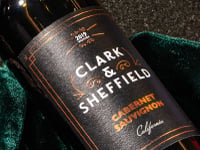
- Bezel Cabernet Sauvignon 2022
If you have a question for the Barrel to Bottle Crew, email us at comments@binnys.com, or reach out to us on Facebook, Twitter or Instagram. If we answer your question during a podcast, you’ll get a $20 Binny’s Gift Card!
If you like our podcast, subscribe wherever you download podcasts. Rate and review us on Apple Podcasts.


