See Full Transcript
Hey, welcome back to Barrel to Bottle, The Binny's Podcast. I am Pat from the Spirits Department. We're gonna taste some spirits stuff today.
Kick the energy up there a little bit.
Hey, hey, it's this energy. Welcome to Barrel to Bottle. Barrel to Bottle episode.
It's another episode.
Wow, of Jenna saying, we gotta kick up the energy.
Wearing all black today, of Jenna saying that.
Our ****ing vampire intern here.
Renfield.
I went to go see that.
Oh, you did?
Of course, he did.
I went to go see that, yeah.
I celebrate Nick Cage, his many efforts. It was pretty good.
All right, back to my episode, you jerks. Hey, it's Barrel to Bottle, The Binny's Podcast. Continuing an experiment this week, couple weeks ago, Roger had us taste the same beer out of a couple different beer glasses.
It was enlightening. We found some cool things. And so we're going to do the same thing with spirits this week.
But we have three different specially spirits glasses available at Binny's near you, plus a kind of plastic tumbler as a control. And we're going to taste several different spirits.
So maybe this, some work better for bourbon, maybe some work better for tequila. We'll find out today. So who else is here?
I'm Roger in beer.
I'm Jenna, communications.
Jim, also communications.
Hey, Jim's on the episode.
Not just chuckling in the background.
Yeah, because everyone else dropped out. Chris went home. Greg is on vacation.
Chris has the plague and Greg's gone.
All right. Well, let's talk a little bit about the spirit. We're going to start first.
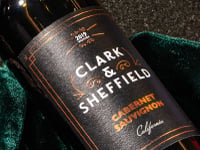
We're going to start with bourbon because it's what's familiar. And the bourbon we are using is, I don't know if you guys have had this yet, is the Clark & Sheffield Bottled in Bond.
So this came in late in 2022, the newest member of the Clark & Sheffield bourbon family. This is on sale at a Binny's near you. I want to say for $31.99 or $32.99, something like that.
Like our other Clark & Sheffields, this comes from the 1792 distillery, the Barton Distillery in Bardstown, Kentucky. Bottled in Bond, of course, meaning it's bottled at exactly 100 proof. It's over four years old, blah, blah, blah.
Single distillery, single distilling season. Those ones don't matter as much as the 100 proof in at least four years old. Anyway, so we have plastic tumbler.
We have the classic Glencairn nosing glass, also known as the Glencairn whiskey glass. We have a Glencairn Spirits Copita, which is what we use in the office, what we use when we're doing staff trainings and stuff.
It's what you'll get as your glass at like Binny's World of Whiskey, things like that. I also have a Glencairn Canadian whiskey glass, which I believe is on our website as the malt mixer glass.
It's got a similar, I don't know, it's got this wide base like a rocks glass, but then it does pinches inward a bit before tulip being outward a bit. We'll see what comes of these and then the plastic tumbler, of course.
First off, let's try it out of the plastic tumbler.
Canadian you say?
Yeah.
Hey. Take off you hoser.
Try it out of a plastic tumbler first. Let me know what you guys think about this bourbon, especially you Roger. I can't believe you haven't had this yet.
I bought this one when it came out.
It's usually what I use for cocktails.
Yeah, because I was waiting for this forever. It's like very old barton, right? Yeah.
What do you think of this bourbon?
It's excellent.
Yeah.
Quite tasty. I really like the finish on it.
It's pretty typical barton, a little sweeter, so high corn content. It's just round, oily, fat, lots of sweet corn oil, sweet vanilla character, toffee. It's pretty classic bourbon.
Hey, I heard the other day that they canceled tours.
Yeah, they don't do tours of barton anymore.
They killed them during COVID, and it's like they don't even take visitors, visitors centers closed.
That's a huge bummer. That was where I used to tell everyone to go.
Well, they didn't do tours until 2008, and then they started or 2006 or something, and now they stopped.
It was the only bourbon tour I've ever been on where it felt like you were actually in a working plant.
Yeah, because it's just a big factory.
Yeah, it was like being on a submarine. It's like going to a museum of science and industry. You're walking on this metal catwalk.
Everything was loud. Yeah, very loud, very hot.
I was there once in July during their yearly shutdown, and they had all the access ports on the still open because they were cleaning the still, so we got to stick our heads in the still. That's pretty cool. Jenna said it was good.
Jim, what do you think? Oh, you already said it.
I already had it. I like it.
All right.
So knows this. Let's start with the classic Glencairn spirits glass, the little stubby guy. Much more concentrated aroma, right?
So that's something like old school way would have been, you know, some guy with a monocle, with a big snifter, probably related to Roger.
We should get a monocle.
But the thing is, when you have a bigger snifter or rocks gas like that, or like our plastic guy here, you know, it's the same liquid over a greater surface area, right? So it's kind of just fizzling out.
You want something, generally, with whiskey, that's going to kind of chimney it up into your nose, like these Glencairn's do.
I feel like you get way more oak out of the Glencairn than the plastic cup.
Yes. It has a much spicier finish too, out of the Glencairn.
Interesting.
Like, my tongue is tingling.
I wasn't expecting us to taste much different, probably just smell, so this is a good exercise, then.
Yeah. I mean, overall, it's largely the same, but I notice that spice sticks out much more on the finish from the Glencairn than it did on the tumbler.
I mean, so much of your taste is your smell, right? So we are drastically changing how this whiskey smells. All right, how's that compared to our little Spirits Copita here?
Is this a shorter neck than a Sherry one?
Is it exactly the same, or?
I think it's close in size.
Yeah.
Glencairn calls them Spirits Copitas, but if somebody saw them on the shelf, they might think it's a Sherry Copita.
Does no one drink Sherry, so no one knows what a Sherry glass looks like.
Interest, I expected these to be almost the same, and I think the nose is a little more dull in this Copita.
I agree.
The nose in a Copita is like, I'm getting an alcohol burn from it a little bit.
Yeah, me too.
But I also think they all taste a little different. I don't-
Yeah, no. Yeah, this, much less sweet coming out of this mini wine glass.
That's what we're calling Copita.
Copita.
Jenna's just going to buy a bunch and say that they're mini wine glasses.
I totally am. Yeah, 100%. They're adorable.
They're the right size for my cats.
Be right back.
I'm going to go Instagram my cats drinking wine out of this.
Interesting.
It's much more earthy. It tastes much more earthy coming out of this.
I feel like with both of these, you really get a concentrated alcohol with the way that this tapers in. You definitely hit the fumes hit you, and that's always been my gripe with these with Glencairn in general.
Well, okay. Let's move on to our third Glencairn option, the Canadian whiskey glass, the malt mixer.
It's like a mini wine carafe or a- Yeah. It looks like a nice beer glass, honestly, like a stemless tulip glass or a sour glass.
There's definitely been beer glasses that are basically this.
I mean, maybe I don't have enough in this glass, but I don't really get much on the nose.
Oh, it's the Glencairn mixer is what it's etched on the bottom.
It's a friendlier nose for sure because that alcohol is kind of blown off.
Not as concentrated.
And you're smelling just more of the sweet bourbon-ness.
And I like the, we were talking about this in the beer episode too, like my tendency to, I want my nose to be wherever I want it to be without hitting the glass.
Yeah.
Yeah.
Call me crazy, but I think it feels flabbier on the palate out of this glass.
Yes.
I don't know what to think of that.
Yeah, probably. That is weird. It's more like honeyed in this, more like vanilla-y.
I think I like this one the best.
It's up there for me.
I'm a flabby boy, though, so.
I definitely enjoy holding this the most versus pinky out with the Copita here.
The good thing is all three of these Glencairn are like seven or eight bucks, so they should sell them as a set.
Yeah.
The Glencairn experience.
Oh, there you go.
Perfect.
Tour of the glassware.
Yeah, so a Scotsman, a Canadian, and a Spaniard walk into a bar.
I think it tastes richest on the palate out of the classic Glencairn.
Yeah.
But you do get more of the heat, the peppery alcohol character.
But I love the palate on it though. Like I love it. It's a chewier drinking experience out of the classic Glencairn and the Copita, but more so the classic Glencairn.
Well, I never would have guessed that they would taste different.
Neither would I.
That's pretty crazy.
I'm really surprised to see this.
Yeah, I'm kind of actually surprised hearing that only because wine tastes so different from different glasses that I assumed these would as well.
Wine tastes different from different glasses too?
Interesting.
I mean, it's mostly an aroma thing, but it can taste different. But again, like you said, so much of what you taste is connected to what you smell.
So I actually think the the classic and the plastic tumbler were my favorite for the Clark & Sheffield.
The plastic tumbler wasn't bad.
The plastic tumbler wasn't bad. Maybe it's a corn viscosity thing. Let's try them with a different spirit then.
Let's try a rye next. Now, I didn't choose the spiciest meatball of a rye here though.
This is a rye I wanted to show on the podcast previously, and we didn't get around to it, and I think it's exceptional and it's inexpensive, so I wanted you guys to try it today. This is rye and sun's rye.
This is a collaboration between the Pin Hook bourbon people and a chef named Andre Mack who's worked at, I don't know, like French Laundry or something, and some famous places in Manhattan, like real famous, not a chef, a sommelier, and who's worked
at very fancy restaurants. This is, what is this, 92 proof, Raj?
Drawn in the style of Casper the Friendly Ghost.
Yeah, it's just a white and black label. This is the 2022 vintage of this, their first release. What's proof, Raj?
97.5.
97.5.
This is very firmly a Kentucky style rye, lower rye content. I think it's exceptional though. This is $29.99 every day.
I want to say it's on sale right now for like $26. I think this is a wonderful rye.
Pretty tight fit on the cork there.
Yikes. Got any other complaints?
Is that hair's breath away from firing off the table?
All right. Back to Jenna's trusty plastic tumbler.
Can't go wrong with the plastic tumbler.
Pretty muted nose, kind of smells like a rye. You got it on the palette though. I mean, it's minty and herbal.
I like how with the Canadian one, how it doesn't immediately come to you with the aroma.
It's like a softer wave as opposed to-
You don't want to be attacked by the nose of your whiskey?
Yeah. Glencairn is like, hello. It's a Scottish kiss right off the bat.
Bam.
So far, two out of two, the mini wine glass has made my eyes water when I smell it, because of just that alcohol.
I love its new name.
Yeah, Roger, the Canadians, kind of quiet, like a real Canadian.
Yeah, it's more polite.
Now, on this one, I don't feel that the alcohol is quite as strong in the classic Glencairn, but it's a really concentrated nose. This is like a dense nose.
I will give the Glencairn credit, this has the most complexity to the nose, I feel. There's some minty herbal character that I get in this that's lost in the... What is this called again?
Canadian Mixer?
The Glencairn Mixer.
I like Canadian Mixer better. It sounds like a very polite party.
On the side of the box, it says, Canadian Whiskey Logo Glencairn Mixer. The glass so nice, they named it five times.
Thanks for coming out.
I brought some Timmy Hortons.
I think the nose is kind of absent on the Copita here.
This is pretty crazy gentle for the proof, and that it's a rye.
Isn't it an awesome rye?
Yeah, this is much easier to drink neat than I thought it would be.
You're not getting any burning on either of these.
Now, I didn't bring any barrel proof stuff to that. I wanted this to be as like, not neutral, but I wanted to really let the glasses kind of do the talking here. So, no barrel proof stuff.
I do have two different examples of Scotch whiskey that we'll get to in one tequila, but I purposely chose stuff that I think would be kind of like a more neutral nosing and drinking experience here.
It's really beautiful and elegant out of this mixer glass.
Yeah, I get more classic what I would expect out of the Glencairn. Spicier, mintier. This is a great ride, especially if you said 30 bucks.
It's like 26 right now.
It's crazy.
The Canadian bad boy wins it for me on this round.
I think I might agree with you. Well, the classic Glencairn is so good on this.
The Canadian one is the softest, the politest to the palate.
Checks out.
I'm going classic Glencairn again. We're only two through five spirits here, I'm calling it. We might have a sweep here with the Glencairn for me.
I like the nose on the plastic.
Yes.
Classic bins again.
I mean, the flavor is obviously very muted, but or maybe not obviously, but it's muted.
But the nose is like cola or something.
Yeah, yeah, yeah.
Again, I'm totally perplexed as to that these can taste this different.
It's wild, right? I didn't expect this at all.
The wine glass tastes earthier to me, like more oak comes through maybe. I don't get this. I'm really torn up here between the Canadian and the Scottish, but I think I'm giving it to Scotland.
That's what I'm giving it to.
So we've got one vote for plastic, two votes for Scottish.
Jenna, what do you say?
I'm going back and forth between the Scottish and the Canadian, but I think I'm going to stick with the Canadian. The Scottish is very...
I just like the nose on the plastic, not necessarily... The flavor just kind of dies, but...
Yeah, the nose is really nice on the plastic. It is wild that these things taste different at all. All right, well, speaking of Scotch, we're going to move on to some Scotch now.
So we've done bourbon and rye. I figured we should try what malt does. But me being me, I was like, well, we can't just do Scotch.
We have to do an unpeated and a peated Scotch.
Of course.
So we're doing unpeated first. But my love of Isla demands that we use brook laddie, which is an unpeated Isla that we're using the classic laddie. This is 100 proof.
One of brook laddie's great, many great traits is that they bottle their core stuff at 100 proof.
It looks like a tequila bottle. The shade, the color.
The painted teal bottle is interesting.
I feel like I'm in the perfume department with this aquamarine.
Yeah.
It's almost a Tiffany blue, except not because that's copyrighted.
Peacock.
Or whatever it is.
So Brookladdy, Uncho Filtered, Natural Color, 100 Proof, Unpeated. These are mashed in an old cast iron, mashed ton. I mean, it's a real cool distillery if you ever get the chance to go.
Of note here, I've gone through the plastic, the Glencairn and the Copita, and it smells fine out of the plastic, but it has almost no flavor to it. You go to the Glencairn and it's just like all the beautiful malt barley character just blossoms.
It's just sweet honeyed granola and graham and some fruit and a little bit of sweet floral character. It's just such a broad big contemplative whiskey out of the Glencairn glass that it doesn't even taste like anything out of the plastic.
Yeah, all of these plastics have been all aroma and no flavor.
This round also is my least favorite for aroma. Aesthetically, these three glasses look very nice together.
Telling you they need the traveler trio.
I think Canadian is my favorite again.
But this is really a rich, it's an awesome whiskey. It's got that honey. I pretty much nailed everything that I was thinking, like gram, honey, a full mouthfeel.
It's like creamy.
It's beautiful whiskey, beautiful, beautiful whiskey.
I'm going to like chocolate on several of these.
I'm getting a little more of the chocolate character out of the Canadian glass, I think. Yeah.
How much is this, bro?
60 or 70 bucks. Interesting that the Canadian one I feel has continued to highlight. I don't want to call it flabby because that sounds disparaging, but it highlights just the sweeter, rounder elements of the whisky, I feel.
It's softer.
I actually can't make up my mind out of the three glass.
Ignore the plastic on this round. Out of the three glasses, they're different, but they're all good. They all have great aromas and they taste great.
I get more fruit out of the two skinny, tall ones, the Glencairn and the Copita, and I get more of the granola e-malt out of the Canadian glass.
I love floral in Scotch.
I think the first Rosebank I ever had was one of the best Scotch's I ever tasted. It was one of our hand select things way back in the day.
Way back, yeah.
So I'm always chasing what other, I remember asking Brett this years ago, what else is floral? I love that. So I feel like I get the most floral notes out of the classic Glencairn.
So that's probably what I like the best on this one. The Sherry I feel is very similar. I actually picked the Canadian one third on this.
A little more spice coming off the nose on the Sherry Copita, Spirits Copita, whatever it is.
I think this speaks to that if you have a really delicate spirit, maybe you want, I feel like the Scotch is more delicate than the whisky, than the rye whisky or bourbon.
So it's better to have the concentration on this, or for me at least. Whereas with, you know.
Yeah, it should be no surprise that the Scotch drinks best out of the classic Scotch glasses.
Damn, I don't know.
Going Canadian.
Yeah. Really?
I think me too.
But I think it's for different reasons. I think I just get, I like the chocolate that I got from initially. I thought I'm getting that here and I like that.
I agree.
And I think it's, it reads a little more delicate from the Canadian glass, which I enjoy compared to the other two.
I like that you can put an ice cube in the Canadian glass. I'm generally not an ice and Scotch guy, but I just think it's purpose as a useful daily glass. This molten mixer, this Glencairn molten mixer glass, Canadian mixer glass.
It's got the utility of a rocks glass, but it still has some aromatic saving shape to it. Whereas a rocks glass is just going to let everything, it's just a rocks glass is going to smell and taste the same as this plastic cup at that point.
Yeah, you can't really get any ice in a classic Glencairn except for those crappy banana cube.
Yeah.
Fridge ice.
It's so small anyway. What are you going to just drink whiskey on the rocks, two ounces at a time, one ounce at a time or something?
Is that not how you do it?
I do it by the 20 ounce at the time.
How many expressions of Brook Laddie are there like standard? Standard two.
There's Classic Laddie and then there's Poor Charlotte 10 year old. That's the heavily peated one. And then there is a limited release of each year using Isla Grown Barley.
And then there's other limited releases at times in different casks.
That's crazy. I always think of them as like the take up after show.
Yeah, they used to have 20 scoops at one time.
Yeah, a long time ago. Well, this is a really, really nice whiskey. I think some people might avoid it from the bottles a bit garish, but this is good stuff.
I was just going to say the same.
I probably would look at it and, no offense, think it's kind of a joke of a whiskey based off that bottle if I just sat on the shelf, but that is quite fishy.
And it's in this big metal tin too, but they are getting rid of the tins because there's a lot of Scotch producers largely driven by environmental commitments are getting rid of extraneous packaging.
obviously it helps their bottom line with shipping costs and stuff too, but there's a lot more pressure over there to get to carbon neutrality than there is over here.
All right, other end of the spectrum then, I figured we should taste these, an unpeated one and then a peated. Our peated today is one of my favorite everyday whiskies. This is the Lagavulin 8-year-old, which is higher proof than the 16-year-old.
Shows more peat, obviously, because peat does age out as peated whiskies age. I think this is just a fantastic whisky and a great value. It's like $55.
What do you think, if you had to say, has there been a Nick Offerman bump for this brand, would you say yeah?
Maybe.
I know whisky nerds have always liked it, but I feel like people don't.
It's a thing.
I feel like it's always been popular, but the Nick Offerman bottlings do sell really fast. We just got more in, actually, of last year's.
Oh, nice.
They pulled some from a different state or something.
I mean, you can smell the peat in this room.
Oh, yeah.
It's very strong.
It's a peaty whisky.
Man, that tumbler is rough.
Has a lot of burn out of the plastic tumbler. What's our bottling proof here? It's like 94, 92.
96.
96.
I mean, top down, the nose all the way down to the palate, really rough out of that plastic.
Yeah.
It might be leaching or something, I don't know.
Yeah. I can't believe it tastes so boozy out of the plastic. Like you go to the Glencairn and it's gorgeous.
You know, I literally just did that.
It's balanced.
It's if anything, it's like shy and and and like withdrawn in the Glencairn.
Oh, blind taste. I wouldn't even know that's the same whisky.
Yeah, that's wild. I can't believe that.
That's pretty crazy.
I don't get that at all. Or I don't understand. I agree with you and I don't understand why that's happening.
Science.
Wow, taste out of the Spirits Copita.
It's like sweeter and maltier.
There's almost no peat to it. There's peat.
It's just like compared to the other two.
That's what I mean.
It's let in the malt shine more.
Yeah.
Wow. Yeah, I like it better out of the sherry glass, I think.
Whoa, it's wild out of the Canadian malt mixer glass. It's so oily and fat and sweet. Holy cow.
Yeah, it doesn't seem.
This glass highlights the sweet notes on everything.
It really does.
That's probably why I like it so much.
Wow. I think I like it out of the sherry Copita best. Yeah, it feels like it's a little more in the middle.
It feels like the Canadian one threw things out of balance.
Yeah, I feel like the nose gets lost more on the Canadian one.
Yeah, like we already said, it highlights more of the sweet notes on the palette, which doesn't bother me, but I think I like the mini wine glass the best this time.
Mini wine glass for the win on this one.
Yeah, for sure.
Run us through the Lagavulin expressions again.
Lagavulin, your everyday expressions are just going to be this eight-year-old and the 16-year-old. The distillers editions are hitting as we record this, like this week, which is a cast strength 12-year-old.
And then there's essentially a 17-year-old that's a 16-year-old with an extra year finishing. I believe that's in PX barrels, is the Lagavulin.
Each of the different Diageo quote-unquote classic malts gets a distillers edition that's aged an additional year in some different kind of fortified wine casks.
Those are usually pretty good.
Those are usually outstanding. So, I mean, classic Lagavulin 16 shows a ton more sherry character than this. So, way more sherry barrels in the blend.
The peat is toned down. It's got, it's still very peaty, but it's got tons of dark dried fruit and stuff where I love the freshness of this eight-year-old. It's malt and it's peat.
And there's a little bit of fruit there, but the fruit's more from the malt, less from the cask. And that's kind of the reverse in the 16-year expression.
Yeah, I always felt when I would recommend, if someone was curious about Isla whiskies but didn't want to jump head first, I usually recommended Lagvulin 16 because I felt it was very graceful and wasn't, the other ones are so heavy-handed, like
See, I wouldn't think that about Beaumont.
Beaumont isn't as peaty, like LeFroyd is certainly peaty or an Ard bag. Kalila. Wow.
What a great whiskey though, right? I love this stuff.
It's great. I do feel like the peat is much more forward than the 16 though.
Oh yeah.
I have this and then it makes me want to revisit the Distillers or 16 because that's just kind of more my jam, but I've never really been much about the heavier peated single malls.
All right, last spirit to try this on. I figured we should try tequila. And so, I brought, we just recently did the blind tasting of Blanco Tequilas.
This time around, I figured I'd bring a Reposado, just so we have a little more balanced experience between the Oaked Tequilas and the Unoaked Tequilas. But I did bring a very light Reposado.
It's light in color, not only because it's additive free, but also it's in pretty used oak. So a deft hand was created in giving this, was used in creating this Oaked Tequila.
Yeah, it looks like a Blanco in these glasses.
Yeah, kind of, right? It's barely any color.
It's wild. I literally just drank this last night. I just bought it.
The Reposado?
Yeah.
Nice.
Then Roger already knows this is one of the best tequilas we carry. This is Tarralta Reposado. This is made at the El pandio Distillery by Felipe Camarena.
We've talked about the Camarena's before. Unlike some others out of El pandio, this is made only with deep well water.
He's not using any of the rainwater on this, so mineral-rich, heavy deep well water, like a 600 meter well or something, like something real crazy.
Brick oven cooked, like stone oven cooked, crushed with his mechanical Tahona that he made, converted like the front of a steamroller into a mechanical Tahona. It's really cool. It's a cool piece of equipment.
I love the stopper and this is modeled after a Tahona wheel.
Yeah, it's like a stone.
Yeah. What do we think of this out of the plastic?
Definitely muted as per usual.
It tastes very flabby and flat. Roger, what did you pay for this recently? 70 bucks?
No, 50, I think.
50?
Wow.
Either 49 or 59. I think 49.99. All right.
Trying with the Glencairn.
Malt glass.
Very elegant compared to the plastic anyway.
49.99 on sale right now for 45.99.
Wow, nice. More nose in the Glencairn than the Copita.
Yeah. Smokier out of the mini wine glass than the Glencairn. Unless there's just some lingering.
It could be lingering Lagavulin.
I know what you mean though by the kind of smoke-esque.
It's got more of like the agave honey in the finish out of the mini wine glass.
There.
I'll say it.
Hell yeah.
Got them.
What do you think, Jim?
There's like a lemon lime, like a lemon sweetness, lemon frosting on the classic Glencairn flavor and aroma. I'm getting like a lemony, lemon lime kind of thing.
Yeah, I kind of see that like rind or something.
Yeah. I mean, you said agave sweetness, so there's like some sort of sweetness there too.
Oh yeah.
I mean, it's Highland agave, so they're going to amplify more of that sweet roast agave character in The distillation.
I skipped ahead to the Canadian one, and it's so muted on the palate.
Yeah, it almost tastes like nothing.
I mean, yeah, the aromas and palate, but wow, the palate struck me the most.
Yeah, it like dies halfway down, it like doesn't have a finish. I can't believe these tastes different. I thought we were only going to run into aroma differences here.
This is the biggest difference, I think, so far the biggest example of that Canadian glass.
It's water with a drop of tequila in it compared to these other ones.
Yeah. No, I think, again, for things that are delicate, I think you benefit more for the tapering and the glass that you get out of Copita.
I think the classic Glencairn here is the winner for me. I think the combination of concentrated aroma and then the concentrated agave sugars on the palate, what a sweet, crowd-pleasing tequila this is when out of that Glencairn glass. Unbelievable.
I mean, and that's the cleanest finish, too.
No burn, no unpleasantness at the end there. It's just dangerous.
Yeah, this is a really delicate tequila.
Yeah. Beautiful tequila. Dang.
I also think that we were talking about this on the last, the Additive Free Podcast about that some people think shy away from definitely in Yeho, but even Reposados if they want to keep and preserve the agave note, and I think this is a repo where
the agave is still there in a very pleasant way. Yeah.
If you're normally a Blanco drinker because you want to taste agave and not oak, this is a Reposado that you ought to try, because it's so gorgeously balanced between just a kiss of oak and then agave.
Like a little bit of pepper, a little bit of vanilla, but not a lot else.
I find that the mini wine glass meets it too.
I think so.
I think the Glencairn, the classic Glencairn is the way to go on this one.
Yeah, I agree. The Copita is nice on the palate. It's broad and sweet and big, but it doesn't mute the nose.
Yeah, you lose something with it.
On the sherry glass, I get more of a floral character, and I think you lose some of the agave.
Again, very strange how different.
Yeah.
I had no idea these were going to taste different.
This was a lot more interesting than I thought it was going to be.
Yeah, you were pretty disappointed when we told you you had to come in here.
Yes.
I just wanted to sit at your desk and think about your cats until the weekend.
Just stare at their photos. I'm coming home to you.
Well, I think what this proves is that these are all incredible glasses, and they're relatively affordable.
I love how cheap these are, man.
You should buy all three of these because you'll never amaze you.
Eight bucks, and that's the best part, too. Listen, I've dropped and broken so many Glencairn's over the years, but they're $8. I don't know.
I always have at least a box on hand at home, usually several boxes.
Yeah. When you think about wine stemware, I mean, it can just get astronaut. Like, sky's the limit for prices.
Right.
The fact that what's considered the gold standard, like the official whiskey glass is $7.99 at your local Binny's. Pretty wild.
Yeah. Everybody needs one. I think after what this has showed is you should grab this Canadian mixer and the mini wine glass as well.
Yeah.
I think best all around, I'm probably going with the classic Glencairn, but all three of these offerings from them are fantastic. If you're just looking for an easy sipping utilitarian glass, the mixer glass is awesome.
Yeah. Yeah. It definitely I think is a step up because of the flare from just your average rocks glass.
For sure. If you're drinking whiskey neat out of a rocks glass, it would behoove you to buy one of these.
Yeah.
I assume the plastic glass is going to kind of mimic the, if we just had a straight sided rocks glass, it's going to be similar to-
Very similar. That just because it's similar proportions.
Right. Right. It's just flat and wide and muted and you're going to some-
Yeah.
A lot of available area and space for aromas to dissipate.
It's probably a little high comparatively than a lot of rocks, but yeah, other than that.
Yeah. It's probably a little taller because it's like if you cut a Collins in half thing, but-
I think best overall, if you had to choose one glass, probably the classic Glencairn for flavor and aroma, but to router's point, if you are someone who likes drinking on the rocks, then the Canadian is the way to go out of the three then.
Yeah.
Just for a reasonable glass to just use on a daily basis.
Yeah.
Totally. If you enjoy fortified wines, which everyone should explore some of the best value in wine, and you're drinking some Sherry or Madeira, this Copita is where it's at. Yeah.
It's adorable.
Meow, meow.
And that brings us to the Q&A portion of Barrel to Bottle, The Binny's Podcast, where we answer your questions for a $20 Binny's Gift Card.
Just send us your question to comments at binnys.com or hit us up on the social media of your choice. We are at Binny's Bev. All right, what's the question this week, Jenna?
All right, this one comes from Rafael.
Not Donatello?
He emailed us with, so many barrel-aged beers nowadays with varying aging times, what is the upper limit of years or months a beer can be aged before an undesired flavor or ABV is reached?
Follow-up, or what is the limiting factor of aging a beer too long?
Interesting. We're just scratching the surface of answering this question, I feel, in the industry, right, Roger?
I can say that I haven't seen many people that take it longer than three years. I don't think it's practical. Basically, there's an oxidative character to it that is the biggest limiting factor.
Just like when you cellar your beer and you have oxidative characteristics, a cask is a breathable entity. That's why we like it for spirits is that the spirit can soak into the wood and breathe.
As you expose beer to air, it's a little hyper-oxidative compared to a spirit.
What can end up happening over time is you're hoping for those graceful oxidative flavors, so things like fortified wines, like a sherry-esque kind of character, which you never want to run into is more of the cardboard, wet newspaper.
I think it can also over time bring out the umami character.
Oh yeah, big soy character.
Yeah, so we've kind of joked sometimes that when we've brought in like really old Imperial stouts that we've kept in our cellars and almost forgot about, they can like get soy saucy-esque.
That's what I've picked up from some of these, you know, ones where they've taken it almost to like three years. It's usually nuanced. It can be there very subtly in the background.
A lot of it depends too on how the brewer built their base beer. So if they took something that was, you know, how dry, how hoppy, you know, how sweet the stout was going in, I think can affect it as well.
Yeah, certainly the level of hopping too, because, you know, there are a lot of preservative qualities in hops. You know, I've seen some local brewers push it to two, two and a half years. Microphone comes to mind.
I know they try to keep everything for like around two years, at least in barrels now.
Rev has done a bunch of two years.
Rev has done a bunch of two years, and even up to three-year-old stuff. Their VSO barrel-aged stouts are usually quite old. I think going back to like, you know, 10, 15 years ago, brewers were afraid to age them that long.
I mean, it seemed like the common assumption was that the beer would, it was only a matter of time until the beer got infected.
And so you needed to keep it in the barrel long enough to get the qualities you want, and then you needed to get it the hell out of the barrel.
And I've seen a big change in attitude towards that with some of these local brewers recently, which is interesting, you know, because like the original Goose Island, Bourbon County Rare was in barrels for two years.
And at the time it was like, holy cow, they age a barrel in wood for two years. That's insane. You know, where most guys were aging for six months or something.
The risk definitely goes up, especially if you're in a situation where you can't spare to dump a, you know, you don't, we really don't want to dump anything.
I mean, if you're responsible, you know, say you age, you know, 20, 30 barrels of something, there's definitely always going to be a chance that maybe you have a bad one. So, you know, if you need to dump one, so be it.
But I think that a lot of breweries are leaning towards the eight to 12 months, I'd say would be like the standard.
The other thing that you can do, and we've been trying to do this with some of our barrel aged collaborations, is do a double barrel rendition. Yeah. So, like, you age it for a year or eight to 12 months, and then put, empty that into a fresh barrel.
So, then you kind of amp up the alcohol then. Another part of the question that we didn't really address was how much does it affect the alcohol?
You know, you start to gain a, you know, you gain a little more, but I don't know that you gain a considerable amount at like the, once you get to like a year, I think you've extracted pretty much all the alcohol out of the barrel that you're going
to get. And then as far as like evaporation, like an Angel's Share type thing, you're not going to lose enough beer to really kick it up a ton, maybe a little bit, but that would be something, you know, we could do a deep dive on.
But one brewery that does come to mind that, you know, we always talk about what great beer they make, and I think they're a little under appreciated. So I'll give a little plug here is for Central Waters up in Amherst, Wisconsin.
They make sneaky, sneaky good barrel-aged beer, and they're all about aging things for an extended amount of time. So their kind of big release every year is called Black Gold, and that's a three-year-old style.
So they're one of the few people that I know really like, has done a three-year-old.
Yeah, they've done that forever.
For a while. So we have a collab with them that's going to be extended aging, so that'll be fun. That's something to look for and keep an eye out for.
But yeah, I would say that a lot of breweries are around the year mark, and then for special things, you have to remember that the longer you age it, that time is money as far as space, and the risk of something getting infected goes up.
So there's somewhat limiting factors to that too. The longer you age something, it's going to basically require a command to hire a price.
So we joke about how it wasn't that long ago that there were only a barrel-aged out season in the fall, and now there's just barrel-aged beer all the time.
There's some that are just made year-round, things like KBS, and then there's so much Bourbon County made now that that usually hangs around for quite a bit.
So when the market gets saturated like it is right now with barrel-aged beer, I think you're starting to see some brewers willing to, if they're looking for a wow factor, they're looking for something that's a standout, but double-barrel-aged beers
and extended-age beers will be something I think you'll start to see more of to kind of set it apart from your run of the mill. You know, barrel-aged beer used to be a very rare special thing, and now it's kind of like, yeah, everybody has a
barrel-aged beer. Yep.
So, Rafael, there's your 20 bucks worth answer.
Go buy some barrel-aged beer with it.
There you go.
You can buy a whole four-pack of beautiful Central Waters barrel-aged beer for 20 bucks.
Roger only works for them on the weekends. All right, listeners, hope you had fun today. Hope you learned something new.
We'll see you next week with something interesting. Until then, I'm Pat.
I'm Jenna.
I'm Roger.
I'm Jim.
Keep tasting.