







Bottled in Bond - Barrel to Bottle Celebrates America's First Food Safety Law

March is Bottled in Bond Month, but if you’re anything like the Barrel to Bottle crew you live every month like it’s Bottled in Bond Month. If you don’t know what it is, we’re going to tell you, and sample eleven Bottled in Bond spirits.
See Full Transcript
00:00
Introduction
You're listening to another episode of Barrel to Bottle, The Binny's Podcast. I'm Jim. I do communications here at Binny's.
In the room with me today.
I'm Roger. I work in beer.
Hey, I'm Chris. I do wine-related things.
And the man of the hour, hour and a half.
Hour and a half?
No. I don't know. You got a lot of bottles there.
My name is Dan.
I work in spirits, and I do have a few bottles here.
It's for Bottled in Bond Month, which is March 3rd.
I think it was Bottle in Bond Day, but we celebrate the whole month as Bottle in Bond Month. Bottle in Bond is something you've probably seen on bottles.
If you're into bourbon, you've probably heard it and sought out bottles that said Bottle in Bond specifically because they do. So what does this term mean? Basically, in 1897, someone by the name of Colonel Edmund H.
Taylor, EH.
Taylor, you may know him as EH., was helping one of the people pushing for just some regulation in the spirits industry back in the day, pre-prohibition, certainly in the 1800s, when you bought a bottle of spirits or you had spirits at a tavern or
There was no consistency of quality control and things could be added or things were added.
There was no regulation. So you'd buy a whiskey at a tavern and it might be a mixture of some really young whiskey, some weird extracts to make it taste like older whiskey, and then some neutral grain spirits.
So the goal of the Bottle in Bond Act was to bring some regulation to that and set some rules for federal guidance of spirits production and sale.
And that's one of the oldest in the world, correct?
It was actually a lot of... We'll read that it's the first Food Safety Act in the United States. If you read about drinking in the 1800s and probably some of this is what led to prohibition is you'd hear about like...
Going blind.
Going blind or like walking funny because they drink rum and it's because all of this methanol and things to make it...
The heads and tails were in there and they weren't...
Yeah.
Or they were adding stuff in it to make you feel...
Yeah. They were adding some really weird...
I thought it was just pirates with peg legs who drank rum.
Those two. Yeah. They also walked funny.
Only one eyes to no depth perception.
That too.
That certainly didn't help. No. The idea is that you have something that is regulated enough that when it says bottled in bond, that's a government certification that this meets a minimum quality standard for spirits.
Most of what we see is in bourbon. This is mostly talked about in bourbon. But really any age spirit in the United States can have this stretch.
Let me hand around the first bottle.
Just a quick review. We passed this before any kind of actual food legislation. So it took Upton Sinclair writing the jungle for us to care about our food.
But we cared about it.
Being that we're based in Chicago, that's a good reference.
So as we're passing this first bottle around, the basic rules that are mostly relevant today are that bottle in bond spirit will be minimum of four years.
It can be older than that, but it cannot be younger. And then bottled at exactly 100 proof. That it has to be one distillery during one distilling season.
So it has to be one distilling season. So historically, there's two distilling seasons. It has to do with when the temperature is right for distilling and fermentation.
And also when harvest is happening, their storage is much different now than it was 200 years ago. That's why distilling seasons are reference to it.
Also, you'll have really high quality bourbons these days that aren't bottled in a bond, but you'll see are over four years and bottled a hundred proof.
And one of the reasons they may not be doing that is because they want to have the freedom to blend barrels from different distilling seasons to get the signature flavor.
But when it does say Bottle of Bond, that does mean it comes from one distillery, one distiller during one distilling season.
3:55
Bourbon Selections
First thing we handed out was Jimmy Red, Bottled in Bond. This is made in Charleston, South Carolina. It's a brand we've carried for a year and a half, two years.
I've always been pretty impressed with their liquid. What do you guys think?
Is this a bourbon or a rye?
This is a bourbon.
Jimmy Red corn and I don't care.
Corn heavy?
Corn heavy, for sure.
Yeah, Jimmy Red corn.
Jimmy Red corn, yeah.
And they're into the heirloom corn varietals, correct?
They do some of that. They do like a weeded, like a seven-year weeded that's excellent. And we're getting pretty good supply now.
That's from the Highwire Distillery. But all their, most of their bourbons have the Jimmy Red corn. They have like a revival rye that's also very good.
How old is this?
Minimum four years.
Does it say?
It doesn't say.
So it's, you know, it's probably, you know, four to six.
It seems kind of oaky.
Yeah, I would say, yeah.
That could be warmer aging too.
Right. And Charleston's got a pretty spicy finish for being such a corn forward. There's also a fruity aspect here too that stands out to me.
I find the little pear and dare I say a little jackfruit on the palate.
Yeah, but it's just like it tastes like bourbon. It's a little round and it's got some oak there.
Yeah, it's definitely got some caramely oak. But the other thing I would note is I feel like this is also relatively dry for corn heavy.
I think you're getting some of the oak tannin. This is like borderline lumber yard for me. I mean, it's oaky.
That's what I'm saying.
The finish is pretty dry. Pretty dry. Anyway, spot on Roger.
There's a lot of oak spice here.
What's the price point on this bad boy?
$70 on sale.
What? Wow. Yowza.
It's not expensive.
Interesting.
Craft Spirits, hashtag.
Yeah. There you go.
I like the bottle.
Yeah. The bottle is ceramic, painted with a nice stamp of the logo in there.
Don't discard it. It could be good for your jug banding days.
I'm more of a banjo kind of guy.
Never interrupt me in the middle of a hoedown.
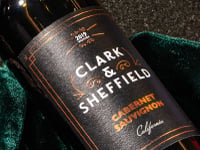
Next, we're passing around Clark & Sheffield Bottled in Bond. This is our line of whiskey made for us by the folks at 1792 Barton. We've had this for, man, we've had this bottling around for five or six years now.
But it's on sale right now for $29.99.
It's a stout little bottle.
The new bottling is in a larger, elegant bottle.
Like a tall.
Similar to our, I think the same bottle.
Yeah, same bottle as the other ones.
The new barrel.
I like this goofy little square one.
Yeah, I like it too.
Yeah, I like it too.
I heard rumors a while back that they were going to close this distillery because it was one of the oldest around that hasn't had an update. Have you heard anything?
I haven't heard anything like that.
I know they closed it to the public.
For quite a while.
That was sad to hear because whenever anyone would ask me about going down there, I'm like, a lot of these distilleries have really polished and updated to the point where you don't really feel like you're in a distillery anymore.
You're in a control room where everyone's wearing a polo shirt in front of a bunch of computers, and they're just like, yeah, we hit the button there and it starts.
Yeah, it's like watching brewing at an Anheuser-Busch.
Yeah, it's not the same. I mean, it's a similar kind of, when we were in Scotland last year, we went to two distilleries owned by Gordon MacPhail. One of them was Ben Roemic.
It was a really small distillery and there's 10 guys in there and they're scrubbing and they're moving pipes and they're hitting levers and it's an active distillation in a very small space.
And then we went to the Cairn Distillery, which is their new distillery that they built that I think they're maybe three or four years into production.
And this is like huge modern distillery and this giant facility that we're in, there's one guy behind a bank of like 10 computer screens and he's just pushing buttons. So like, yeah, I mean, there's automation for efficiency's sake.
I mean, it's been a long time now, probably at least a decade. But when I was at Barton, it was awesome. Super loud, hot.
It felt like you were like people were pulling levers, like it was a working factory kind of atmosphere.
Like a Fritz Lang movie.
It actually reminded me of like touring. Did you guys ever go on the submarine at like the science and industry? Because like everything's metal and like really narrow gangways and stuff.
Then that ended up being pretty apropos because that distillery, I believe, was rebuilt in 1953 because the original burned down during World War II while they were using it to make torpedo fuel during the war.
I didn't know that.
That's a fine use of distilling.
Yeah.
Anyway, there's your fun fact for today.
I know it's nobody's first time having this, but what do you think?
Always a solid option.
Yeah. Yeah, I love this.
It's easy, right?
Yep. This to me is just sort of like the quintessential Bourbon character.
Yeah, indeed.
Because it's worth mentioning too that until prohibition was repealed, all Bourbon was essentially 100 proof. People crying about that they'd be doomed if we couldn't lower the proof down to 80.
We'll never be able to catch up after all this time of not distilling. We need to change the lowest proof you can bottle at.
That's tied into something I have heard you guys talk about on previous podcasts with that the gunpowder proof or the 100 proof is the line where that's one of the reasons it was chosen to, is my understanding.
Where the gunpowder will still ignite if it soaks the-
Well, I think too is that this is what perpetuates that myth that you can't add ice to stuff.
Is that well, when whiskey used to be 100 proof, that can hold up to some dilution, whether it be you're actually making a cocktail with it or you're drinking it on the rocks.
But when you lower it from 100 to 80, then yeah, that's a completely different game then as far as mixing with it or pouring it over ice. It is going to get lost or feel washed out. So again, you should be able to drink whiskey however you like it.
But if you feel like you don't ever add ice to stuff because you've tried it in the past with something that's lower proof, I would argue that this category is fun when you drink it with ice.
Yeah, and don't let anybody shame you for doing it. I mean, there's a strong argument to be made that you bring out a lot of aromas and flavors by adding just a little water or letting ice dilute a bit.
Yes.
No, there's, I mean, especially when you talk about like, I mean, a lot of people will drink bourbon, a lot of bourbon enthusiasts drink bourbon at cast strength and will just, you know, drink it that way.
But when you look at like the World of Scotch and like our hand picks and things that are at cast strength, like those aren't, like, yeah, tasted at cast strength, but really the intention isn't to drink them at that strength.
And I think the same could be said for a lot of these bourbons. It's like, sure, taste it that way, but then see what happens when you dilute it a little.
I agree. I don't think you have any choice but to taste it the way it's been bottled. But I mean, that's not necessarily the way you should drink it.
Some of these cast strength bourbons that get near the hazmat proof.
I watch these guys try to drink them straight. And it's just they start coughing uncontrollably. It's again, not the point.
I love that burn.
Good burn.
It's so good. Esophagus in bad shape.
Next time head around the Black Label Wilderness Trail. This is their high rye.
Bedlip on that bottle.
Yeah, it's hard to pour.
Well, I didn't make the bottle.
No, I'm telling Chris, because he spilt it all over the place.
We want to get a new board if we keep passing these bottles straight over the board. Move this over a little bit here.
It's one way to do it.
I don't know what happened, Greg. It just broke.
This is sweet mash, too, of their self-salt sweet mash.
This is nice.
Pleasantly perfumed, I think. The nose is almost floral and maybe pineapple.
Yeah, this is their high rye. Now, they make excellent whiskey. They had a moment seven years ago or so, and people have moved on unfortunately from this distillery.
But this is on sale for 45 bucks right now.
Why do you think that happens? It's like in the beer world, I guess that happens.
What have you done to me lately?
We're actually seeing a little bit of that trend too. It reminds me of craft beer when I was first with Binny's, is that people aren't looking for a style necessarily. They're looking for what's new.
If you have a new brewery or like we found with some of the new distilleries we brought out, we'll look and bring in a few skews and they actually do really well because it's what's new on the shelf. Then the whiskey is good.
We're not bringing in anything that's not good. People try it and they'll sometimes rebuy it, but then again, it's that same what's next.
It's got to be maddening from the craftsman point of view where I think if you were interviewing some of these people, they'd probably be honest with you that the quality of what they're making now is better.
A lot of times better than when they started.
If people are writing them off because you tried them right when they started and they weren't necessarily for you, I think it's important to revisit some of these because not to say that the wilderness trail stuff wasn't good out the gate, but this
Isn't there the possibility of a scenario where you're buying juice and then you move into your own distillate and have a more distinctive product after time?
Some of that, some, I mean-
I'm not saying that happens all the time, but a lot of startup whiskey places are not distilling their own.
Or I think we're completely free of this now, but I mean, back in the day, it used to always get the business on this podcast in particular when I would, I kind of groan at some of the craft whiskeys because a ton of them were using less than
standard size bear. Right.
Yeah.
And you just get these absolute oak bombs, and unless you grow up drinking that, and that's kind of how you entered your whiskey journey where you're like, oh, I like that taste.
If you start the conventional way and then try those afterwards, I'm like, this is just all oak.
Yeah. There's a reason that it takes time for a whiskey to mellow in oak. You can try to rush it, but it's never the same.
Right.
Well, it's crazy with whiskey, though. You know, with beer, we, Roger, always talk about the different combos of hops, and maybe some different yeast, maybe some different grains, but it's mostly just about different hops.
But you can churn that stuff out in three weeks.
Yeah.
But with whiskey, you're, first of all, limited by certain factors. You can't mix and match and plug and play with all this different stuff.
You can maybe do barrel finishes, but even that is like it's still going to take you four years to figure out if it's any good. So it's crazy to think that people are like trying something once and say, okay, I need something new now.
But the new thing they're trying is just going to be like very similar to the thing they just had.
What you're saying is true. I mean, hopefully, like we all have said this and we know this, but innovation is hard in Bourbon. Because much like Cognac is another good example, there's so many rules in the production.
For Cognac, it's like what grapes do you use, and what kind of barrels, and how long, and Bourbon is very similar.
It's like here's, yes, you can play with Mashbill, yes, you can play with barrel treatment, and we're starting to see some innovation and finishes.
Hopefully, to finishing Bourbon, they're tasting a really good barrel of Bourbon that's already mature, and then they're enhancing it with some finishing. But you're a little limited in what you can do for innovation in Bourbon for sure.
For this, we were saying this is a high rye Mashbill.
I mean, this, I think it was perfect the order we tried them in because we had this next to the Bottled in Bond from Clark & Sheffield, which definitely showed some corn leanings, and it was very corn forward, and this is very different in that the
A lot more fruit and floral.
Yeah, but also that spice character, that like baking spice, and I think it's important too.
When we say spice, we don't necessarily mean when you hear spicy, your mind might go to hot pepper or black pepper, but more often than not, if we're talking about it in terms of rye, we're mentioning things like baking spice.
So things like allspice or clove or cinnamon.
Nutmeg.
Nutmeg, fat rails. I really like this. This is, I think, is an excellent whiskey.
Well, since I'm kind of going all over here with the Bourbons, because when you're talking about Bottle & Bond, they're all going to be 100 proofs, so you don't have to measure it that way.
So now I'm passing around affordable value option, the Evan Williams white label.
Nice.
This also comes in a handle.
Yes. Heaven Hill is known for affordable bottled in bond whiskeys. They have several on the shelf in most of our stores, and they're all good and affordable.
This is no exception.
Do you know if Lubbers still works for them? He has a bottled in bond tattoo, and he was always the evangelist for this category. He's a nice guy.
He's a Bib Gourmand.
This is, I think, this is 1899 on the shelf right now.
Well, just on the smell for 1899, this is mellow, sweet, smells like it's corn forward.
I assume it is.
Evan Williams, DSP Kentucky 1.
2199. It's gone up a little bit over the years, but still.
Still.
You got a four-year-old hunter to prove for under 25 bucks. I think that's a win.
It's whiskey-flavored. It's bourbon-flavored bourbon.
Well, it's got that younger character that I love, which is like that red fruit is so prominent in addition to the caramel and some of the spice.
I always get a little bit of cinnamon-y character off of this, almost like a red hot candy.
I agree. On the finish, that's definitely present.
It's just nice.
I think the Evan Williams line up in general is just something that needs more attention. I think the 1783 has always been a sleeper. The single barrel, I can remember trying to sell that to people.
People would come in asking for Blanton's and you'd be like, all right, we don't have any Blanton's, but we have this single barrel whiskey, very similar in its character.
People would look at it, look at the price and be like, oh, it can't be as good. Well, it wasn't hand-bottled, doesn't have a fancy horse on top.
But I'm like, age-wise and how it feels in the palate and how it delivers, I'm like, this is very close to Blanton's. Then people would just look at the affordability of it and just go, no, no way. Blanton could never compete with Blanton's.
So funny how certain categories, like people look for value but then refuse to buy value because, how could it be any good?
As we've said many times before in this podcast, every once in a while, you should try things blind because that's the truest way to, if you really care about what it tastes like, what you're drinking is more about taste and less about trying to
Right.
Yeah. Be prepared for your mind to be blown when it's revealed that you like something from the bottom shelf better than something that's 100 bucks.
The aftertaste on that Evan Williams is just like strawberry jam and it's sweet. It's so nice.
It's nice, sweet, fruity.
I like that and I think it would pair well with some biscuits with strawberry jam.
Oh, hell yeah.
Oh yeah. Nice slab of butter.
I mean, you are in the biscuit belt down there.
Oh, the biscuit belt.
I need a new belt because I'll dance.
Yeah, I can put away a few biscuits.
I just had a round at Larracan, Bottle in Bond Bourbon.
19:36
Unique Bourbon Offerings
This is a new brand. Speaking of new brands, we brought this in, I want to say, three or four weeks ago.
They're not from Australia.
Not from Australia, but they have a connection.
They have a boxing kangaroo.
The guy that started the distillery has spent time as both a service member in Australia and the United States. So that's where that kind of connection comes from. But for a new brand, we brought in, you know, some stores have up to seven SKUs.
They're doing really well. Like people are really responding to this brand.
It's a cool bottle.
And this is, I think, $70, which I know Roger doesn't want to hear, but...
At least it has an age statement. You got to pay for age statements these days.
So this is an eight-year, eight-year bottle and bond, like we said, minimum four, but can be more than that. This is also made for them by 1792. They source it from 1792.
What's the proof on this?
It's bottle and bond.
Whoopsie.
What's the score?
Who's winning? The Bears.
I'll leave it in, but that's going to telegraph what I'm about to say. This is kind of hot.
There's a lot more like Barrel spice. I couldn't wait to spit out what was in my mouth when you said that. I had to be like, I don't know what that is.
Touche. Deserved.
It's like a black pepper kind of a. Yeah, it's a spicy meatball. Also kind of pureziney.
There's a little purezine too.
Yeah, there's a savory edge to this. It's probably kind of more of the herbal. I wouldn't go like full green pepper, but.
No. Green.
Yeah, there's a greeniness.
Strolling through the garden.
This is like fairly what I would describe it as like contemplative. Like this is something you'd sit, maybe an ice cube, maybe a splash of water, and just because there's more layers here, I think.
A hint of delicate sherval.
Yeah. Boxing some kangaroos with Mad Max in the Eden area.
While contemplating your whiskey.
I passed around the Angels Envy Bottle in Bond, so this was a new release from them from last year. This is an interesting one worth talking about. First of all, that's the first straight bourbon whiskey that Angels Envy has ever released.
The reason being that one of the rules of the Bottle in Bond Act is that if you've added any additives to it, you can no longer call it that.
But also the barrel finishing for bourbon, once you take a mature bourbon, if you put it in a finishing barrel, you can call it bourbon whiskey finished in such and such a barrel, but it's no longer a straight bourbon whiskey.
Angels Envy is well known for finishing in port barrels. They're doing a lot of really interesting finishings over the years.
So they're disqualified for musing that term unless they did this.
Any time you take that mature whiskey and you put it in another barrel for finishing, you lose that for a port barrel or.
So this is not finished in a wacky barrel.
Just they're straight bourbon. The other thing that's unique is if you look at the label, it's bottled in bond and it's cask strength. Typically, with these 100 proof whiskies, they don't come out of the barrel that way.
They're much higher and they're watered down. So instead of doing that watering it down, there are instances where aging whiskey you lose proof.
So the master distiller, Owen, found barrels that were both under and over 100 proof and blended them to come up with a cask strength 100 proof bottled in bond.
That is definitely an unusual approach. It has a very distinctive nose. This is different.
It smells nutty to me like a roasted pecan, maybe a walnut shell.
Almost like a turtle candy.
Yeah.
It's got the nuts and the caramel and the touch of like cocoa dust.
So nutty.
Do you know what, I know this is in the weeds, but do you know what their entry level proof is? It must be lower if they got something down to a heart.
Yeah, that's really surprising.
They do go on a little lower than as usual, if I remember correctly. That's like tons of fruit.
Wow. It's like a...
And that nuttiness just keeps going.
It's almost like a praline on the palate. Wow.
Yeah, I like that. It's got like an English toffee kind of... Deeply caramelized sugars.
I think the lack of like blending, even though it's the same proof, like blending those barrels without watering them down, like it says a lot for the mouthfeel.
I think it's got like a bigger mouthfeel than some of them.
Yeah. That is so different than anything we've tasted so far.
This is on the shelves right now for $59.99.
And what's the mash bill here? I mean, they make rye. Is this high rye?
It doesn't seem overtly rye spicy to me.
Yeah. It says pretty standard. 72 corn, 18 rye, 10 malted barley is what I'm seeing on the internet.
It's really good.
But it's nice, isn't it?
Yeah. And there's plenty of this in the chain. It's going to be an annual release from them.
That's what they said to us last year. So anyway.
So it's just like a one-time drop, but they'll probably do it.
It's going to be like, yeah, once a year, annual release. But like I said, we've got a good amount in the chain and it's on sale right now. So pick up a bottle.
It's cool. It's a cool story, if nothing else, and it's good whiskey. Next, we're going to kind of transition into rye with a new distillery for us, a Switzgrass Spirits out of St.
24:26
Rye Whiskey Exploration
Louis. This is unique. It's a bottled in bond rye.
But this is also one of the first weeded ryes that we've gotten. So instead of corn and rye and malted barley, it's rye and wheat and malted barley.
Interesting. And it's made with no corn at all.
Made with Provel cheese.
And there's some Provel. Just a touch. Just enough to give it that.
Of Provel and oregano.
That ropey top note.
What is this?
Emose bourbon? No, emose rye?
Jim, we're under where it says rye whiskey.
AKA Slimo's.
The pumpernickel rye. 75% pumpernickel rye, 12.5% red winter wheat, and 12.5% malted barley.
Pumpernickel, huh?
Wow. It's got a very unique nose. Very grainy.
Yeah.
And I think, yeah, pumpernickel's spot on. It smells like rye grain, like in the nose, like straight up rye, like a rye bread.
Well, tell me what you guys think. My first impression of this was that, much like in a weeded bourbon, the wheat kind of takes a backseat to the corn in a bourbon, whereas I feel like that's kind of what's happening here.
Like the wheat isn't maybe bringing like a little bit of roundness and sweetness, but it kind of lets the rye shine without having that like fatty corn element.
Yeah.
But I could be off.
No. Grain. I mean, this feels very agricultural forward.
Indeed.
Yeah. Totally agree with that. You guys know that pumpernickel means flatulent demon, right?
I do now.
Thank you for invading my brain with Chris Vex.
Is it German, I assume?
It is German, yeah.
They got a word for everything.
Why was this applied?
Well, because I think that the fibrous nature of pumpernickel bread actually produced those results.
Oh, Hodge, you're quite a thought demon, aren't you?
Well, no, there was probably plenty of ergot going around back then too.
Right.
People are freaking out.
Yeah.
Gassy freak outs.
Little rye ergot infestation is always a good time.
It's a pumpernickel freak out.
That'd be a good name for like a deli.
Pumpernickel freak out? Yeah.
Yeah.
Have this with your corn based sandwich.
Yeah. I was just about to say, the savory quality of this lends itself to pair this with some food.
Yeah.
That's very unique.
Yeah. Lerican actually makes a weeded rye as well. It's something we've seen a couple of examples of.
It is so different.
I think you're right about the wheat. It's there, it's sweet, and the whole thing is grainy, but it doesn't get in the way of the rye.
Right.
But it tones down the spice a little.
Is red winter wheat a unique thing to use or not really? It's pretty standard.
I'm sure I'll hear back about this, but I think the idea is that calling out the grain as they're working with somebody, rather than just like this is wheat.
Distillers' wheat or something that's just being grown as a cover crop, this is a more conscious choice to make.
But I mean, so I'm wondering if it's adding anything specifically that red winter variety.
I don't know off the top of my head. I'm sure that there is something there.
This has perhaps nothing to do with distillation, but a lot of winter wheats are lower in gluten. They're softer, and I don't know, rye is notoriously gummy and still maybe that's a good choice.
Yeah, that's...
What is this retail for?
It's on sale right now for $50, $49.99. Next, we've got an old favorite, New Riff.
Oh, it's a good one.
New Riff has made quite a name for themselves starting up. Roger mentioned some of the shortcuts people took when they were trying to get distillate on the shelves. They did none of this, so they used full-sized barrels.
They waited the proper amount of time to have good whiskey, and their bourbons and ryes are just classics at this point.
They must have pockets.
They always stood out, and I think it was kind of hilarious. It was something in part that simple of like, gee, all the other people taking this shortcut, it's not working out.
Plus, it's March and the bottle makes it look like a black and tan.
Yeah.
Yeah. It's got a green, plus there's green. Yeah.
You got the green on there.
Not too much green.
Just a little bit green.
I always thought this did a great job of, some of the ryes that get more attention are the Kentucky Ryes where they're actually a ton of corn. They meet the legal requirement, but they might be like 51 percent rye.
You mean they might as well be bourbon.
Right. This I always felt was, and sometimes the super high ryes are too much for people.
If you've tried rye and you thought it was not your thing, it was too dry, too spicy, too vegetal, this I think if you're typically a bourbon drinker, will bring a new appreciation to the category.
I would wholeheartedly agree with this. Just tasting this now, it starts off soft and sweet like a bourbon, but you definitely get all that rye on the finish.
What's really interesting that you say that is that this, they use a 95.5 mash bill. Get out of here.
No way.
They do such a great job with maturation that brings in, like you get some sweetness there that kind of supports that, like, austerity of the rye.
That's kind of crazy. Do you know if they use like a really high char barrel or something?
Yeah, because all that upfront sweetness has got to be coming from somewhere, right?
Yeah.
I assume the barrel.
Boy, that's interesting because I mean, I've had some of those 95 percent ryes that are like, they almost taste green.
You kind of have to use them in cocktails.
Yeah. It's like they're intense.
There is some tannin on the finish and some texture, a little drying nature. But the thing that strikes me now that I taste it again, upfront is kind of the unctuous oiliness of this whiskey too.
That says they use a number four char, so it's not uncommon, I guess. I mean, this is just well-crafted.
Unctuous oiliness sounds like a good weekend.
I mean, I am fresh off my weekend, so I do have certain things in mind.
So, sticking with whiskey theme, so mostly the conversation around Bottle of Bond is bourbon with rye kind of secondarily.
30:55
American Single Malts
But again, any age spirit in the US can have this. Next, we're going to move to a couple of locally made single malts. The first is Maplewood's Fat Pug at Maplewood.
Nice.
So, is this the Fat Pug?
Mashbill.
Mashbill.
They use at least something close to their Fat Pug on Mashbill.
Grain types, percentages might not be identical.
But, yeah.
I've always felt that in past times when I've tried this, the chocolate character is a real standout.
And I think American single malt is an emerging category for us. For my taste, the distilleries that are making it more similar to beer or scotch.
Spilled the Fat Pug all over the place.
Tend to be the ones I enjoy a little more. There's a lot of them on both sides I really like. But I think what I find is an extension of that is breweries often make very good single malt whiskey.
This is really interesting.
The nose is sweet and red fruit, candied red fruit, almost like a red vine twizzler type of thing going on in the nose.
Yeah, there's some chocolate in there for sure.
I always found it kind of surprising that more of the craft distilleries weren't incorporating different types of barley. Supposedly, some of it's like a cost thing.
They don't want to use these brewer malts because it's going to totally change the price point of what they have to charge. To me, that's kind of the antithesis of craft. Not making something interesting just because of the cost.
Yeah, exactly.
It's exactly what you should be doing, exploring better ingredients and very careful technique.
This finishes like you're drinking a porter. It has that chocolate caramel.
Dare I say it has some Ambarana characteristics.
I'm not going to discount that. I'm not getting that as much.
There's just that sweetness that I associate now with Ambarana.
I know they own one or two of those barrels.
Yeah, it's probably just invading the rest of the barrels.
I'm getting a lot of licorice. Is anyone getting licorice on this?
A little bit.
Yeah, like black licorice, like good and plenty.
Yeah, this is excellent. If you're a Scotch drinker and listening to this and you haven't explored American Single Malt, you're missing out. I get it.
I get that it takes a lot to pass that barrier as someone who's loved Scotch for 20 years.
But I love Scotch, Scotchy Scotch.
I would argue that that's one way to look at it. But also there's plenty of Scotch drinkers that will not like this, sadly, because if they're so used to in their mind what Scotch profile, this really is its own thing.
I know you can bill it as Single Malt whiskey, but the bourbon drinkers who wouldn't touch a bottle of Scotch, and trust me, I've tried over the years, there's people that are just like, nope, don't drink Scotch. Why don't you drink Scotch?
I don't like smoky stuff. All right, first off, you love barbecue, so you're lying. You might not like drinking smoky stuff, but not all Scotch is smoky, and Scotch is just always going to suffer that misunderstanding.
But this is very much something for beer and bourbon and rye whiskey lovers. Like this, you don't have to be a Scotch drinker to gravitate towards an American single malt.
I completely agree, especially in this case. The wood treatment is so much more forward than you would expect out of most Scotches.
And this is new oak too.
So a lot of what you're saying is...
But I think like that fruit, like when we were smelling it, like that red vines.
That fruity malt character for sure.
That malt, I think you're right. Like I think there's something to like for beer drinkers here, for bourbon drinkers, and I think that for single malt Scotch drinkers as well, personally.
But it speaks to just how different Scotch is, even though it all gets kind of labeled the same way. Like yeah, there's certain single malts or yeah, this wouldn't be as much of a jump. But Chris made a great point with the barrel character.
Like there's so many Scotches where the barrel is almost like irrelevant. There's like almost no barrel character. And if there's any, it's probably from a finishing cast, not the original cast.
Right.
Have they aged Fat Pug in Fat Pug Barrels?
I don't know.
That'd be a good Roger question.
Well, Fat Pug isn't really barrel.
I don't think they do a... You're probably thinking of some of their different...
Yeah, they do Cup I know. But I mean, have they ever thought about like Fat Pug or Double Fat Pug?
It would have to be like an imperialized version.
Yeah, don't they have an Imperial Fat Pug?
I thought they did.
Imperial Pug.
Morbidly Obese Pug.
Morbidly Obese, yeah, yeah.
Which is describes most pugs, I think.
Yeah.
I'm doing the Brett trick of rubbing it on my hands. And I get more chocolate when I do that.
I was getting like a ton just on the finish.
Yeah, lots of chocolate. For me, the more I drank it, the more black licorice came out. But could be crazy.
The next going around is Three Floyds Gumball Head.
Single malt made with the same wheat that's used in Gumball Head.
I'm going to correct you there. That's an old time joke of the people mispronounce. People looking for Gumball Head would miss say what the beer was called.
You'd hear things like Bubblegum Face or Bumblegum Head. So I believe this is called Bubblegum Head.
Oh, yeah. Bubblegum Head.
I believe we just talked about that in our flagship February, oops, all Chicago-led edition. That Gumball Head was once called Bubblegum Head.
I once got asked for Grey Goose Bourbon Country Style.
You never know.
When you don't give the people that are buying you gifts enough information, they don't know what they're looking for.
Something about a goose and a bourbon or something.
There's supposed to be a comma on that list, I guess.
For some reason, I always love Bubblegum Face. I kind of wish they would have called it that because I was asked for that many a time, emphatically, like, Hi, hello, I would like Bubblegum Face.
All right, blow a bubble and I'll pop it in your face.
What do you guys think of this?
I like this. Three Floyds whiskey never quite took off like they were hoping. But again, I think that's because a lot of people don't understand what American Single Malt is.
The first thing they think of is Scotch. Again, this misconception that's Scotch equals Smoky. But I think this has some really nice spice to it.
You know, the funny thing is their whiskies are starting to have some pull, especially at the size that they're at.
Well, they rethought their price structure a little bit, right?
That always helps.
But let's be honest about it.
They were a little too high. When they hit the market, they were like, had some cool kid pricing.
Well, there's a little bit like of, and Brad will talk about this, where their first round of stuff from them was young and expensive.
But what you'll see a lot of newer distilleries in Scotland doing is they'll set their initial bottlings at a price point that they're going to be comfortable with when they have mature whiskey or are close to it.
So that if it's a $50 two year or three year or four year, when it's 10 years, it's going to be maybe like 60 bucks. So there's a little bit of an increase, but you're not.
Sometimes the impetus can be like, well, we need to make it back our money as fast as possible where it's like, well, this is a long term project. And we've had several hand picks from them that I couldn't even write about because they sold so fast.
Okay, cool.
We've had Binny's hand picks? Oh, I didn't. I had no idea.
They used New Woods or-
Of Bubble Gun Face?
Of-
Just kidding.
Yes.
We're also speaking of on our last bottle.
38:22
Lairdʼs Apple Brandy
And I bring this because it's-
Do you bring any dant?
How dare you?
How many? We talked about it so many times. We could do a podcast on all-
Honorable mention.
Go seek out dant.
Or JTS Brown.
You don't even need to hear us talk about how great it is. Just go buy some JW. Dan.
Raj loves to-
He's the dant-ing queen.
He loves to dance with the devil in the pale moonlight.
That's the little thing I came up with.
I'll be honest, when I go to Kentucky, I'm not looking for rare whiskeys.
I'm getting- You can get handles of dant and JTS Brown for like 30 bucks.
They come in plastic, though. I hate drinking out of plastic.
You're not pouring it in a glass or something?
It feels good in your hand. It's really light. But no, I mean, alcohol has to leach.
It does seem kind of low-branch.
Yeah.
Yeah, I definitely re-decanted into my liter-sized dant because normal dant does not come in a 750. They're like, you're a liter crowd. You need a little more.
That last drink of the night.
All right. Well, anyway, the last thing I brought is something that I love. It's from Laird's.
It's their Bottle in Bond. I feel like it's Bottle in Bond, so it's-
Finishing with brandy, I like it. That's a real curve ball.
Well, it's just driving the point home that any aged American spirit can be Bottle in Bond if it follows those rules. Laird's the oldest distillery in the United States, still pumping out incredible stuff that is pretty affordable.
The family is still involved, which is a true rarity. I mean, a lot of these brands are all heritage. The beer industry does this all the time.
There's these heritage brands that haven't existed as a brewery in 100 years. But the Laird family is still involved, which is super cool.
Augie Bush, the sexist, is still around.
Augie.
Yeah, but like all the Papsu Ribbon, old style, all that stuff, it's all just contract made.
I mean, Laird's is older than Bottle and Bond.
Yeah, sure. I mean, it's crazy. Yeah, some of these brands are too old.
They have literally the first DSP, right?
Number one.
They taught George Washington how to distill.
Right.
I think I didn't know anything.
I had to teach him how to war.
This was his side gig.
Anyway, I would also say, in my humble opinion, spend the few extra dollars on the Bottled in Bond brandy.
No, this is their 100 proof, minimum four-year-old apple brandy. I think it's delicious.
Gorgeous. Well, it knows. Smells like apples, actually.
Tastes like apples too.
People think apple brandy, they're probably thinking it's something tricky and sweet, unpleasant, right?
Right, but no, this is-
But that's not-
This is brandy like Cognac's brandy, like Arminiax.
This tastes like whiskey that's been finished in, I don't know what, apple-
Not bright green schnapps.
No, this is primed for old fashions and cocktails.
Yeah, yeah.
It's like 25 bucks, I think, still.
The other thing I would highly recommend with this, so let's say you- It's freaking great.
We convinced you to go try this amazing, very affordable brandy with a great story, and you have a bottle at home, this is the kind of thing that mixes extremely well with other liquors. I love mixing this with rye, with bourbon, with rum.
You can mix it with all sorts of different things to add a pop of that fruity and apple character. Maybe that's too much for you as is, or maybe you think it needs a little bit of tannic structure or spice. Mix it with some rye.
It can be great with other things.
Put it in classic recipes that already mix base spirits like a VU Carre. Give that a twist.
Yes, for sure.
One of the other reasons to bring this up again is that, I think, what was it?
It was during the pandemic that Mo Rock did that segment on Good Morning America, and suddenly Laird's went from something that we love to talk about that nobody wanted to buy to where we couldn't get on the shelf, and now we're back to where-
Yeah, I had like a- there was a moment when I was downstate where we couldn't get it. I mean, the shelf was empty, and we couldn't get any because of the segment on-
So if you were someone that was a fan of it then, I'm reminding you that it still exists and you should still be buying it.
You can get it now. The hype has calmed down a little bit.
They've had one or two additional releases. They actually, they have this, they call it Jersey Lightning. It's an unaged one that I love.
I mean, it's not a Springsteen's.
Yeah.
Yeah.
It got me- Sprung from cages.
When I bought that bottle, it got me on this kick of, well, I both bought that bottle and was like, this is incredible, then went to New Riff and tried their new make, and I was like, I would drink their new make, their unaged whiskey just straight
after still was so good. Then I went on this big kick of buying unaged spirits that you would typically have been aged.
That's why we call you White Dog Danny.
Well, and I thought it was a different reason. Then I bought something that I'm not going to name here because we still sell it, that I haven't bought a single bottle of unaged spirit that wasn't totally the same. You ruined it for it.
I've gone too far.
I can't bring it up.
But anyway, the Jersey Lightning, it's not in a ton of stores, but if you see it, it's just a cool, almost an academic experiment in tasting this stuff before it hits a barrel.
Sure.
It's incredible.
To your point, I remember how this became so popular for that little blip where they are a very niche under-the-radar brand that they had to drop the bottled in bond distinction because there just wasn't enough juice, and they bottled a hundred proof
Well, this is at peak form and it's delicious.
I haven't tasted this in a while and it has impressed me as it always has.
Love it.
This is, you've heard me go on and on about this in the past, but in apple harvest season when you can get fresh pressed apple cider, this is awesome to add to that.
Oh, yeah.
Then in the winter-
What do you call that, Raj?
Stone fence.
Is there a rum element in a stone fence or is that something?
It changed over time. It started as a drink with rum. Then as people learned how to make brandy, there was an argument that they were using their own fruited brandy, including apple.
Then as people started making whiskeys like rye and bourbon, they switched to that. I often like mixing again, so I'll mix rye whisky, apple brandy, and bourbon together in the drink.
It's the Roger version of a Long Island Ice Tea.
I agree with you, Roger. I think rye and apple brandy marry so well together. The spice and the fruitiness, it's incredible.
Yeah, just call it Jersey Shore Out Ice Tea.
The Snooki.
Apple and cinnamon pair really well together.
That's a proven combo. The way people describe a lot of rye is that it has that sweet spice character.
No, that's good.
It's actually good in eggnog too.
Oh yeah, of course.
Well, there's Bottle in Bond for you. Happy Bottle in Bond Month. Drink Bottle in Bond spirits all year.
They're good. They're usually pretty affordable.
Yeah. For so long, now there's some other choices, there's some craft options. For many years, these were just the bottom shelf, overlook gems.
So it's nice to see more people being aware of the options and what exactly it means. But there's still just some incredible value to be had here. Truly exceptional products at amazing prices.
All right.
Yeah.
Nice lineup, Dan.
Oh, no worries. Happy to help out and taste stuff.
Yeah.
Cool.
All right.
Well, thank you for listening to another episode of Barrel to Bottle, The Binny's Podcast. If you like Barrel to Bottle as much as we like bottled and bond whiskey, leave us a review on Apple podcasts.
We will be back in your feed next week with something exciting. Until then, I'm Jim.
I'm Roger.
I'm Chris.
And I'm Dan. Keep tasting.
I planted some Sherval last year. Let's see if it comes back. Sherval.
Sherval.
Sherval don't grow on trees.
Okay.
I've tried.
That's the Pimm's Cup garnish, right? Or am I mixing that up with that sluvage?
Lovage.
Sherval is very, very delicate, slightly anise-y, like maybe an even more delicate tarragon.
And I think I'm mixing these up. Does it look like celery?
It has little leaf, it looks more like a delicate parsley.
Yeah, yeah. So I'm mixing it up. I've planted the Pimm's Cup garnish.
Yes, of course.
Delicate parsley.
Yeah. That's like, he gets big, right? Yeah.
Sounds like we're having a Sherval party this summer.
We're going to have some genuine Pimm's Cups this summer at Roger's Pool.
I'm down to clown.
- High Wire Distilling Jimmy Red Bourbon Bottled in Bond
- Clark & Sheffield Bottled in Bond Bourbon
- Wilderness Trail Distillery Black Label Small Batch High Rye Bourbon Bottled in Bond
- Evan Williams White Label 100 Proof Bourbon Bottled in Bond
- Larrikin 8-Year-Old Straight Bourbon Bottled in Bond
- Angel’s Envy Bourbon Bottled in Bond Limited Edition
- Switchgrass Spirits Bottled in Bond Straight Rye Whiskey
- New Riff Distilling Kentucky Straight Rye Bottled in Bond
- Maplewood Distilling Fat Pug Whiskey Bottled in Bond
- Three Floyds Distilling Bubblegumhead Straight Malt Whiskey Bottled in Bond
- Laird’s 100 Proof Straight Apple Brandy
If you have a question for the Barrel to Bottle Crew, email us at comments@binnys.com, or reach out to us on Facebook, Twitter or Instagram. If we answer your question during a podcast, you’ll get a $20 Binny’s Gift Card!
If you like our podcast, subscribe wherever you download podcasts. Rate and review us on Apple Podcasts.


